

Estimated read time: 6 min 45 sec
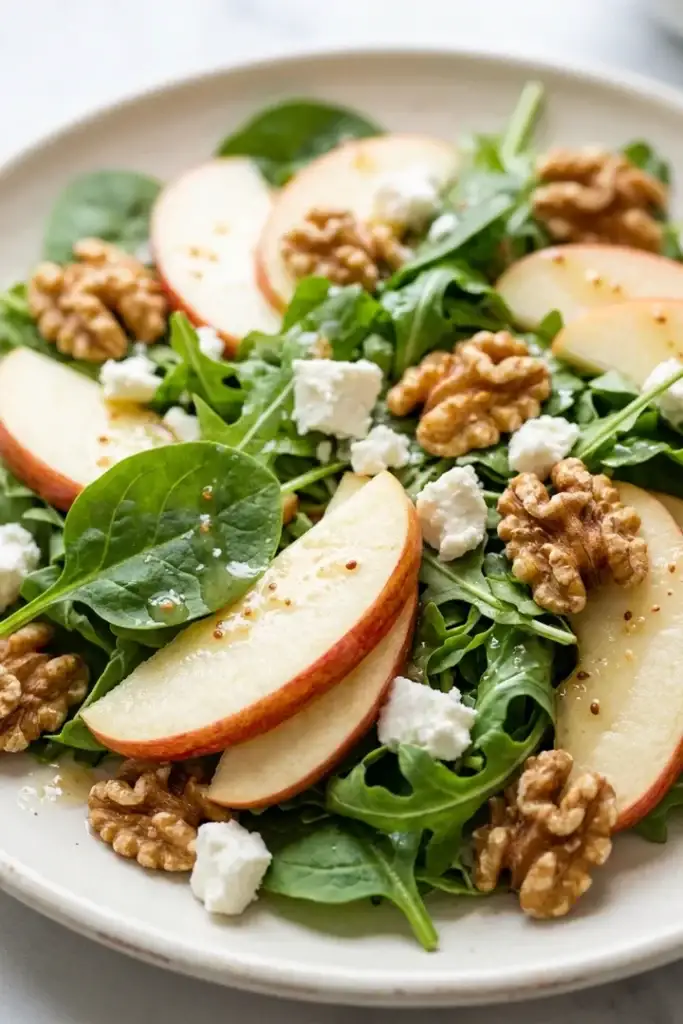
Apple walnut salad brings crisp apple slices, toasted nuts and creamy feta together with a tangy honey Dijon dressing. When I make this salad as a 20-minute side, I always toast the walnuts first so they have time to cool completely on a plate, and I slice the apples last, tossing them straight into a spoonful of dressing so the cut surfaces stay bright and crisp right up to the table.
Servings: 4 side servings · Prep: 15 minutes · Cook: 5 minutes · Total: 20 minutes
Dry the leaves and slice the apples last
Wash and dry the greens while the walnuts cool. Hold the apples whole until the dressing and serving bowl are ready, then slice them just before tossing. If you are taking the salad somewhere, pack the nuts and dressing separately and add them when serving.
Key Ingredients & Why They Matter
- Crisp apples (2 apples, about 300 g after coring): Leaving the skin on and slicing them thinly just before assembly preserves their firm snap and natural pectin structure so they hold up alongside tender greens.
- Walnut halves (60 g, roughly broken): Dry-toasting the broken halves for 3–5 minutes brings their natural oils to the surface and deepens their earthy flavor, while cooling them on a plate keeps them crisp.
- Dijon mustard (1 teaspoon / 5 g) and runny honey (2 teaspoons / 14 g): Mustard mucilage acts as an emulsifier that binds the olive oil, apple cider vinegar and lemon juice into a clingy dressing, while honey balances the sharp acidity.
- Feta (60 g, crumbled): Salty, brined feta provides creamy contrast to the sweet-tart apples and means you only need a light pinch of added salt in the dressing.
Ingredients
- 60 g walnut halves, roughly broken
- 120 g mixed salad leaves, washed and thoroughly dried
- 2 crisp apples, about 300 g after coring, thinly sliced with skin on
- 60 g feta, crumbled
- 2 tablespoons olive oil (30 ml)
- 1 tablespoon apple cider vinegar (15 ml)
- 1 teaspoon Dijon mustard (5 g)
- 2 teaspoons runny honey (14 g)
- 1 teaspoon lemon juice (5 ml)
- 1/8 teaspoon fine salt, or to taste
- 1/4 teaspoon freshly ground black pepper
Equipment
A small dry skillet, large salad bowl, sharp knife, chopping board, measuring spoons and a small jar with a tight-fitting lid for shaking the dressing.
Instructions
1. Toast and cool the walnuts
Put the walnuts in a dry skillet over medium-low heat. Cook for 3–5 minutes, shaking the pan and stirring often, until fragrant and slightly darker at the edges. Transfer to a plate immediately so they stop cooking. Let them cool completely before adding them to the leaves.
2. Shake the dressing
Put the oil, cider vinegar, Dijon, honey, lemon juice, salt and pepper in a small jar. Close the lid firmly and shake until the mixture looks evenly combined. Taste a drop on a leaf rather than tasting it only from a spoon. Adjust the salt after considering the salty feta.
3. Prepare the apples and greens
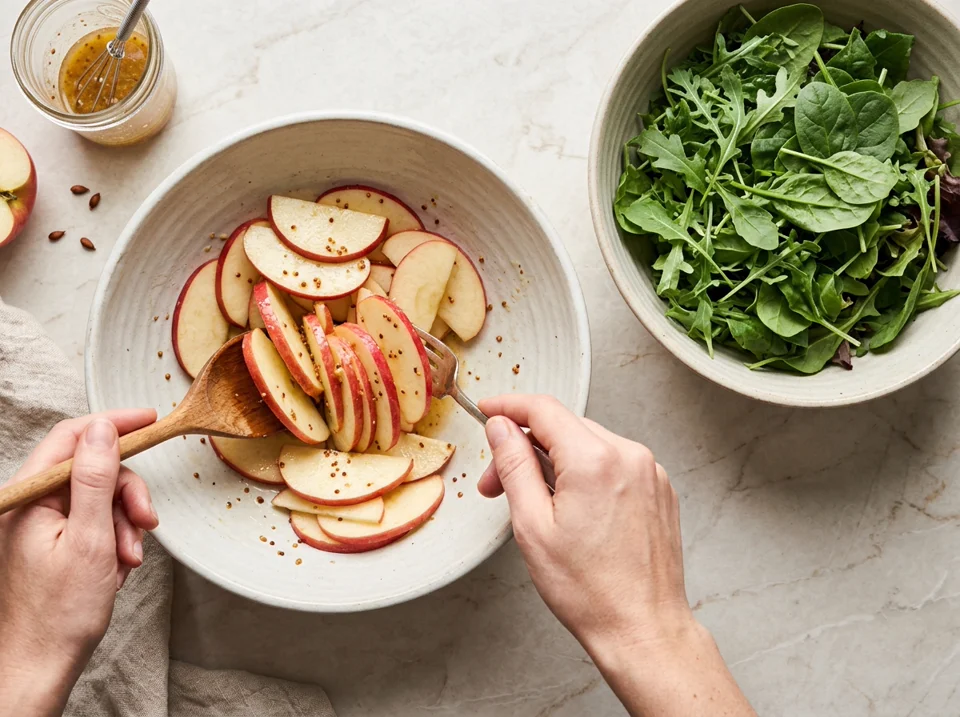
Dry the washed leaves well and place in a large bowl. Core the apples and cut into thin slices just before assembling. Toss the slices with 1 tablespoon of the prepared dressing to lightly coat their cut surfaces. This slows browning but will not prevent it indefinitely.
4. Toss and finish
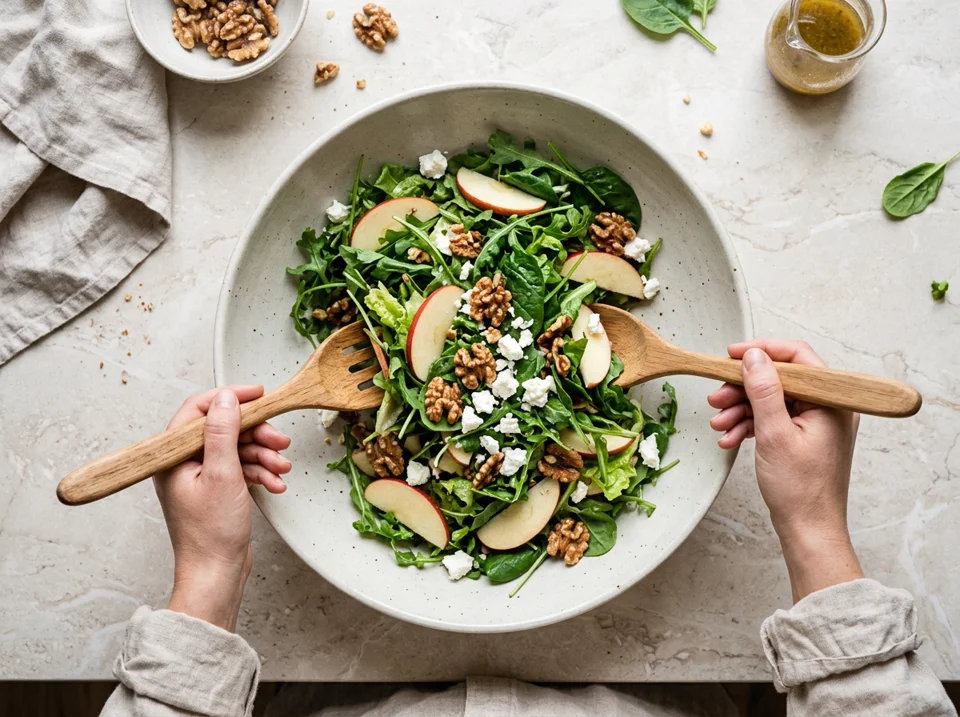
Add the apple slices to the leaves. Drizzle over about half the remaining dressing and toss gently with clean salad servers. Add the cool walnuts and feta, then fold once or twice. Serve immediately, offering the rest of the dressing separately so people can add it to taste.
Tips for crisp apple walnut salad
- Use firm sweet-tart apples such as Pink Lady, Braeburn or Honeycrisp. Softer apples bruise more easily and lose their shape when tossed.
- Dry leaves thoroughly. Water clinging to the greens dilutes the dressing and makes it slide off instead of coating them.
- Cool toasted nuts before assembling. Warm walnuts wilt tender greens, and they stay crisp longer when stored separately from the dressing.
- Add dressing gradually. The amount you need depends on how loosely packed the greens are and how thickly the apples are sliced. You do not have to use every drop.
- For a nut-free version, omit walnuts and use toasted pumpkin seeds only if seeds are suitable for everyone eating the salad. Check packaged ingredients for relevant allergen warnings.
How to serve apple walnut salad
This apple walnut salad is designed as a side rather than a full main course. Serve with a warm bowl of creamy mushroom orzo or roasted vegetable soup. For a more substantial lunch, add drained canned chickpeas that have been rinsed and dried well. Keep the extra dressing separate until eating.
How to store apple walnut salad
For advance preparation, refrigerate clean, dry leaves and feta in separate covered containers at 4°C or below. Keep cooled walnuts airtight at room temperature and refrigerate the dressing for up to 3 days; shake before using. Slice apples and combine everything shortly before serving. Refrigerate dressed leftovers promptly and use within 24 hours for quality; the leaves will soften. Do not freeze.
Apple walnut salad FAQs
Can I make apple walnut salad ahead of time?
Prepare the dressing and toast the nuts a day ahead. Store all components separately. Cut the apples and dress the salad just before serving for the crispest leaves and freshest appearance.
What can I use instead of feta?
Crumbled goat cheese works well if you like a tangier flavor. For a dairy-free version, omit the cheese and add a small pinch of salt only after tasting the dressed salad. The balance will be less creamy but still fresh.
Can I use a different vinegar?
White wine vinegar can replace apple cider vinegar in the same amount. Balsamic has a darker color and sweeter taste, so begin with a little less honey and adjust the dressing before adding it to the leaves.
How do I keep the apples from browning?
Slice them close to serving time and coat them lightly with the lemon-containing dressing. Cover and refrigerate briefly if needed. Acid slows browning, but storing cut apples for many hours will still affect their color and texture.
More recipes to try
Try crunchy cabbage and carrot slaw or creamy mushroom orzo.
For safe storage, follow FoodSafety.gov food-handling guidance.
Reader comments