

Estimated read time: 7 min
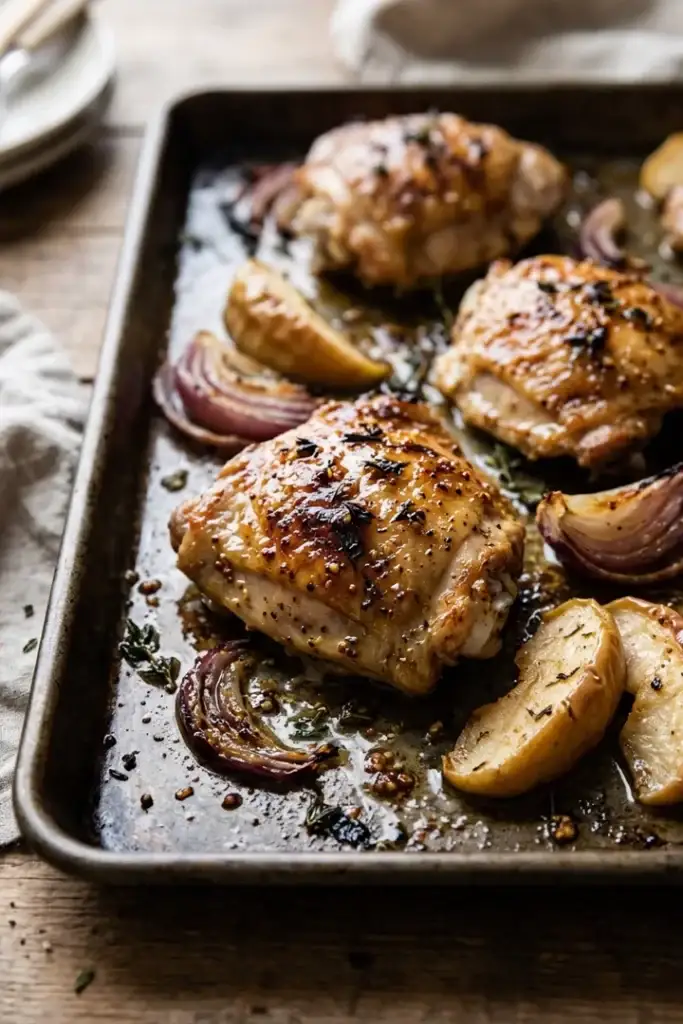
In my kitchen, I always pat the chicken skin thoroughly dry before brushing on the glaze so these maple Dijon chicken thighs roast skin-side up with a glossy, golden finish. Waiting 20 minutes before tucking the firm apples and red onion wedges around the pan lets the fruit soak up the savory pan drippings while staying sturdy enough to lift off the tray intact.
Servings: 4 · Prep: 15 minutes · Cook: 35–40 minutes · Total: about 55–60 minutes including a 5-minute rest
Set the thighs out in thickness order
Look for bone-in thighs about the same size and pat the skin dry. If one is noticeably smaller, leave enough room to check it without disturbing the others. Stir together the maple and Dijon and keep the thermometer and a clean plate ready before handling the raw chicken.
Key Ingredients & Why They Matter
- Bone-in, skin-on chicken thighs (4 thighs, about 900 g): The bone slows heat transfer to keep the dark meat juicy at 425°F, while rendering subcutaneous fat crisps the skin and bastes the apples and onions on the sheet pan.
- Dijon mustard (2 tbsp) & olive oil (1 tbsp): Mustard seed mucilage and natural lecithins act as an emulsifier that binds the oil, maple syrup, and vinegar into a cohesive glaze that clings to the dry skin instead of sliding off.
- Pure maple syrup (1½ tbsp): Limiting the syrup to 1½ tablespoons provides enough sucrose and reducing sugars for deep caramelization and Maillard browning without scorching during a 35–40 minute roast.
- Firm apples, cut into thick wedges (2) & apple cider vinegar (1 tsp): Sturdier apples retain higher pectin integrity when added halfway through roasting, while the cider vinegar sharpens the sweet pan drippings so the glaze tastes balanced.
Ingredients
- 4 bone-in, skin-on chicken thighs (about 900 g)
- 2 tbsp Dijon mustard
- 1½ tbsp pure maple syrup
- 1 tbsp olive oil
- 1 tsp apple cider vinegar
- ¾ tsp fine sea salt
- ¼ tsp black pepper
- 1 medium red onion, cut into wedges
- 2 firm apples, cored and cut into thick wedges
Instructions
Step 1. Heat the oven and prepare the pan
Heat the oven to 425°F (220°C). Use a rimmed sheet pan wide enough to hold the thighs and the apple and onion wedges without stacking them. Pat the chicken skin dry with paper towels. Leave a dry plate and clean tongs ready for the cooked chicken.
Step 2. Whisk the maple Dijon glaze
Whisk Dijon, maple syrup, olive oil, cider vinegar, salt and pepper in a small bowl. Whisk again before brushing to recombine any oil that has separated. This makes a thin glaze that should lightly coat the brush. For a serving drizzle, use the cooked pan juices later.
Step 3. Brush the skin and start roasting
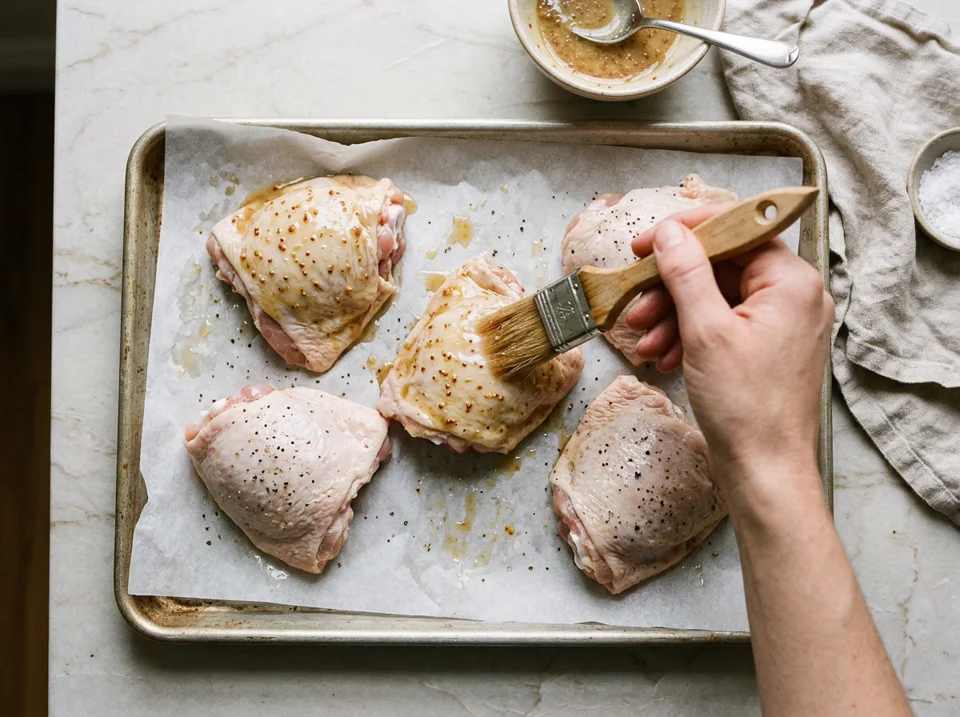
Arrange the thighs skin-side up with space between them. Brush on the glaze and discard any that contacted a brush used on raw chicken. Roast for 20 minutes on the middle rack, until the skin begins to turn golden.
Step 4. Cut and add the apples and onion
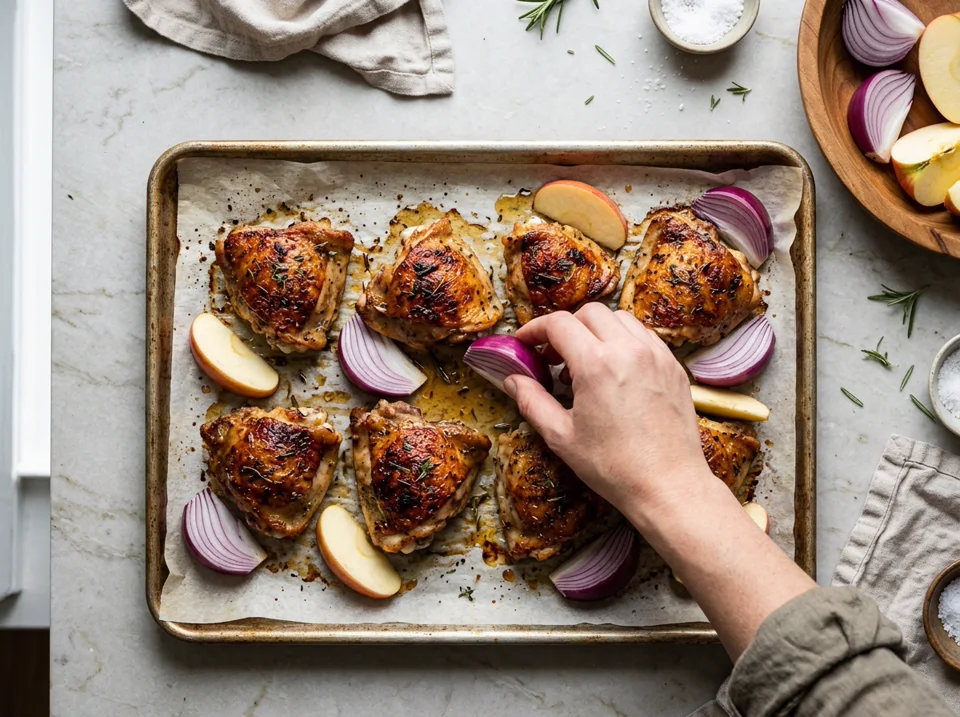
While the chicken roasts, core the apples and cut them into thick wedges. Cut the onion through the root end so the wedges are less likely to fall apart. Add both around the chicken after the first 20 minutes. Turn them lightly in the pan juices and keep them off the chicken skin.
Step 5. Finish roasting and check each thigh
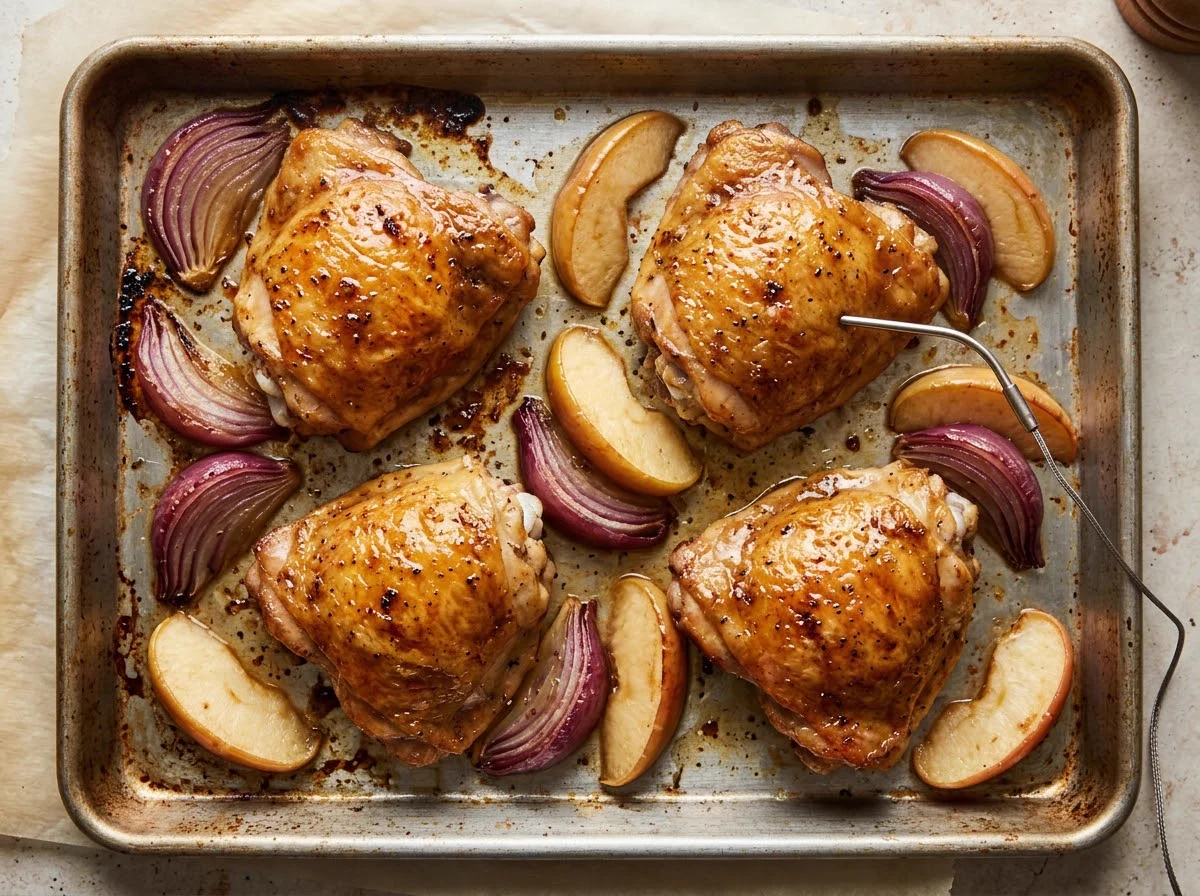
Roast for 15–20 minutes more. Check the thick part of each thigh with an instant-read thermometer inserted from the side without touching bone. Each thigh should reach 165°F (74°C) or higher. Pull the thighs that finish first onto a clean plate and return the others to the oven to finish. See the USDA safe temperature chart.
Step 6. Rest and spoon over the pan juices
Rest the chicken for 5 minutes. The apple wedges should be tender at the edges and firm enough to move with a spatula. Spoon a little of the cooked pan juice over the onions and apples at the table. Keep most of it off the top of the thighs if you want the skin to stay crisp.
Tips
- Pat the chicken skin dry before brushing it with glaze.
- Use firm apple wedges and add them partway through roasting so they retain their shape.
- Check each thigh in its thickest part without touching bone, rather than relying on time alone.
If the apples finish before the chicken
Lift tender wedges out of the pan with a thin spatula so they don’t collapse while the thighs finish. If they’re soft along the peel but still firm at the center, leave them a few minutes longer. A sturdy apple such as Pink Lady or Honeycrisp gives you more room to time both parts of the dish.
Keep the glaze from darkening too quickly
Maple syrup browns early where it collects in thin streaks on the tray. If the skin takes on a lot of color before the thighs are cooked, tent the browned spots loosely with foil and return the tray to the oven. Check the internal temperature before deciding when it’s ready.
For leftovers, cool the chicken and fruit in shallow containers and refrigerate within 2 hours. Use within 3–4 days and reheat the chicken to 165°F (74°C).
FAQs
Can I add the apples at the beginning?
The recipe adds them after 20 minutes so they can soften without collapsing during the full chicken roasting time.
How do I know the chicken is cooked?
Use an instant-read thermometer and check that the thickest part of each thigh reaches at least 74°C (165°F), avoiding the bone.
Can I use boneless thighs with the same timing?
The method and timing are written for bone-in, skin-on thighs. Boneless thighs cook differently, so do not assume the same roasting time.
Serving your finished recipe
Rest the chicken for 5 minutes, then serve with the apples, onion and a spoonful of the maple-Dijon pan juices.
More recipes to try
Try our paprika chicken potato traybake next.
Estimated nutrition
Per serving, about 485 kcal, 28.7 g protein, 21 g carbohydrates and 31.8 g fat. Assumes about 675 g edible chicken including skin from the bone-in thighs. The amount of pan juices served changes the estimate.
Reader comments