

Estimated read time: 7 min
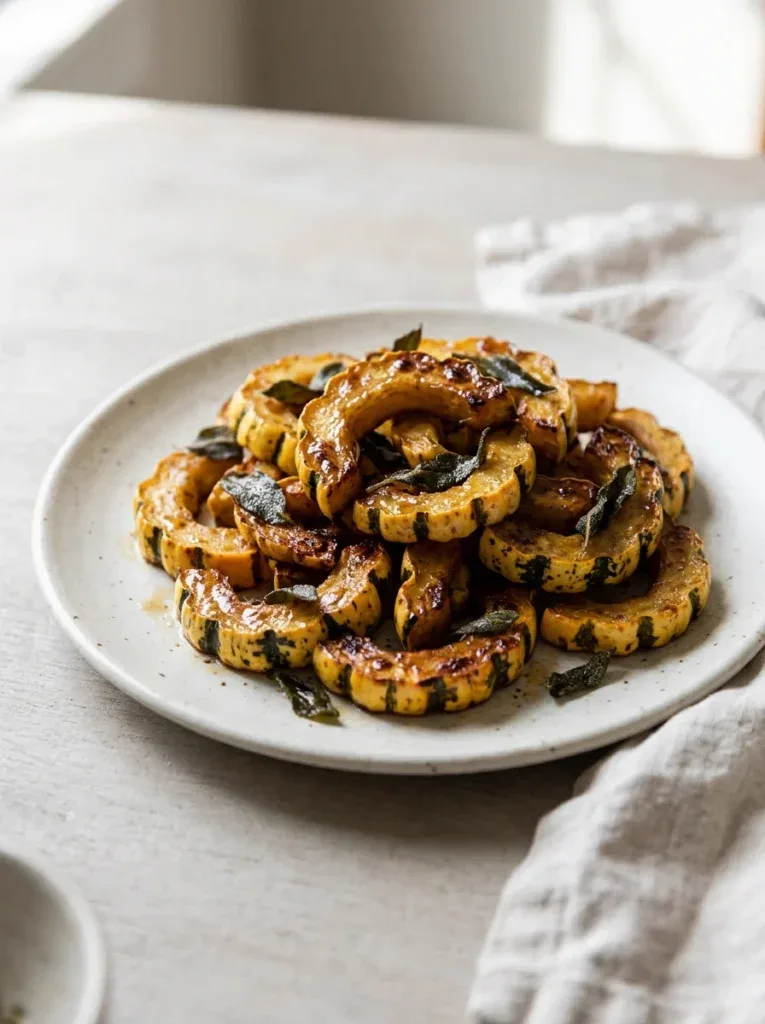
Roasted delicata squash with maple and sage turns tender in the oven and browns at the edges, and because the thin skin is edible, you can leave it right on. When I make a sheet pan of delicata, I always group the narrower end slices together on one edge of the tray and wait to toss on the maple syrup and sage until the last few minutes so the natural sugars caramelize without scorching.
Servings: 4 · Prep: 15 minutes · Cook: 23–25 minutes · Total: about 40 minutes
Cuisine: American
Size the squash slices for even roasting
Choose delicata with firm skin and scrub it well because the peel goes on the tray. Cut half-moons to a consistent thickness and put any thin end pieces together. Measure the maple and sage separately so you can add them once the squash has started browning.
Key Ingredients & Why They Matter
- Medium delicata squash (2, about 900 g): Its thin, delicate rind softens completely during a high-heat roast, providing structural support so the sweet, dense flesh holds its half-moon shape without peeling.
- Olive oil (2 tbsp): Coats the cut starch surfaces to conduct heat evenly from the metal sheet pan, promoting deep golden browning before the glaze goes on.
- Maple syrup (1 tbsp): Added in the final 3 to 5 minutes of roasting so its concentrated sucrose and invert sugars form a glossy glaze without burning at 425°F.
- Chopped fresh sage (1 tbsp): Tossed with the warm oil and maple late in the bake so the leaves release their earthy, piney essential oils without turning brittle and bitter.
Ingredients
- 2 medium delicata squash (about 900 g)
- 2 tbsp olive oil
- 1 tbsp maple syrup
- 1 tbsp chopped fresh sage
- ½ tsp fine salt
- ¼ tsp black pepper
Instructions
Step 1: Heat the oven and clean the squash
Heat the oven to 425°F (220°C). Set out a rimmed baking sheet. Scrub the striped skin under running water and dry it. Leave the edible peel in place so the pieces hold their shape.
Step 2: Remove the seeds and slice half-moons
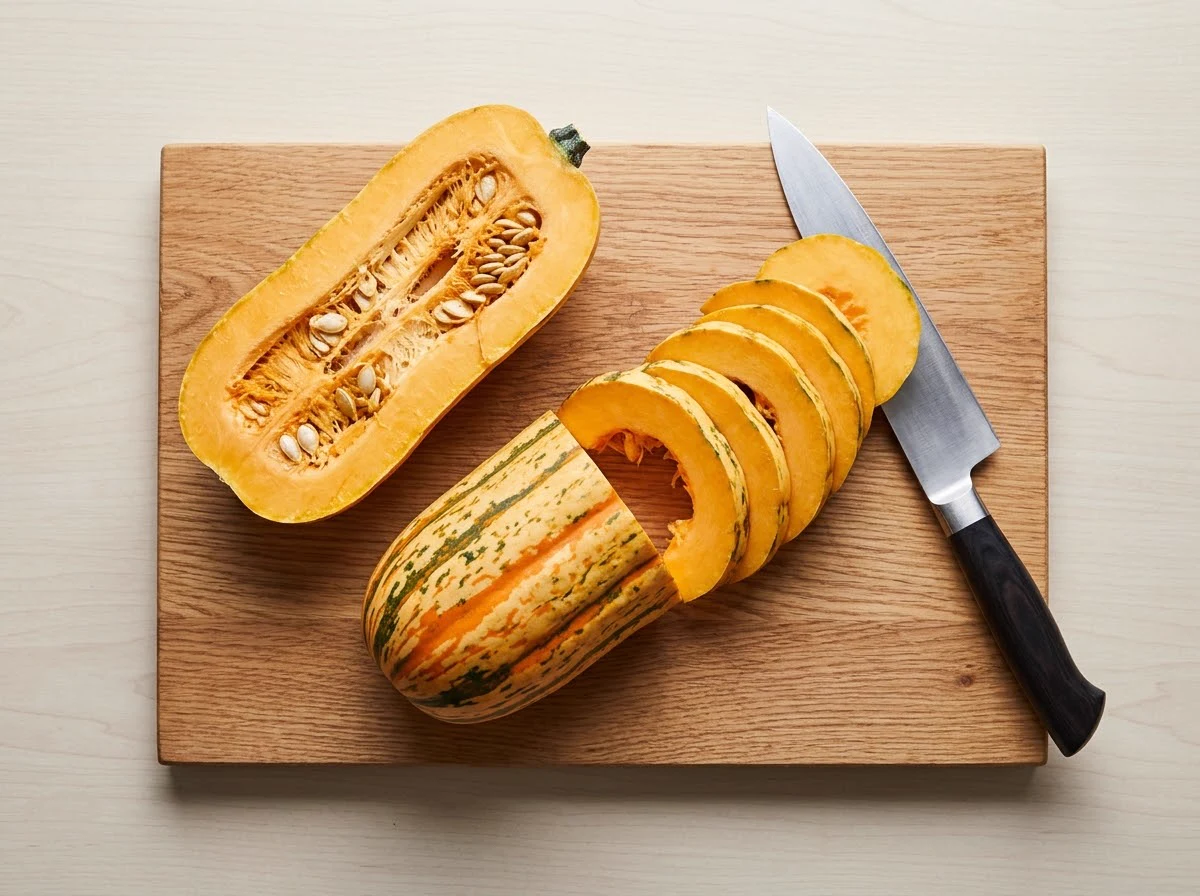
Halve the squash lengthwise and scoop out the seeds and strings. Lay each half cut-side down and slice into ½-inch half-moons. Put any narrower end pieces together so you can lift them out first if they brown early.
Step 3: Season and roast the first side
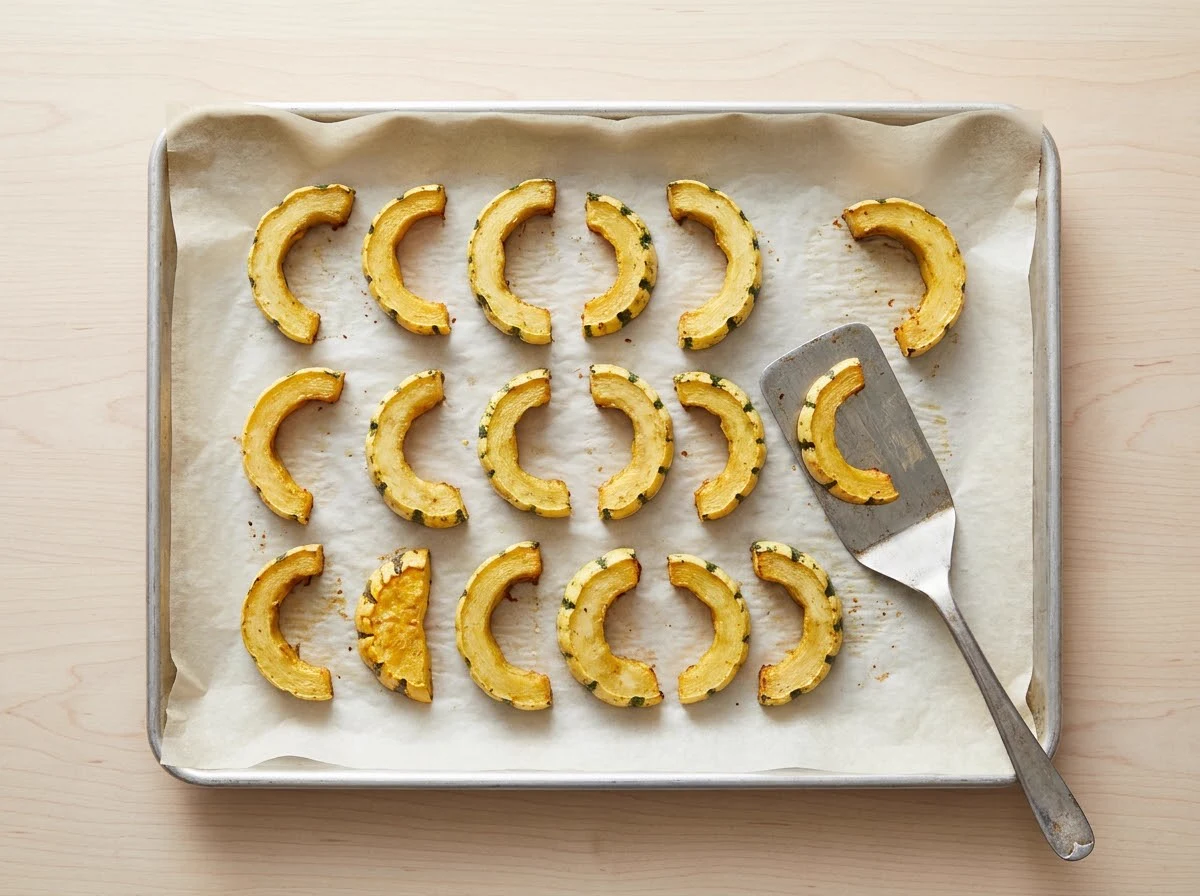
Toss with olive oil, salt and pepper. Spread in a single layer with a flat side on the pan. Roast for 15 minutes, then check a piece from the center of the tray for golden spots on the underside.
Step 4: Turn the slices and prepare the finish
Turn the slices with a thin spatula and roast 5 minutes more. While the second side browns, measure the maple syrup and chop the sage so both are ready when the pan comes out.
Step 5: Glaze and finish roasting
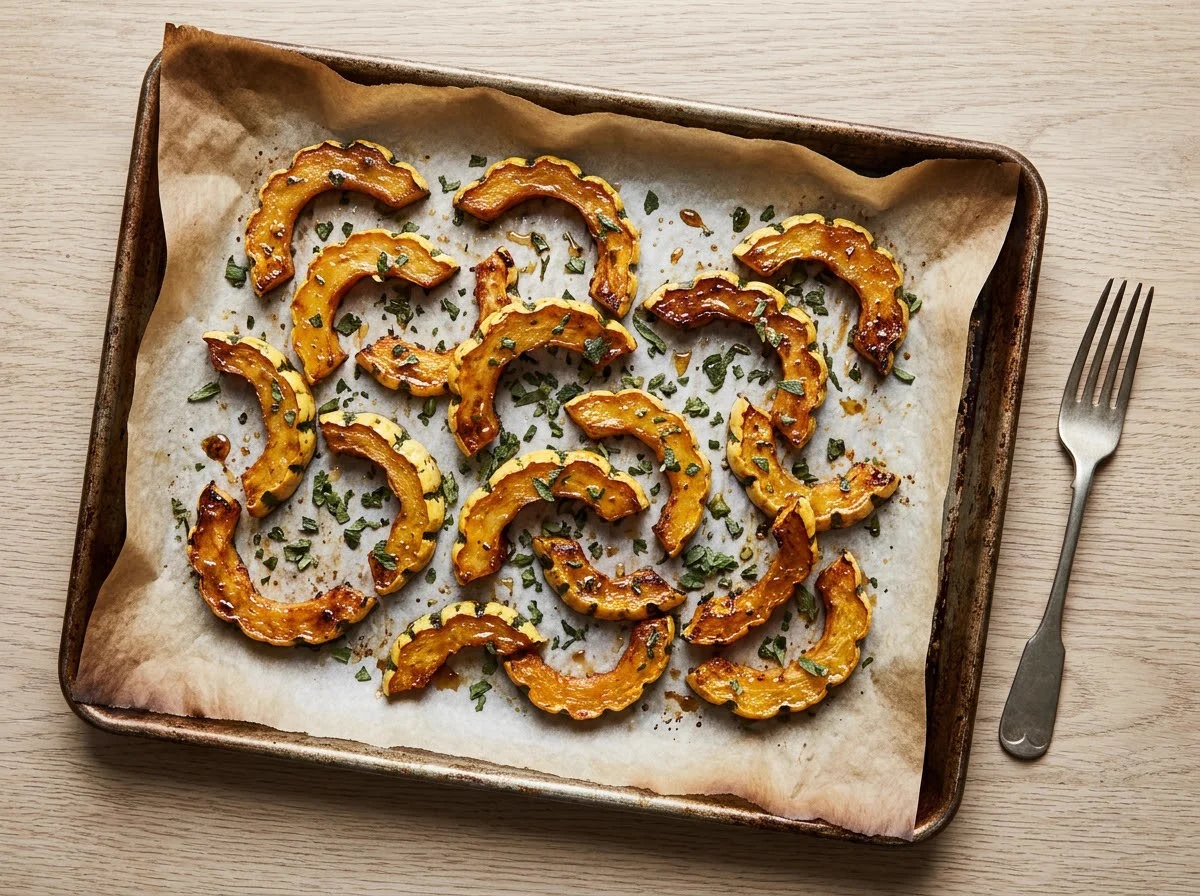
Toss the slices with the maple syrup and sage. Return them to the oven for 3–5 minutes, until the flesh is fork-tender and the glaze looks glossy. Check the thinner slices first and remove them if the edges are already dark.
Cooking tips
Put the narrow end pieces on one side of the sheet pan. They brown ahead of the wider half-moons and are easier to lift out all at once when the flesh is tender.
Add the maple near the end to limit scorching. Keep slices the same thickness.
Cut evenly sized half-moons and dry them before adding oil. Leave room between the pieces so the exposed edges brown. If you need a second pan, rotate both pans halfway through roasting.
How to choose and cut delicata squash
Look for a squash that feels firm and heavy for its size, with skin free of soft patches. Scrub the peel before slicing since it stays on. Cut the squash in half lengthwise, then use a spoon to scrape out the seeds and stringy center. Place each half flat on your cutting board and slice it evenly so each piece gets about the same time in the oven.
Give the squash room to brown
Use a large rimmed sheet pan and spread the pieces into a single layer with space around them. The side touching the pan browns first, so check the undersides before turning. If your pieces are pale and soft late in the bake, spread them out further and roast for a few more minutes. Watch the edges closely because the maple syrup can darken quickly near the end.
Prep ahead and reheat
You can cut the squash ahead and keep the slices covered in the refrigerator. Pat off any moisture before seasoning and roasting. Leftover roasted delicata squash with maple and sage works in a grain bowl, where its sweetness goes well with a sharp vinaigrette and crunchy toasted nuts. To serve it hot again, spread the slices on a sheet pan and warm them until the edges firm up.
Use the peel for texture
Delicata is one of the winter squashes with an edible skin. Illinois Extension’s winter squash guide explains how it differs from other varieties. Try roasted delicata squash with maple and sage alongside a main dish with a bright or salty sauce. A squeeze of lemon at the table adds acidity, while a sprinkling of toasted pumpkin seeds gives the soft squash a little crunch.
FAQs
How can I tell when the squash is done?
A fork should slide through the thickest half-moon, and the side touching the pan should have golden brown patches.
Do I peel delicata squash?
No. Scrub the skin well and leave it on.
Can I use butternut squash?
Yes. Peel and slice it, and adjust the roasting time as needed.
What if the squash is crowded?
Use two baking sheets and swap their positions halfway.
Serving your finished recipe
Serve the maple-glazed half-moons with garlic herb roast turkey breast, or spoon them over cooked farro for a simple lunch.
Planning a holiday menu? Serve roasted delicata squash with maple and sage alongside Balsamic Bacon Brussels Sprouts.
Estimated nutrition
Per serving (1 of 4): 145 kcal, 2.0 g protein, 21.6 g carbohydrates and 7.0 g fat. Calculated using generic USDA FoodData Central values. Uses generic raw winter squash for delicata, with 850 g after trimming.
Reader comments