

Estimated read time: 7 min 15 sec
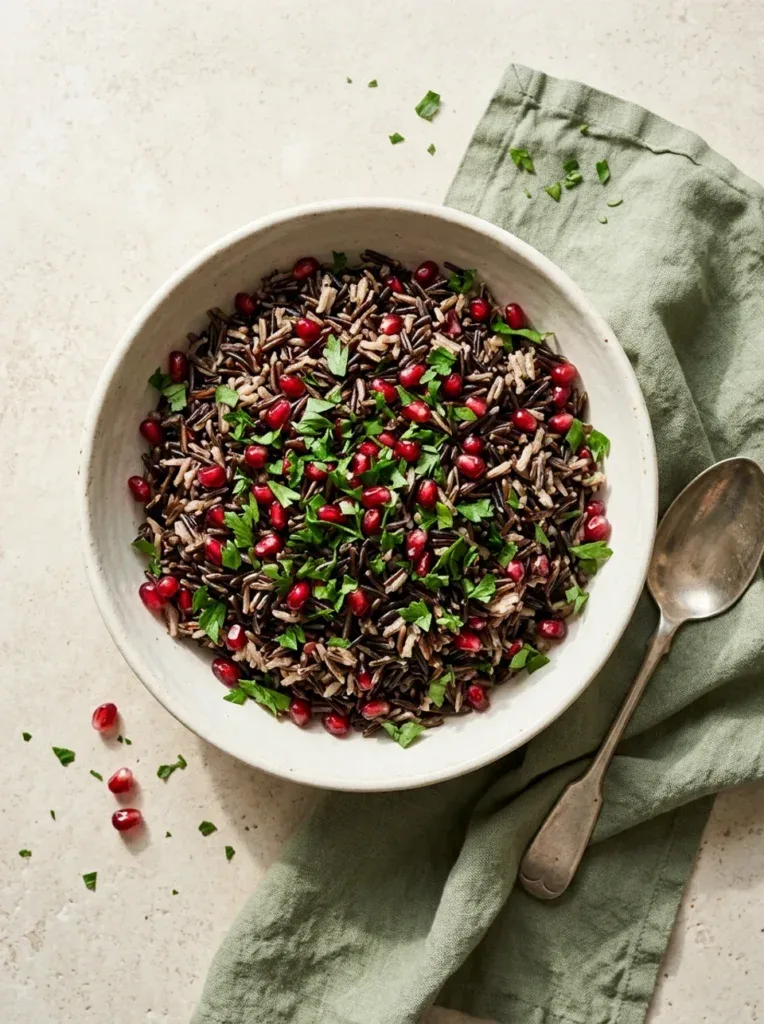
Pomegranate wild rice pilaf brings tart fruit and fresh parsley to a bowl of chewy, savory grains. In my kitchen, I always fold in the lemon juice and warm shallot oil while the drained rice is still hot so the seasoning coats every grain evenly, then wait for the heavy steam to stop before adding the arils so they keep their crisp, fresh pop. Serve it warm with a roast or chill it for a make-ahead grain salad.
Servings: 6 servings · Prep: about 10 minutes · Cook: 45–60 minutes · Total: about 55–70 minutes, with the shallot and garnish prepared while the rice simmers
Check which wild rice you bought
Look for a package of pure wild rice. A rice blend can contain grains that finish much sooner, and the broth-draining method suits plain wild rice best. Set a fine-mesh strainer over the sink before you start and let the cooked grain drain well before it meets the lemon dressing.
Key Ingredients & Why They Matter
- Wild Rice (1 cup, rinsed): Pure aquatic grass seed has a dense outer hull that splits open slowly during simmering, providing a nutty flavor and resilient, chewy texture that never turns mushy when dressed warm.
- Low-Sodium Vegetable Broth (4 cups): Simmering the grain in an excess of low-sodium broth infuses savory depth into the interior of each kernel while allowing you to drain excess liquid without oversalting the dish.
- Shallot & Olive Oil (1 shallot + 1 tbsp olive oil): Gently sweating the finely chopped shallot in olive oil softens its sharp sulfur compounds into sweet aromatics and creates a flavored fat that clings to the warm, starchy surface of the drained rice.
- Pomegranate Arils & Lemon Juice (½ cup arils + 1 tbsp lemon juice): Fresh citric acid brightens the earthy grain immediately, while the crisp arils deliver bursts of malic acid and juicy contrast against the chewy rice.
Ingredients
- 1 cup wild rice, rinsed
- 4 cups low-sodium vegetable broth
- 1 tbsp olive oil
- 1 shallot, finely chopped
- ½ cup pomegranate arils
- ¼ cup chopped parsley
- 1 tbsp lemon juice
- ¼ tsp fine salt
Instructions
Step 1. Rinse the wild rice and bring the broth to a boil
Tip the rice into a fine-mesh strainer and rinse it under cool water. Shake off the water before adding the rice to the broth. Bring it to a boil in a saucepan with a lid, then lower the heat to a gentle simmer and cover.
Step 2. Check the grain and drain the broth
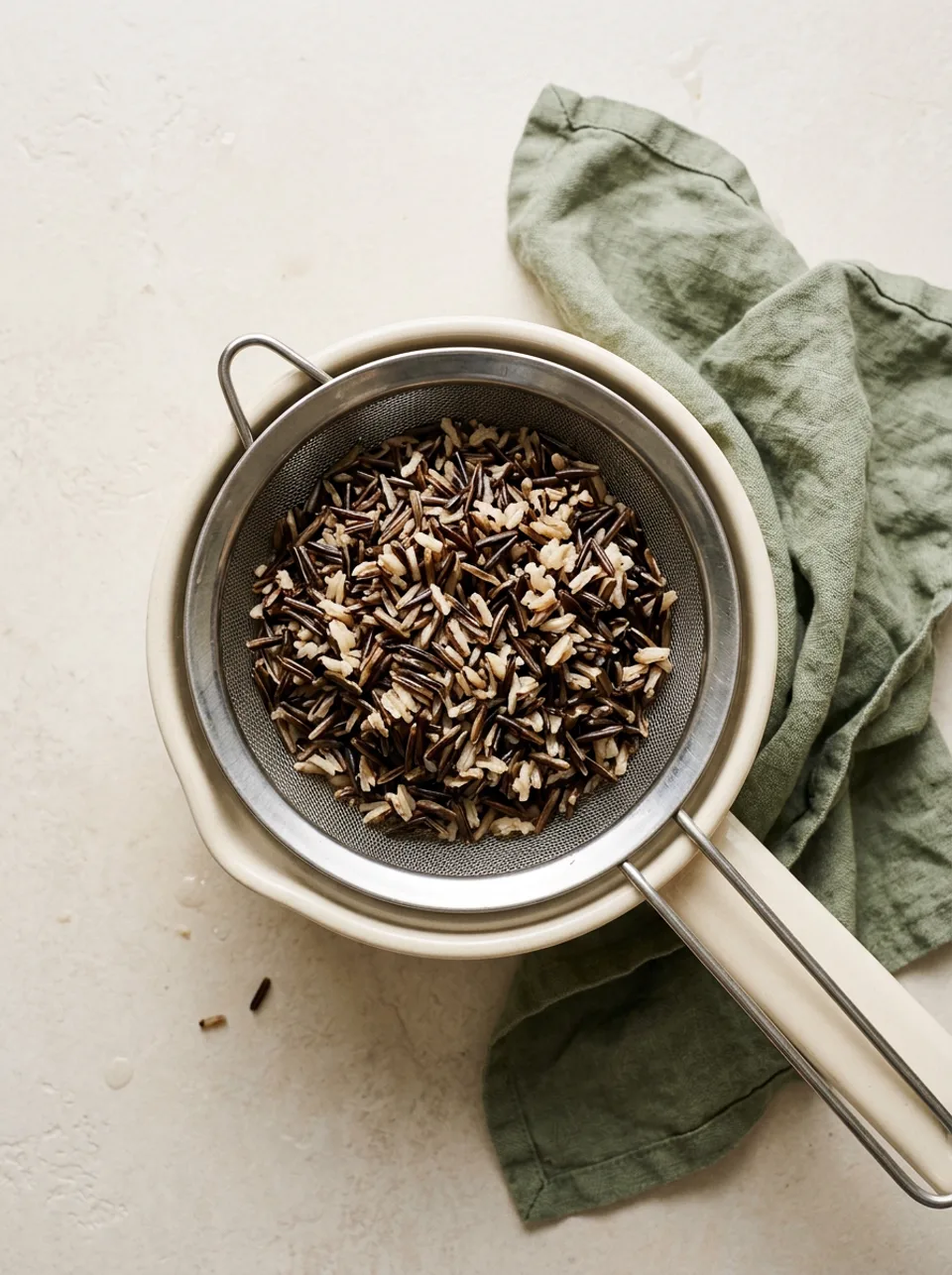
Start tasting at 45 minutes. A good batch has grains that have opened to show a pale center and grains that still hold their shape. Taste several. The centers should be chewy without a hard bit that sticks between your teeth. Cook up to about 60 minutes if needed, then drain off the remaining broth and let the rice sit in the strainer for a minute.
Step 3. Soften the shallot while the rice cooks
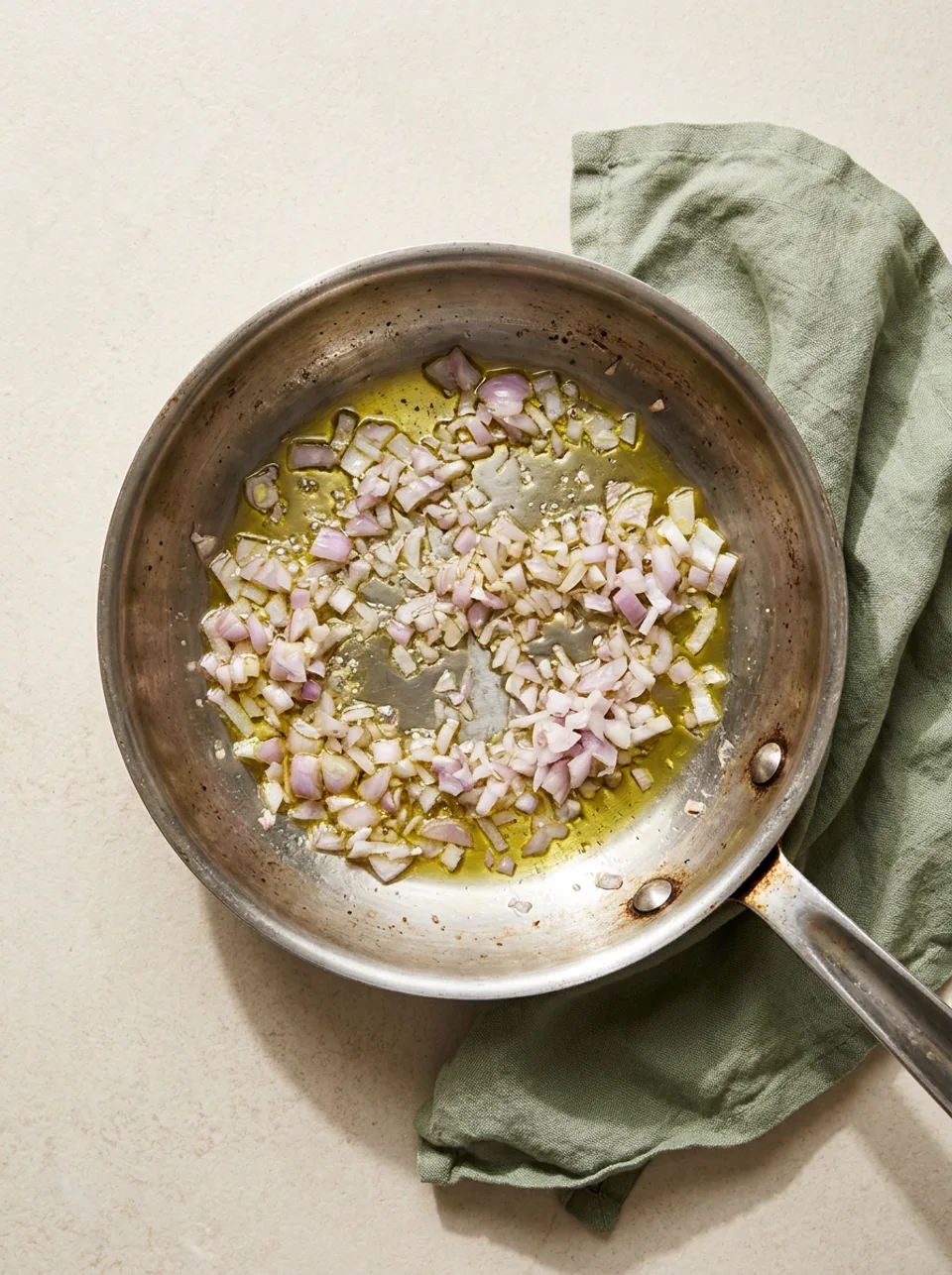
Heat the olive oil in a small skillet over medium heat. Stir in the shallot and cook for about 4 minutes until translucent. If the little pieces start browning before they soften, turn the heat down. Set the pan aside until the rice has drained.
Step 4. Dress the warm, drained rice
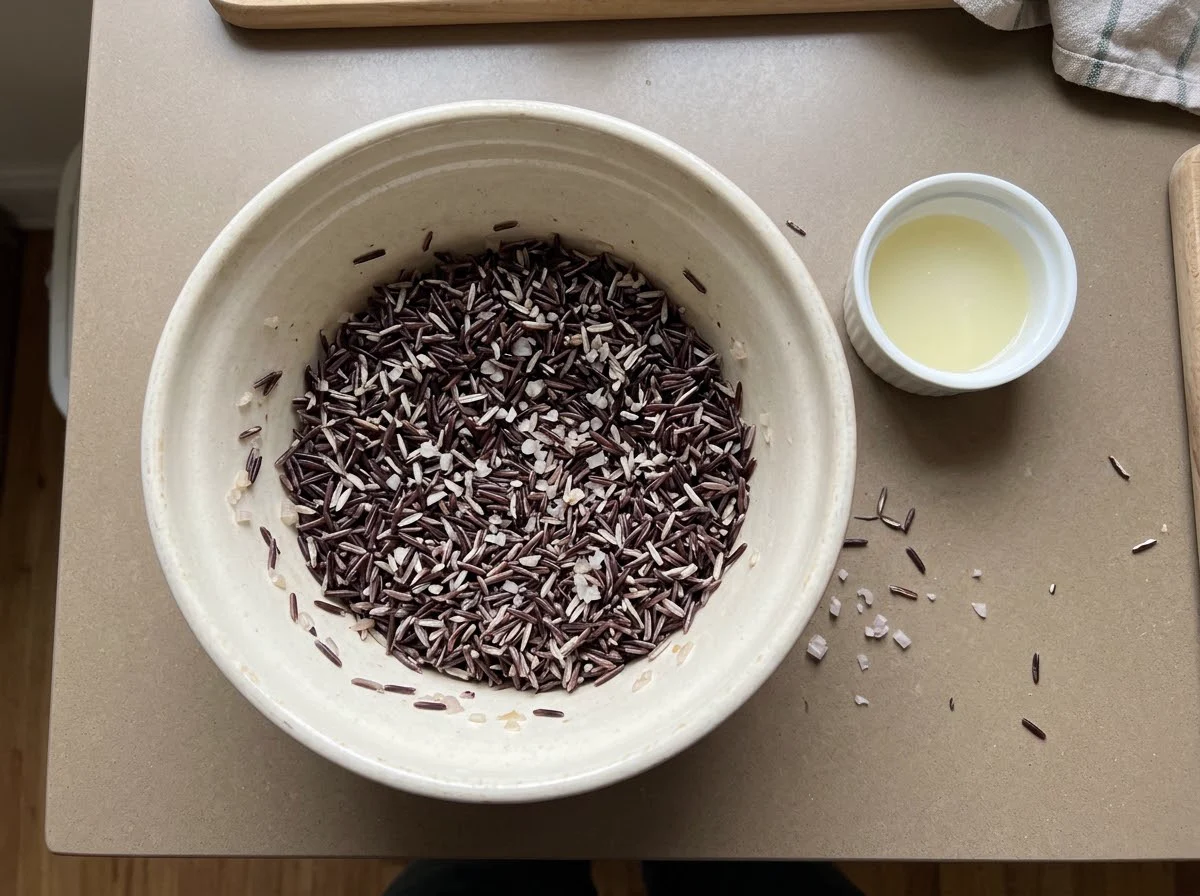
Transfer the drained rice to a wide bowl. Scrape in the shallot and every drop of its oil, then drizzle in the lemon juice. Toss from the bottom so the seasoning reaches the lower half of the bowl. Start with some of the measured salt, then taste before using the rest because the broth contributes salt.
Step 5. Fold in the fruit and herbs
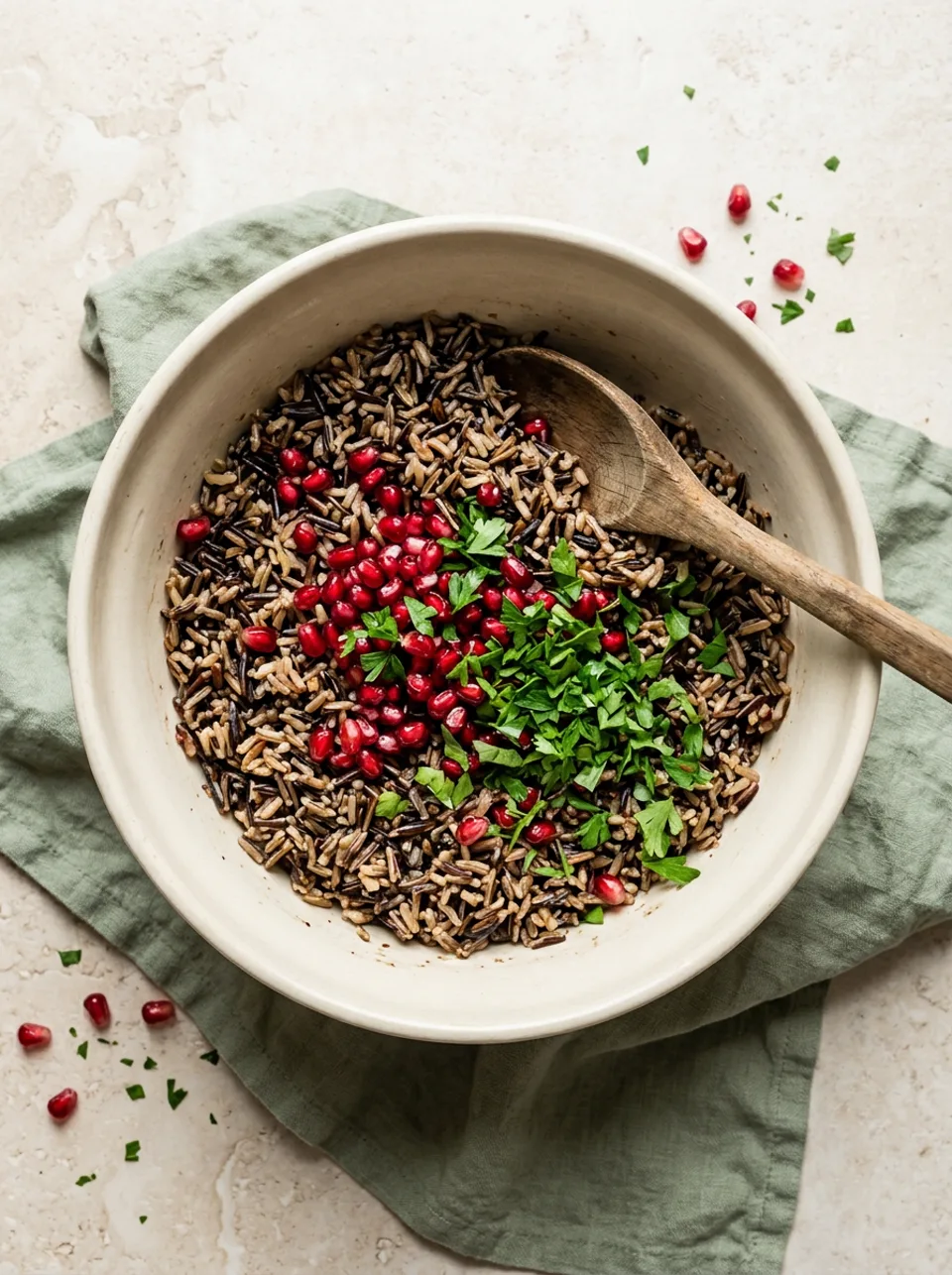
Wait for the heavy steam to subside. Fold in the arils and parsley with a broad spoon so the fruit stays intact. A final taste should bring out both the lemon and the shallot. Set aside a spoonful of arils from the measured amount for the top if you like.
Tips for pomegranate wild rice pilaf
Look for a bag labeled 100% wild rice. Blends often include brown or white rice, which can go soft before the wild rice in a long simmer. If you’re using a blend, use the package’s broth amount and cooking time, then season it with the same shallot and lemon.
If starting with a whole pomegranate, pull the sections apart in a bowl of water and loosen the arils with your fingers. Lift off the floating white membrane, then drain the arils and pat them dry. You can do this while the rice simmers.
What to do if the pilaf tastes flat
Taste a spoonful with a few arils in it. The fruit can be quite tart, so the rice by itself may taste less bright than the finished pilaf. If the entire bite is bland, stir in a pinch of the measured salt and taste again. If the salt tastes right but the finish is heavy, a small squeeze of lemon is more useful. When the arils are very sour, reserve a little of them and add to taste at the table.
FAQs
Can I make this ahead or serve it cold?
Yes. Refrigerate the cooked rice promptly in shallow containers and keep the arils and parsley separate. For a cold pilaf, add the garnish and check the seasoning once the rice is chilled. For a warm pilaf, reheat the rice to 165°F (74°C) with a small splash of broth, then finish with the fruit and parsley. See the USDA’s leftovers guidance.
Why is there broth left in the pot?
Pure wild rice can take up different amounts of broth depending on the age of the grain and how briskly it simmers. Once the grain is tender, drain the remaining liquid. Extra simmering to boil it away can make some of the grains collapse before you add the fruit.
What if pomegranate is out of season?
Try ⅓ cup dried cranberries for a sweeter, chewier finish. If they’re very firm, soak them briefly in warm water and drain them before adding. Taste after mixing and add a squeeze of lemon if the dish needs its tart edge back.
Serving ideas
Serve pomegranate wild rice pilaf with Garlic Herb Roast Turkey Breast or spoon the cooled pilaf alongside roasted squash. Put any extra arils on the table for people who want a second spoonful of fruit.
Estimated nutrition
Per serving, one sixth of the recipe, about 130 kcal, 4 g protein, 24 g carbohydrates and 3 g fat. The amount of broth retained after draining can change the estimate.
Reader comments