

Estimated read time: 7 min 45 sec
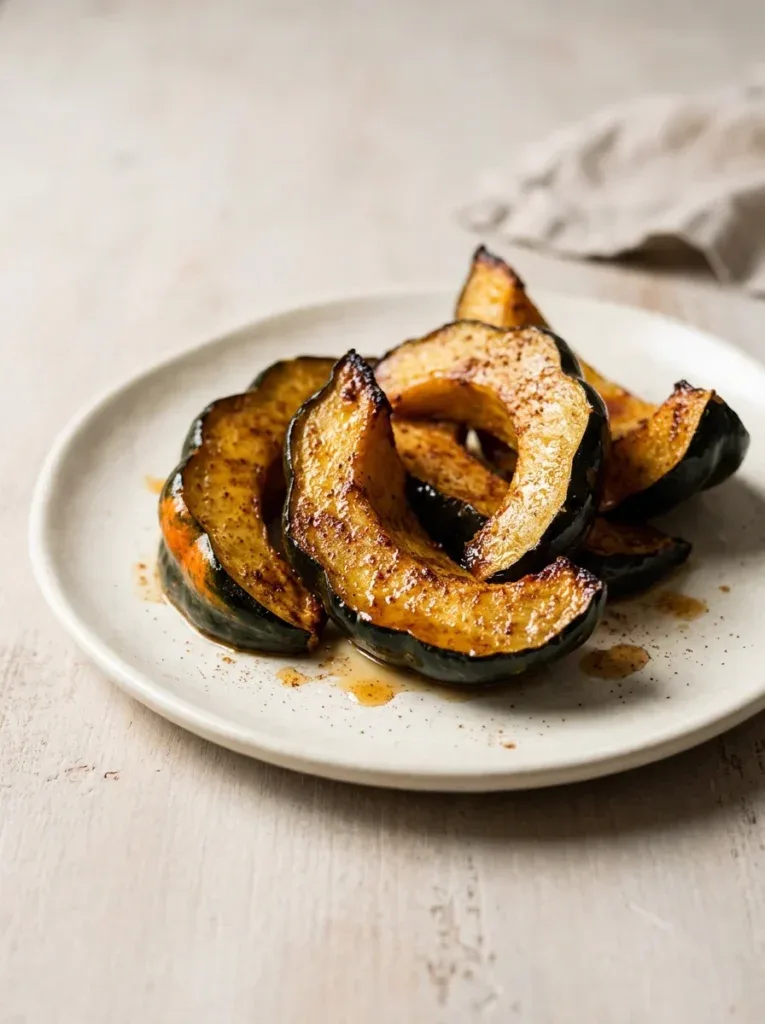
Maple roasted acorn squash gets browned cut sides and a glossy finish from two stages in the oven. In my kitchen, I always roast the wedges cut-side down with just olive oil and salt first, waiting until I see golden patches on the undersides before flipping them and brushing on the cinnamon maple glaze so the syrup caramelizes onto the flesh instead of burning on the pan.
Servings: 4 side servings · Prep: 15 minutes · Cook: 35 minutes · Total: 50 minutes
Cuisine: American
Plan for wedges that finish together
Pick two squash roughly the same size so the wedges can share one roasting time. Cut the ends wide enough that they will not turn into thin tips and burn. Set the maple syrup aside until the cut faces have started browning so you can see when it is time to glaze.
Key Ingredients & Why They Matter
- Small Acorn Squash (2 small squash, about 700 g usable): Smaller squash have denser, sweeter flesh and thinner rinds that roast evenly in ¾-inch crescent wedges without turning stringy.
- Olive Oil (1½ tbsp): Enables dry-heat Maillard browning against the hot sheet pan during the first 20 minutes before any sugar touches the tray.
- Pure Maple Syrup (2 tbsp): Brushed on in a thin layer only after turning, pure maple sugars thicken and glaze the hot, partially roasted squash faces in 10 to 15 minutes without scorching.
- Ground Cinnamon & Fine Salt (¼ tsp cinnamon + ½ tsp salt): Salt draws surface moisture out early so the wedges brown, while cinnamon dissolved directly into the maple syrup distributes warm spice evenly across every wedge.
Ingredients
- 2 small acorn squash
- 1½ tbsp olive oil
- 2 tbsp pure maple syrup
- ½ tsp fine salt
- ¼ tsp ground cinnamon
Choose two small acorn squash, about 700 g usable after removing the stems and seeds. Use a sturdy knife and a board that won’t slide. A rimmed sheet pan catches any glaze that runs off. Use parchment rated for 425°F (220°C) if you line it.
Instructions
Step 1. Heat the oven and scrub the squash
Heat the oven to 425°F (220°C) and line a rimmed sheet pan with suitable parchment. Scrub and dry the squash, especially in the ridges. Set a damp towel under the cutting board if it shifts. A dry squash is easier to hold while you find a stable side.
Step 2. Halve each squash and scoop out the seeds
Set the squash on its most stable side. Use a sturdy knife to cut lengthwise, working around the hard stem if needed. Set the halves cut-side up and scrape out the seeds and stringy center with a spoon. Clear any loose strings from the edge of the hollow before slicing.
Step 3. Cut wedges of even thickness
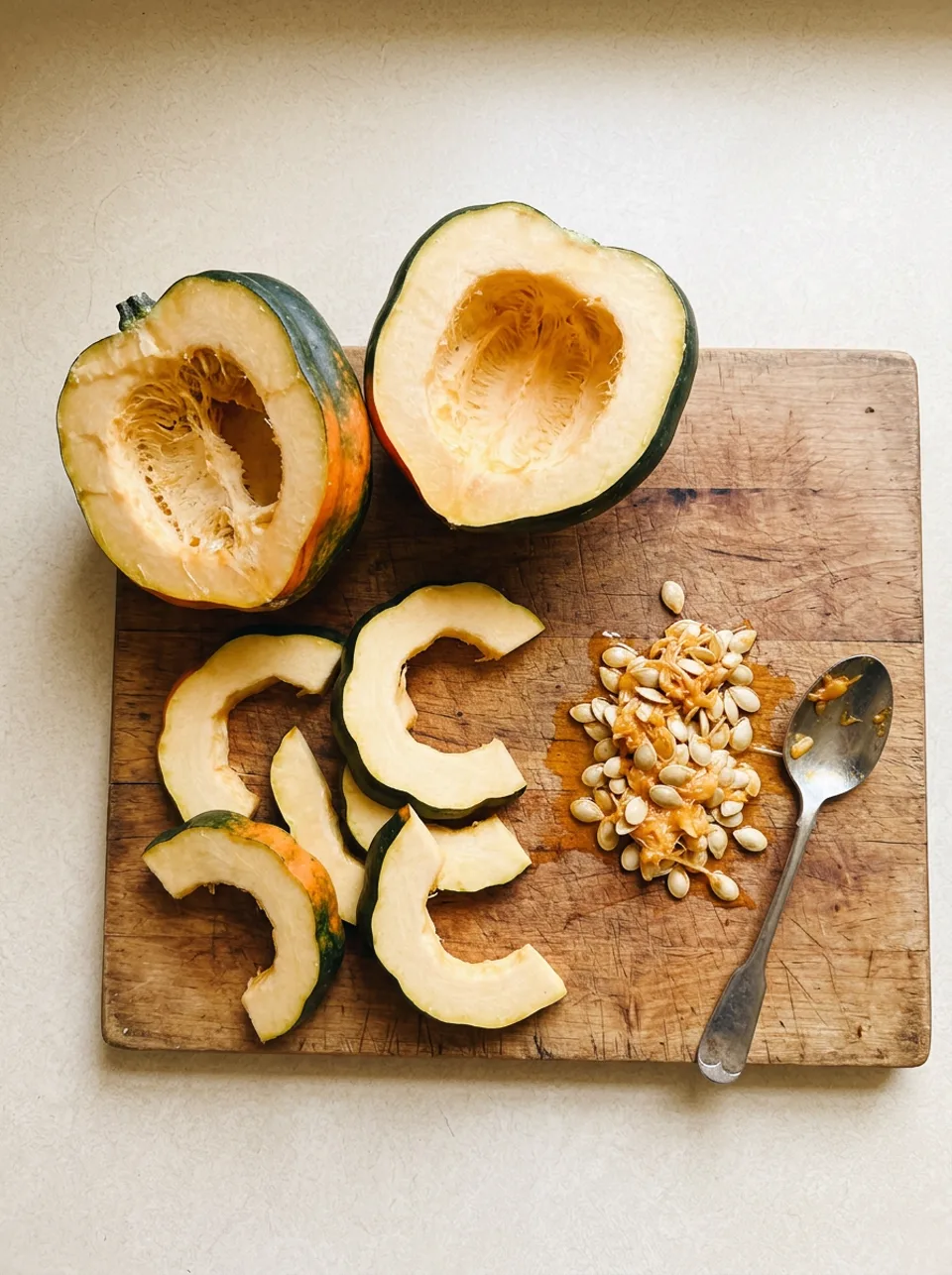
Set each half on its cut face and cut wedges roughly ¾ inch thick. Use the thickest part of the flesh as your guide because the ridges make the outside look uneven. Group the thinner ends together so you can check them early later.
Step 4. Toss with oil and salt and spread out
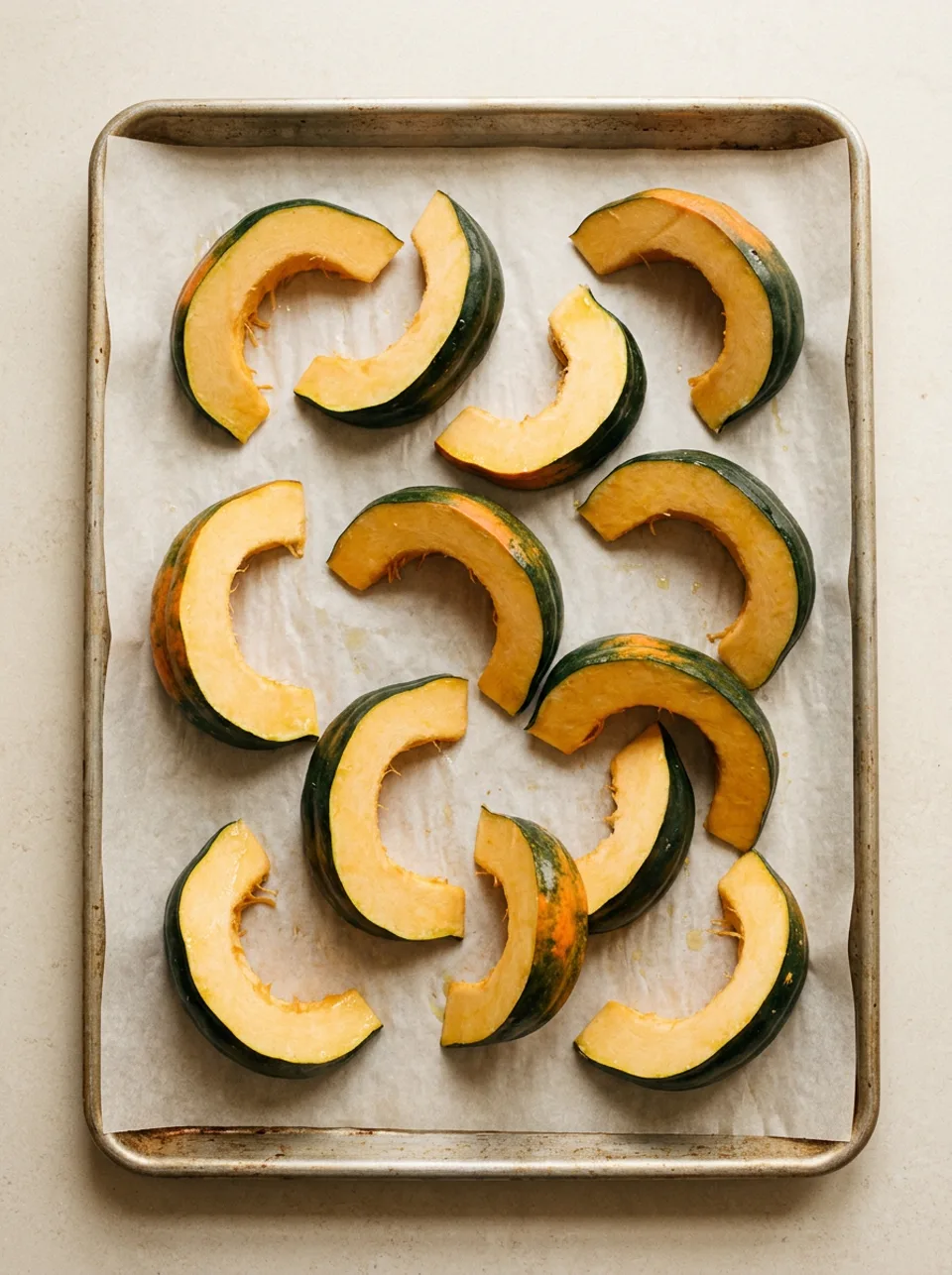
Coat the wedges with the olive oil and fine salt. Lay them in one layer, leaving some room between pieces, and set a broad cut face against the tray. Use two trays if the wedges touch throughout. A crowded pan will trap steam and slow browning.
Step 5. Roast and check the underside before turning
Roast the squash for about 20 minutes. Slide a thin spatula under a wedge from the middle of the pan and look for golden patches on the underside. If it’s still pale, give it a minute or two more. Turn the wedges so the browned faces point up.
Step 6. Stir cinnamon into the maple syrup during the first roast
While the wedges roast, stir the ground cinnamon into the maple syrup in a small bowl. Break up any dark cinnamon clumps with a spoon. Set a pastry brush or a small spoon beside the pan so you can glaze the pieces as soon as you turn them.
Step 7. Brush on the glaze and return the wedges to the oven
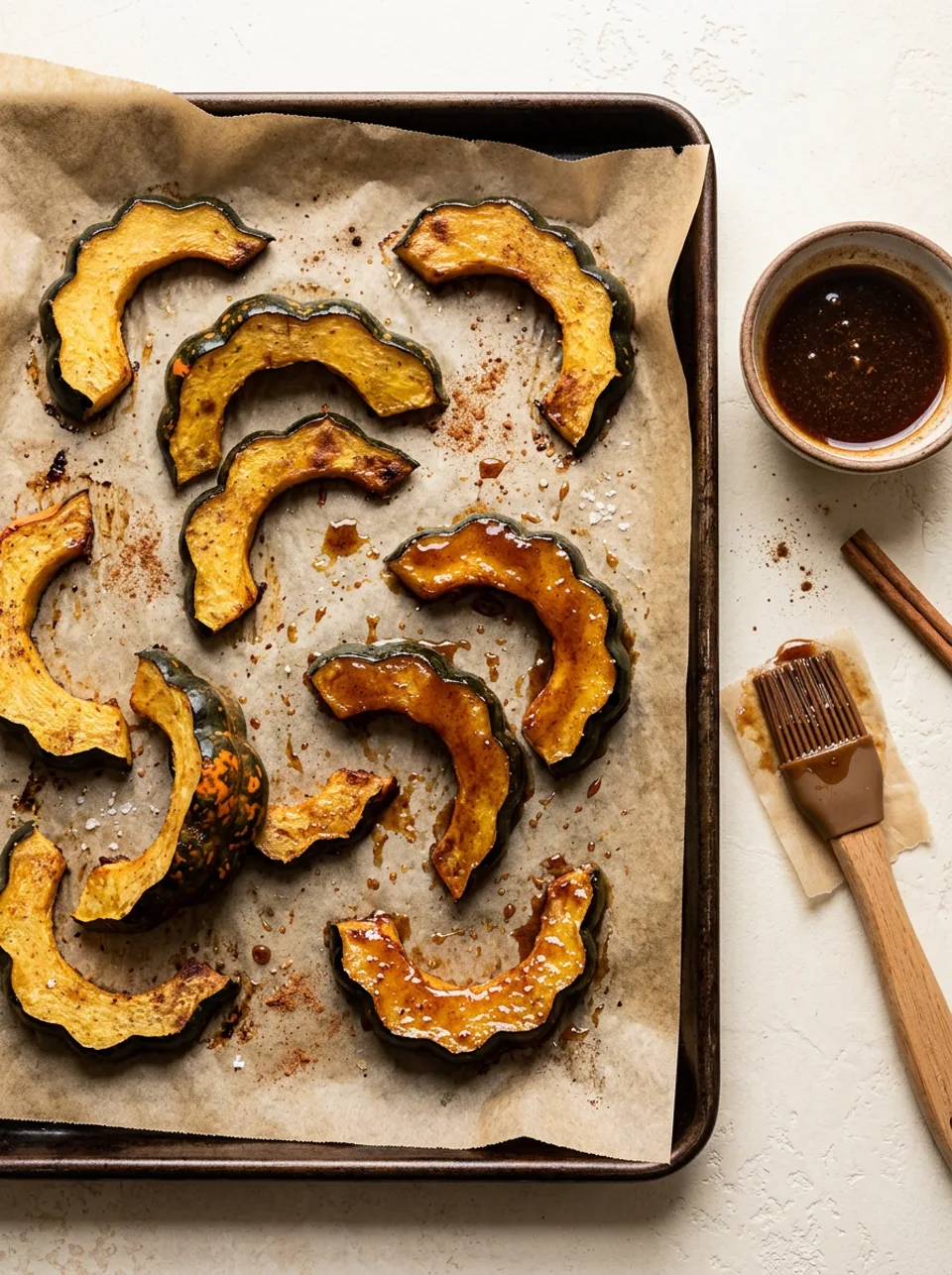
Brush a thin coat over the exposed flesh. Spread any drips on the parchment back onto the thick wedges, so the syrup doesn’t burn in puddles. Return the tray for 10–15 minutes. Check the thinnest pieces early because they may soften before the rest.
Step 8. Check a thick wedge and serve
Push a fork through the thickest part of the flesh. It should give easily. Remove finished thin pieces if the thicker wedges need longer. Transfer to a warm platter with the browned sides up. Serve while the glaze still looks glossy.
Make-Ahead and Serving Tips
You can cut the squash ahead and refrigerate the wedges in a covered container. Blot them dry before tossing with oil and salt. For a holiday dinner, do the first roast while the table is being set, then brush on the maple syrup and finish the wedges closer to serving time.
Arrange the finished wedges on a platter with the browned sides facing up. Maple roasted acorn squash pairs well with roast poultry and savory sides. See the make-ahead Thanksgiving menu for more dishes to serve alongside it.
Give mixed-size wedges different places on the tray
Put slender end wedges where you can lift them without moving the larger pieces. Leave thick wedges in a broad open area so both sides can brown. If the thin ones look dark after the glaze goes on, take them out and keep roasting the thicker wedges until the fork test passes.
Prep ahead and keep the cut surfaces dry
Cut the squash earlier and refrigerate the wedges in a covered container. Blot the cut faces before oiling because they can collect moisture. For cooked leftovers, refrigerate promptly in a shallow covered container within two hours and use within three days. Reheat in a single layer to 165°F (74°C) and watch the glaze closely.
Frequently asked questions
Can I eat acorn squash skin?
Yes, if it is tender enough for your taste. The skin on larger squash can stay chewy. If you prefer, serve the wedges with the rind on and scoop the flesh away with a fork at the table.
Can I use delicata squash?
Yes. Use the same glaze, but start checking the wedges sooner since delicata can soften faster. For more on preparing winter squash, see Mississippi State University Extension’s winter squash guide.
Why did the wedges steam?
A crowded pan or wet cut surfaces can slow browning. Blot the wedges dry and use a single layer with gaps between pieces.
Can I apply the glaze without a pastry brush?
Yes. Use the back of a teaspoon to spread small amounts over the exposed flesh. It’s easier to keep the layer thin when you add a little to each wedge first and then use what remains.
Estimated nutrition
Per serving (1 of 4): 140 kcal, 1.4 g protein, 25.0 g carbohydrates and 5.2 g fat. Calculated using generic USDA FoodData Central values. Assumes 700 g of usable squash after removing the seeds and stems.
Serve with Garlic Herb Roast Turkey Breast. For a holiday meal, use the Make-Ahead Thanksgiving Menu to plan around the oven.
Reader comments