

Estimated read time: 8 min 30 sec
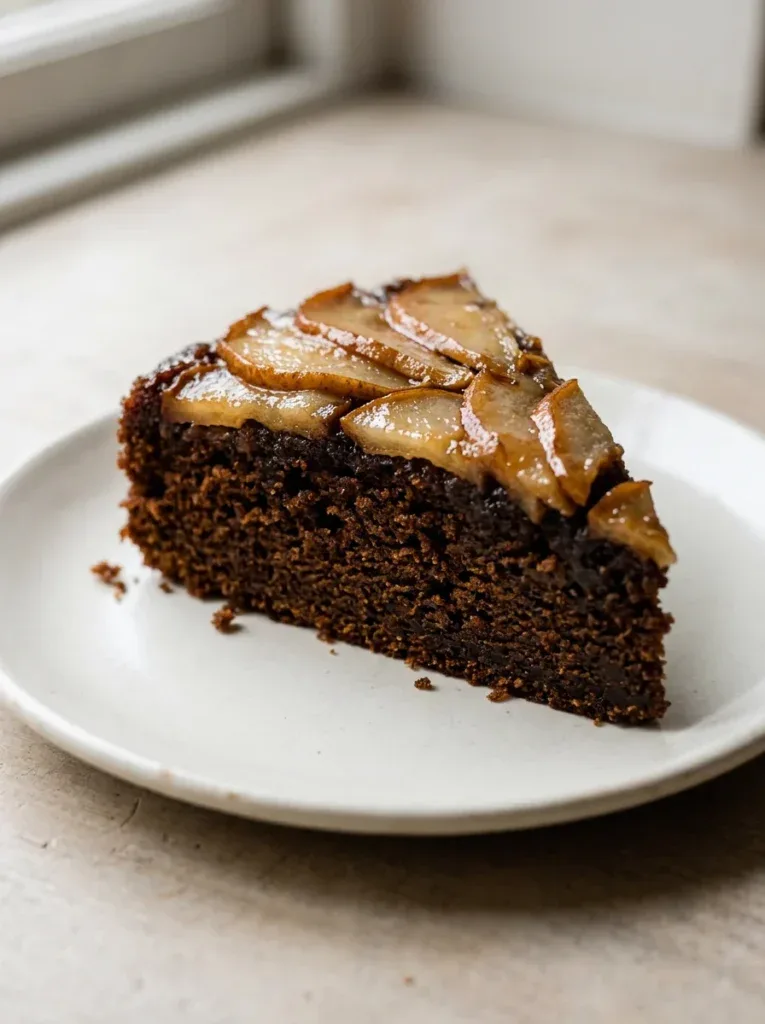
Gingerbread pear upside-down cake has a dark molasses crumb beneath rows of glossy, caramelized pears that bake against butter and brown sugar at the bottom of the pan. In my kitchen, I always drop the thick gingerbread batter in small spoonfuls across the arranged pear slices before connecting them with a spatula so the fruit stays neatly in place and releases cleanly when flipped after a 10-minute rest.
Servings: 9 slices · Prep: 20 minutes · Cook: 45 minutes · Cooling before turning out: 10 minutes · Total: 75 minutes
Cuisine: American-inspired
Arrange the pear layer before you mix
Choose pears firm enough to cut into clean slices without crushing them. Dry-fit the slices in the pan if you want a tidy pattern, then lift them out to prepare the sugar layer. Set out a flat plate wider than the cake pan so it is ready for the turn after baking.
Key Ingredients & Why They Matter
- Firm-ripe pears (2, cored and thinly sliced): Pears that yield slightly at the neck but remain firm through the core soften evenly in the oven without collapsing into mush under the weight of the cake crumb.
- Regular unsulphured molasses (¼ cup): Delivers deep bittersweet caramel flavor, moisture-retaining invert sugars, and natural acidity that keeps the spiced crumb tender without the harsh bitterness of blackstrap.
- Packed brown sugar (½ cup total, divided): Half melts with butter in the bottom of the pan to form a glossy syrup around the pears, while the other half sweetens and softens the gingerbread batter.
- Ground ginger (2 tsp) and ground cinnamon (1 tsp): Provide warm, pungent aromatics that cut through the rich molasses and complement the sweet roasted fruit.
Ingredients
For the pear topping
- 2 tbsp unsalted butter
- ¼ cup packed brown sugar
- 2 firm-ripe pears, cored and thinly sliced
For the gingerbread batter
- 1¼ cups all-purpose flour
- 1 tsp baking powder
- 2 tsp ground ginger
- 1 tsp ground cinnamon
- ¼ tsp fine salt
- 2 tbsp unsalted butter, melted and slightly cooled
- ¼ cup packed brown sugar
- 1 large egg
- ¼ cup regular unsulphured molasses
- ½ cup milk
Instructions
Step 1. Heat the oven and butter the pan
Heat to 350°F (175°C). Grease the sides of an 8-inch square metal pan. Pour two tablespoons of melted butter into the bottom and tilt the pan until the base is coated, reaching into all four corners.
Step 2. Scatter the sugar and overlap the pear slices
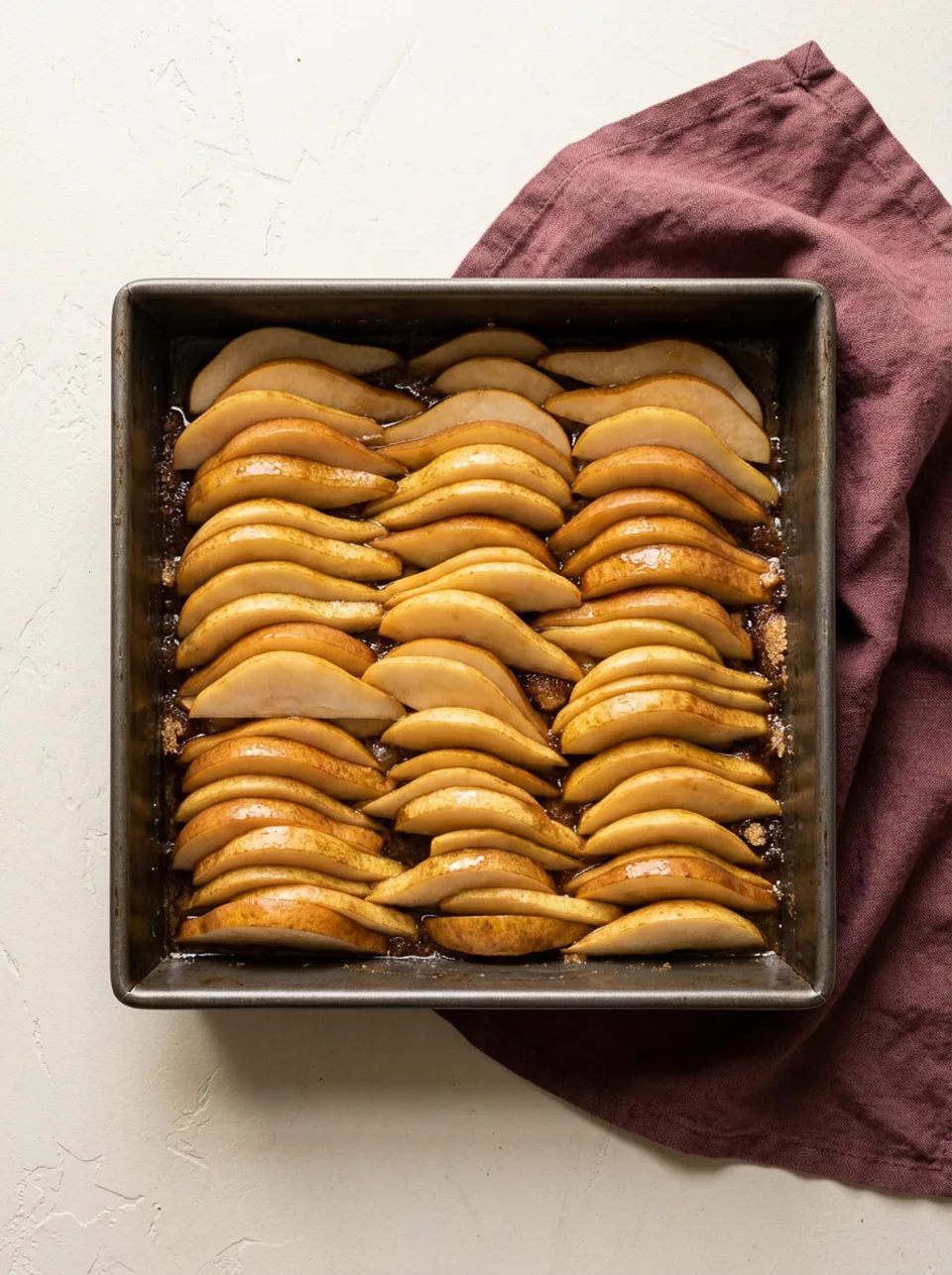
Break up clumps in ¼ cup brown sugar and scatter it over the butter. Core the pears and slice them evenly. Overlap the slices in rows, covering most of the pan. Move any thick end pieces into gaps so the fruit layer sits fairly level.
Step 3. Mix the dry ingredients in one bowl
Whisk the flour, baking powder, ground ginger, cinnamon and salt. Break up any spice clumps before touching the wet batter. An even mix helps prevent small pockets of ginger and baking powder in the finished crumb.
Step 4. Whisk the wet mixture and fold in the flour
Whisk the remaining two tablespoons melted butter and ¼ cup brown sugar with the egg, molasses and milk. Add the dry mix and stir just until the final flour streaks disappear. Run the spatula along the bottom once to catch any dry mixture there.
Step 5. Spoon the batter over the pears
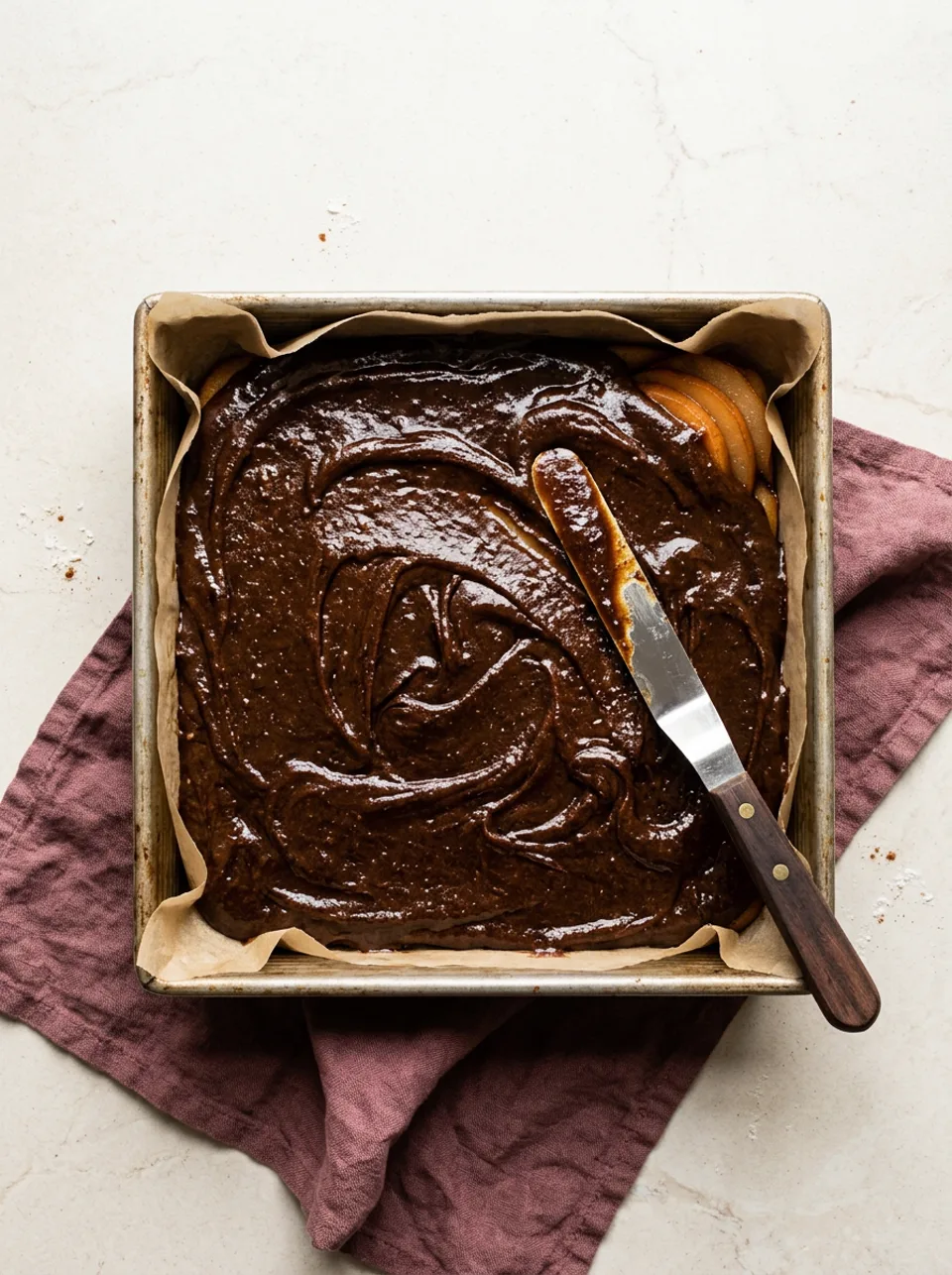
Drop spoonfuls of batter across the fruit layer and use a spatula to connect them. Spread gently to the corners. Pulling all the batter from one side can move the pear slices, so use short strokes where you can see fruit underneath.
Step 6. Bake and test the gingerbread crumb
Bake for 35–45 minutes. Test the center at 35 minutes with a skewer, aiming for the batter just above the fruit. A few damp crumbs are fine. If the skewer is streaked with wet batter, return the pan to the oven and check again after a few minutes.
Step 7. Rest ten minutes and loosen the sides
Set the pan on a rack for ten minutes so the crumb firms up enough to move. Run a thin knife around the sides. Choose a heatproof plate bigger than the pan, preferably with a slight rim to catch any warm syrup.
Step 8. Invert the pan and recover any stuck pears
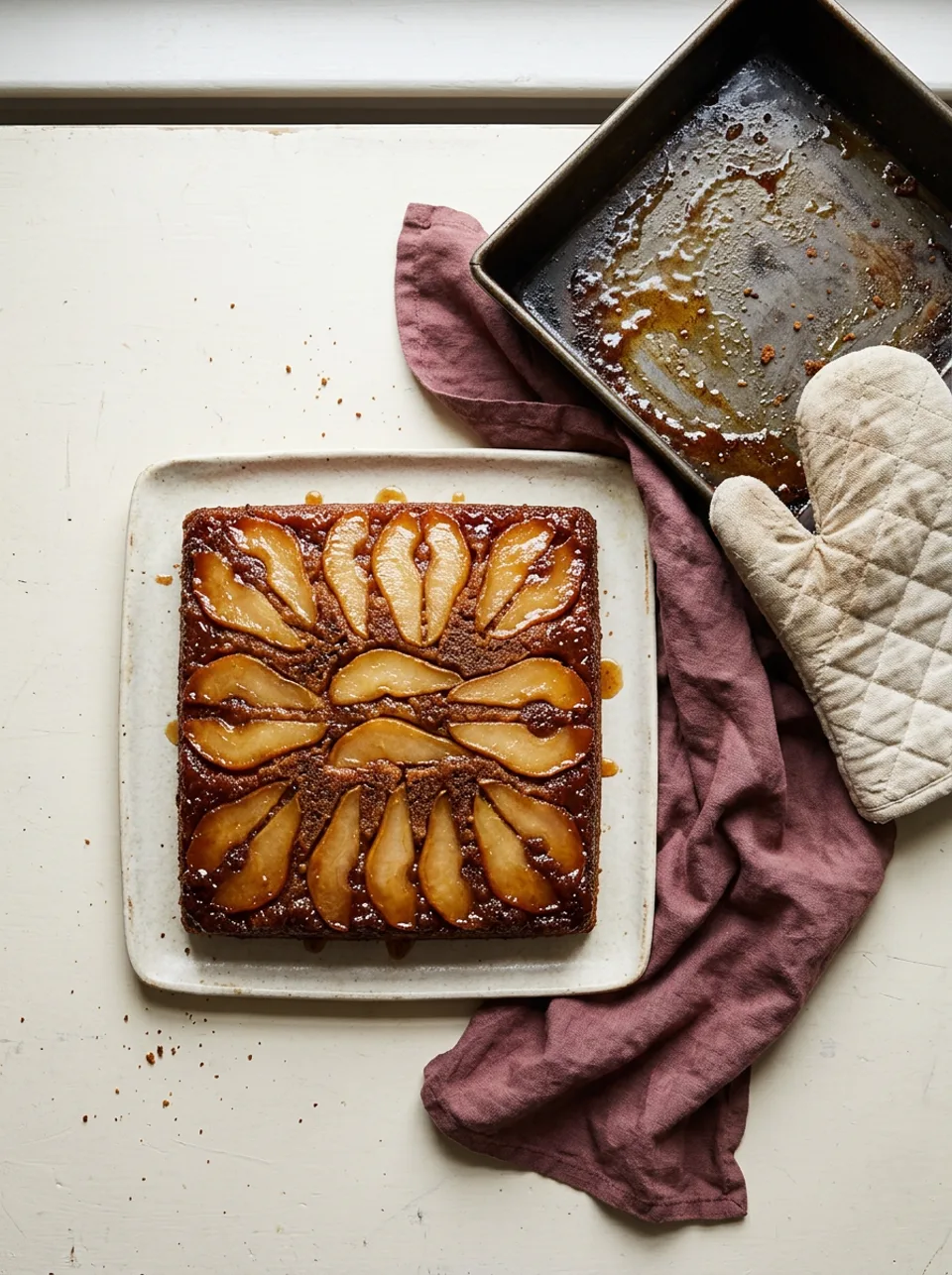
Put on oven mitts and hold the plate firmly against the pan. Flip them together and lift the pan straight up. If a slice sticks, lift it carefully with a spoon and return it to the pattern. Cool a little longer before slicing if the syrup is still very hot.
Tips for Gingerbread Pear Upside-Down Cake
Blot unusually juicy pear slices before arranging them. If the centers of the slices are far firmer than the edges, cut the firmer portions a little thinner so they soften in the same time.
- Choose firm-ripe pears. Look for fruit that gives a little near the stem but is still firm through the middle. Cut the slices about ¼ inch thick so they soften evenly and hold their shape.
- Spread the batter with a light touch. Spoon it over several parts of the fruit layer before smoothing it. This keeps the spatula from dragging the pears into a pile as you work.
- Flip while the topping is warm. The short rest gives the cake time to settle while the sugar layer is still loose. See King Arthur Baking’s pear upside-down cake tips for more on unmolding.
How to Get a Clean Release
Choose a platter wider than the baking pan and set a towel under your work area to catch any drips. With the platter centered, grip both pieces firmly through dry oven mitts and turn them in one motion. Set the platter down before lifting the pan. If syrup pools on the platter, spoon it over the pears before slicing.
Choose fruit that can handle the turn
Use firm-ripe pears that yield a little near the stem. Very soft pieces can break when you overlap them and lose their shape when you turn the pan out. If the pears are different sizes, use the broad slices first and fill the gaps with the narrower pieces.
Check the crumb separately from the fruit layer
A skewer that reaches the pears may come back with clear syrup. Test a second spot a little shallower if you are unsure. Wet batter leaves a thicker coating. Give it more time only when the crumb needs it, since a finished gingerbread can dry out at the corners.
Store the cake pear-side up
Let the cake cool before covering it so condensation doesn’t loosen the topping. Refrigerate covered if making it earlier and set out only the slices you plan to serve. If reheating a slice, use gentle heat so the molasses crumb stays soft and the pear layer doesn’t slide.
Frequently asked questions
Can I use blackstrap molasses?
Choose regular unsulphured molasses for this cake. Blackstrap has a stronger, more bitter flavor that can dominate the pears and spices.
What if a pear slice sticks?
Slip a thin spatula under the slice and return it to its spot on the cake while the topping is still warm. Spoon any loose syrup in the pan over the pear layer.
Can I make gingerbread pear upside-down cake ahead?
Yes. Flip it after the 10-minute rest, then let it cool completely before covering. If you want to serve it warm later, warm individual slices gently before adding whipped cream or ice cream.
Can I use a glass pan?
The cake was written for a metal pan. In glass, the center and corners can heat at different rates, so use the skewer and the set surface as your checks instead of relying on the original timing alone.
Estimated nutrition
Per serving (1 of 9): 220 kcal, 3.1 g protein, 38.9 g carbohydrates and 6.3 g fat. Calculated using generic USDA FoodData Central values. Assumes 350 g of cored pears and whole milk.
Let the pear layer settle before cutting the cake so the fruit stays on each slice. If you have extra pears, save them for Maple Cinnamon Roasted Pears, which uses the fruit without a cake batter.
Reader comments