

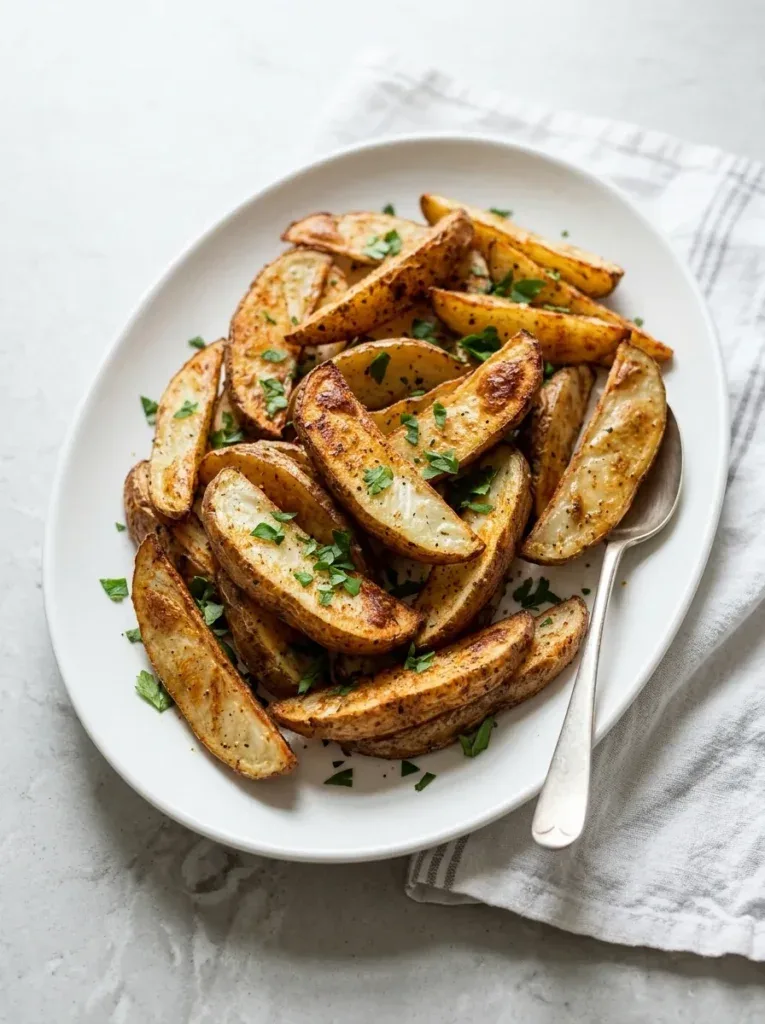
In my kitchen, I always rinse cut potato wedges briefly and pat their flat faces bone-dry with a clean tea towel before tossing them with olive oil, paprika, and garlic powder so they roast up crisp on the outside with fluffy centers. Leaving the skins on saves peeling and gives the wedges a little more structure, while the light spice coating brings savory flavor without hiding the potatoes.
The most useful trick is giving each wedge enough space on the tray. Potatoes piled on top of one another trap steam; potatoes spread out with a cut side against the metal have a better chance to brown. This recipe explains the cuts, drying and turning so you know what to look for along the way.
Estimated read time: 8 min
Serves: 4 as a side · Prep: 15 minutes · Cook: 35–45 minutes · Total: 50–60 minutes
Key Ingredients & Why They Matter
- Russet Potatoes (900 g / about 2 lb): High-starch, low-moisture russets gelatinize inside into a light, fluffy interior while their dried cut surfaces crisp firmly against a hot metal baking sheet.
- Olive Oil (2 tablespoons / 30 ml): Forms a thin heat-conducting film over the dried wedges so the surface starch blisters and browns evenly at 220°C (425°F).
- Sweet Paprika (1 teaspoon): Dissolves into the olive oil to give the crust warm color and mild pepper sweetness without overpowering the potato flavor.
- Garlic Powder (1 teaspoon): Adheres evenly across every wedge and withstands a 35 to 45 minute roast without scorching the way minced fresh garlic does on a hot sheet pan.
Ingredients
- 900 g (about 2 lb) russet potatoes, scrubbed and dried
- 2 tablespoons (30 ml) olive oil
- 1 teaspoon sweet paprika
- 1 teaspoon garlic powder
- ¾ teaspoon fine salt, plus more to taste after baking
- ¼ teaspoon freshly ground black pepper
- 1 tablespoon chopped fresh parsley, optional, to finish
Choosing potatoes: Look for firm potatoes of similar size. Russets give a floury interior; Yukon Gold potatoes work too, with a creamier center. Avoid potatoes with green skin or a bitter taste.
Equipment: A large rimmed metal baking sheet, chopping board, sharp knife, large bowl, clean tea towel and a thin spatula. Use two trays if the wedges cannot sit in a single spaced layer.
Instructions
Follow these seven steps for evenly roasted wedges.
1. Heat the oven
Heat the oven to 220°C / 425°F conventional, or 200°C fan. Put a rack in the middle. Lightly oil a large rimmed metal tray using a little of the measured oil. A metal tray helps the cut surfaces brown; do not use a glass dish for this method.
2. Cut even wedges
Cut each potato in half lengthways, then put each half cut-side down on the board. Cut it lengthways into three or four wedges, depending on its size. Aim for pieces about 2 cm (¾ inch) thick at the widest part. Keeping the sizes similar matters more than making the same number from every potato.
3. Rinse briefly and dry thoroughly
Rinse the wedges under cold water to remove loose surface starch. Drain, then pat them very dry with a clean tea towel. Pay attention to the cut surfaces: water left on them will need to evaporate before they can brown. This is a brief rinse, not a long soak, so it fits within the preparation time.
4. Coat with oil and seasoning
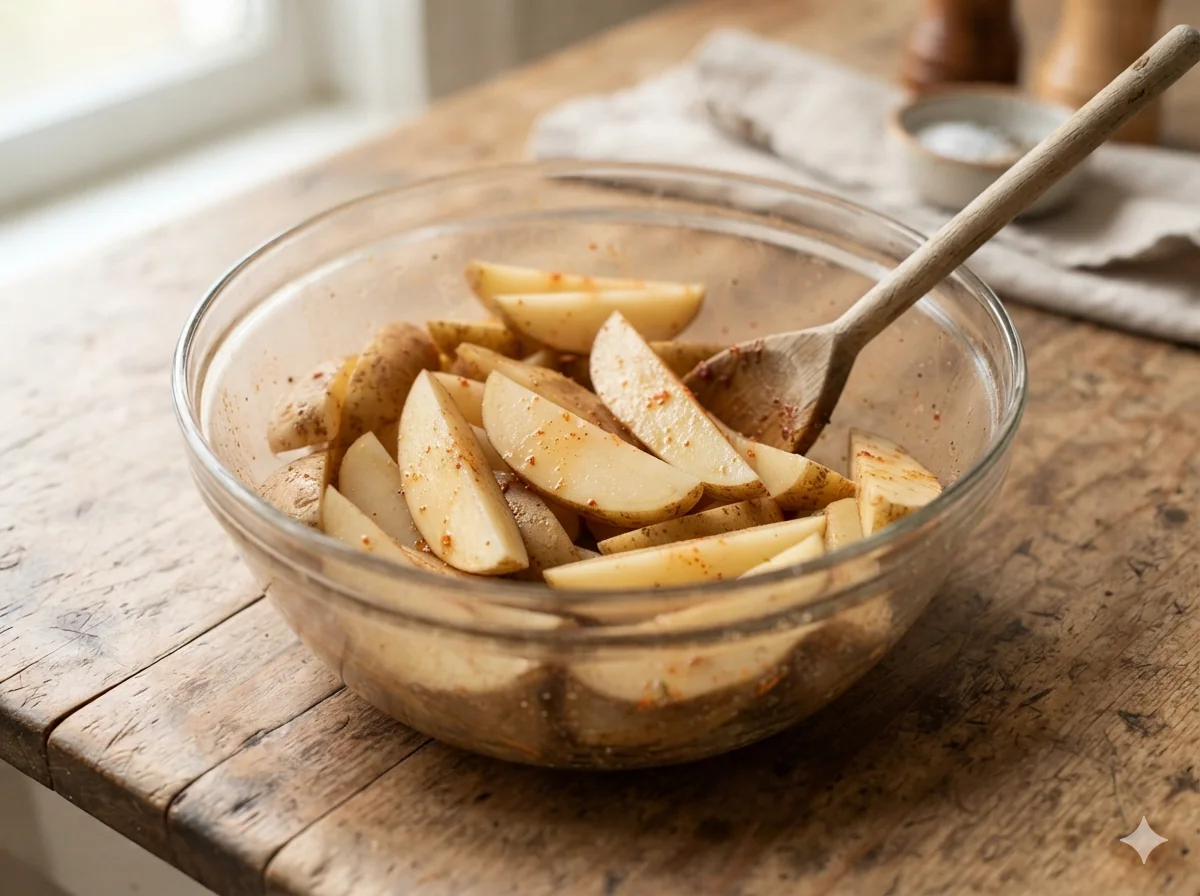
Put the dry wedges in a large bowl. Add the remaining olive oil, paprika, garlic powder, salt and pepper. Toss until each wedge has a thin, even coating. There should not be a pool of oil at the bottom. Garlic powder is useful here because small pieces of fresh garlic can scorch during the long bake.
5. Spread out and roast
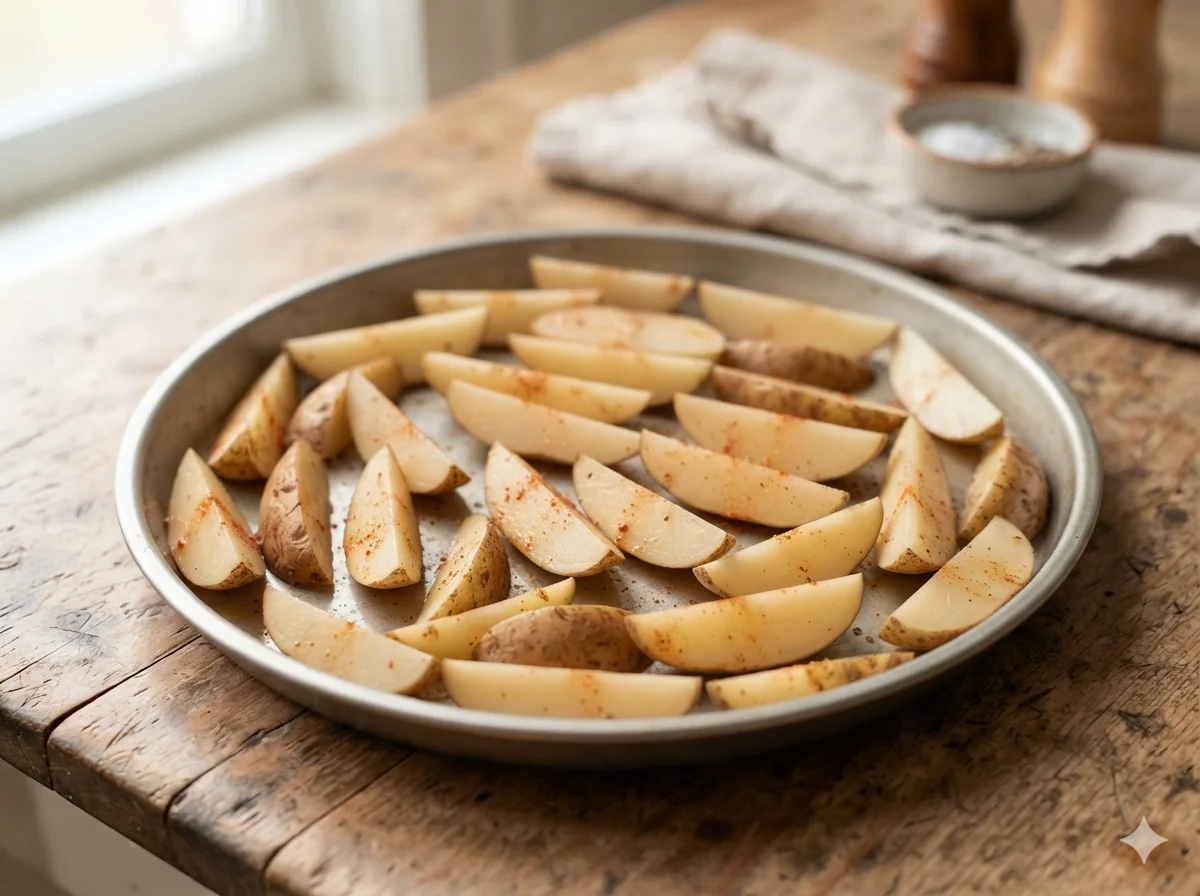
Arrange the wedges on the tray with one cut side facing down. Leave small gaps between them. Roast for 20–25 minutes without stirring. Check a wedge underneath: it should be developing a golden crust and begin to release from the tray. If it sticks firmly, give it another few minutes before trying again with a thin spatula.
6. Turn and finish baking
Turn the wedges onto their other cut side. Roast for another 15–20 minutes, until the cut surfaces are golden and a fork slides easily into the thickest center. Start checking earlier for smaller wedges. The total bake is usually 35–45 minutes, but the thickness of the potatoes and your oven will affect it. If the seasoning darkens too quickly, lower the oven by about 10–15°C and let the centers finish cooking.
7. Season and serve
Taste a wedge and add a little more salt if needed. Scatter over the optional parsley and serve promptly. Leave the wedges uncovered while you bring the meal together; covering a hot pile traps steam and softens the crust.
Tips for crisp edges and fluffy centers
- Dry before seasoning. Oil coats a dry surface more evenly than a wet one.
- Use enough tray space. Two uncrowded trays are better than one overflowing tray. If using two racks, swap their positions when you turn the potatoes.
- Let the first side brown. Repeated stirring can break the potatoes and interrupt crust formation.
- Check thickness before timing. A thin wedge may be ready while a very large one is still firm in the middle.
- Season with restraint. A heavy layer of spices can burn before the potato cooks. Add extra salt at the end if it needs it.
How to store crispy oven potato wedges
Refrigerate leftover wedges in a shallow covered container within 2 hours and use within 3–4 days. Reheat in a single layer on a metal tray until hot throughout. The edges may firm up again, but reheated wedges will not have quite the same texture as a fresh batch.
See FoodSafety.gov storage guidance. Refrigerate sooner in very hot conditions.
FAQs
Do I need to peel the potatoes?
No. Scrub them well and remove any damaged areas. The skins help the wedges hold their shape. If you prefer peeled wedges, use the same method and handle them gently when turning.
Do the potatoes need a long soak?
This version uses a quick rinse followed by thorough drying. A long soak is not part of the recipe or its timing. The drying, spacing and contact with the hot tray are the main points to focus on here.
Why are my wedges soft instead of crisp?
Check whether the tray was crowded, the potatoes were still wet, or the oven was not fully heated. Also check the centers: potatoes need enough time to become tender. Wedges will soften as they stand, so serve them soon after roasting.
Can I use smoked paprika?
Yes. Replace the sweet paprika with the same amount of smoked paprika for a smokier flavor. For a milder result, use half a teaspoon of smoked paprika and half a teaspoon of sweet paprika.
Can I prepare them in advance?
For the crispest result, bake close to serving time. You can measure the dry seasoning earlier and scrub the potatoes ahead. If reheating cooked wedges, spread them on a metal tray and heat in a hot oven until hot throughout and the edges have firmed up again. A microwave warms them but will not restore the same crisp surface.
What can I serve with potato wedges?
Try them with our Crispy Homemade Chicken Burgers, alongside a salad, or with a simple yogurt dip. Serve dips separately so the wedges stay crisp. For a drink alongside burger night, try our Lychee Sparkle Fizz.
A simple side worth making well
Good wedges do not need a long ingredient list. Cut them evenly, dry them carefully and give them room on the tray. Once you know the color and texture you are looking for, it is easier to adjust the final few minutes to your own oven.
Have a seasoning combination you enjoy or a question about the method? Share it in the comments below.

Reader comments