

Estimated read time: 6 min 45 sec
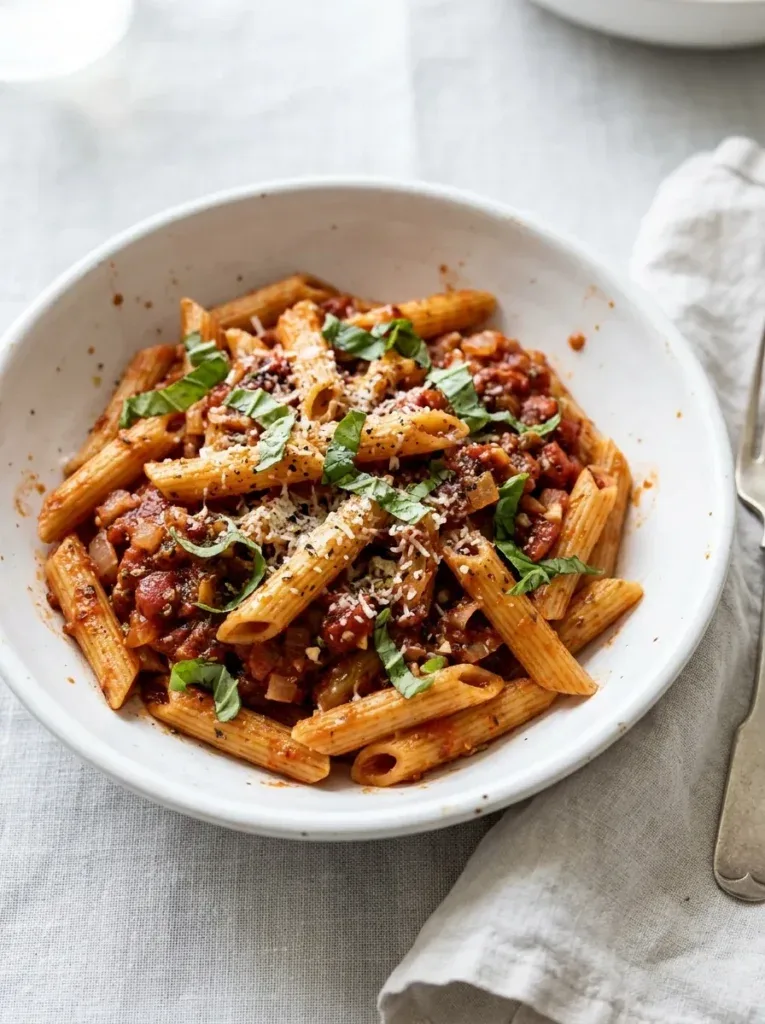
When I make tomato basil one-pot pasta on a busy night, I cook the dried penne directly in the simmering tomato and stock base so the starch released from the tubes naturally emulsifies the sauce and makes it cling to every ridge. Canned chopped tomatoes, onion, garlic and oregano make the base, while torn basil goes in off the heat at the end for a fresher flavor.
Watch the level of the liquid as you cook. A wide pan loses water more quickly and penne varies by brand. Take out one piece to check its center before deciding whether the pan needs more water or just a few minutes uncovered.
Serves: 3 · Prep: 10 minutes · Cook: 20 minutes · Total: 32 minutes
Cuisine: Italian-inspired
Key Ingredients & Why They Matter
- Dried Penne (250 g): Simmering dry durum wheat pasta directly in the sauce releases surface starch into the liquid, thickening the broth into a glossy coating without needing cream or a separate roux.
- Canned Chopped Tomatoes (400 g): Provides both the acidic tomato solids and packing juices that balance the savory stock and keep the pasta from sticking as the liquid reduces.
- Hot Vegetable Stock (600 ml, plus up to 150 ml extra hot water): Starting with hot stock brings the pot right back to a simmer as soon as the dry penne goes in, preventing the outer starch layer from turning gummy while the centers hydrate.
- Fresh Basil Leaves (a small handful, torn): Stirred in after the pan comes off the burner, the delicate aromatic oils warm gently without oxidizing or losing their bright herbal scent.
Ingredients
- 250 g dried penne
- 1 tablespoon olive oil
- 1 small onion, finely diced
- 2 garlic cloves, finely chopped
- 1 can chopped tomatoes, 400 g
- 600 ml hot vegetable stock, plus up to 150 ml extra hot water as needed
- 1 teaspoon dried oregano
- ¼ teaspoon fine salt, only if needed
- ¼ teaspoon black pepper
- A small handful fresh basil leaves, torn
- Optional: grated Parmesan to serve
Use a wide saucepan or deep skillet and regular dried penne. Heat the 600 ml vegetable stock while you dice the onion. Keep up to 150 ml extra hot water nearby and add only what the pan needs. The timing includes a brief rest after cooking.
Instructions
Step 1. Soften the onion and garlic
Heat the oil over medium heat. Add the diced onion and stir for about 5 minutes, until it becomes translucent and soft. If the edges turn dark early, lower the heat. Add the garlic and stir for about 30 seconds, just until fragrant.
Step 2. Bring the tomato base to a simmer
Pour in the chopped tomatoes with their juices and the 600 ml hot stock. Add oregano and black pepper. Stir across the bottom to loosen the onion and bring the pot to a steady simmer. Taste before adding any of the measured salt because some stocks are already quite salty.
Step 3. Add the penne and stir from the bottom
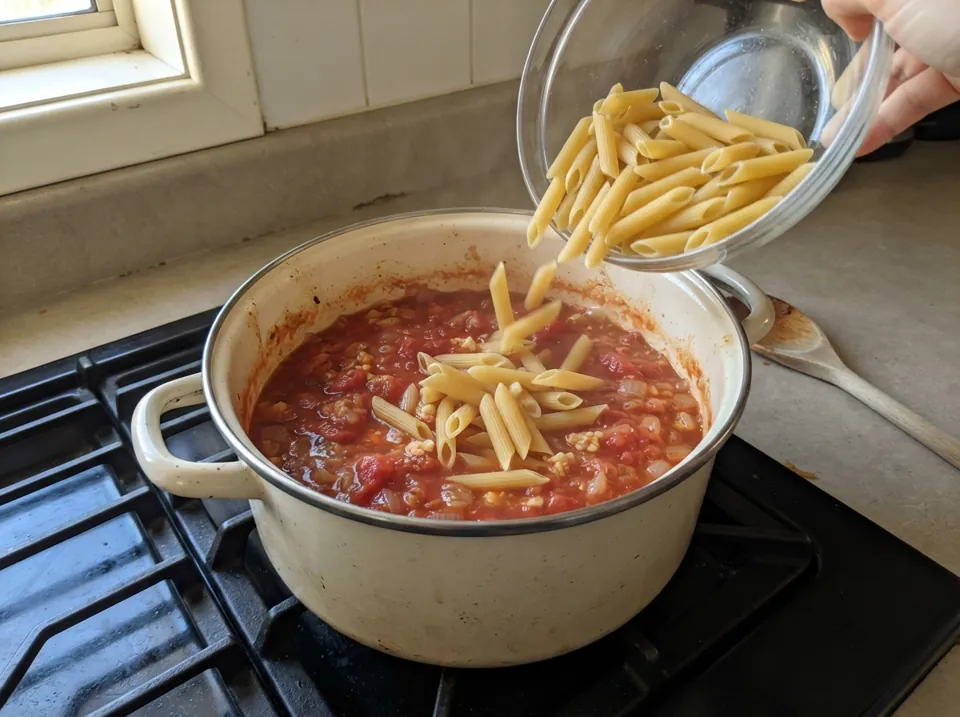
Stir the dry penne into the sauce. Press exposed tubes down lightly and bring the pot back to a simmer. Stir often for the first few minutes so the pasta does not settle into a layer on the bottom. Cook uncovered or partly covered if the liquid is disappearing quickly.
Step 4. Taste a tube and check the sauce
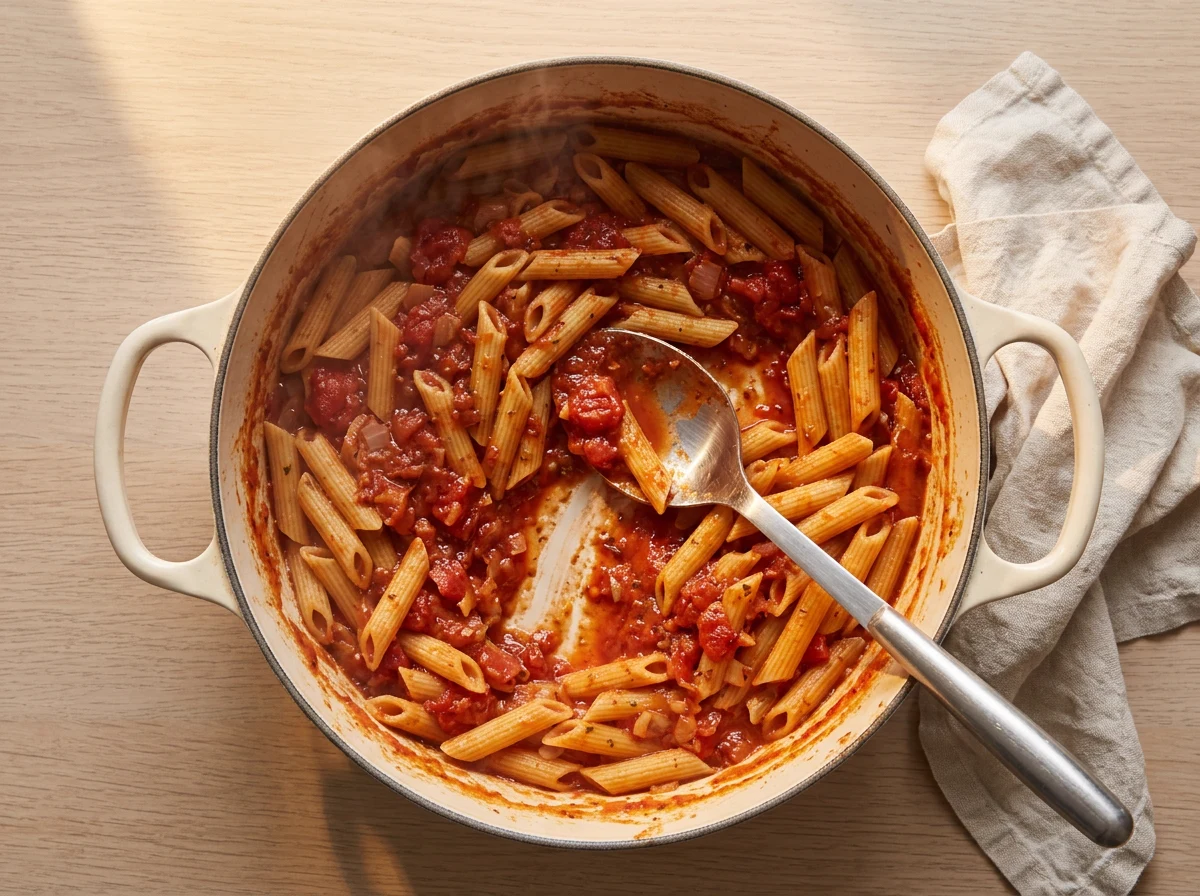
Start tasting near the lower end of the packet time, often at 10–12 minutes. If the pasta is still hard in the middle and the pot looks dry, add hot water in small splashes. If it is nearly tender but the sauce is thin, simmer uncovered briefly. Drag a spoon through the pan. As it finishes, the sauce should lightly cling and flow slowly back into the trail.
Step 5. Add the basil and rest off the heat
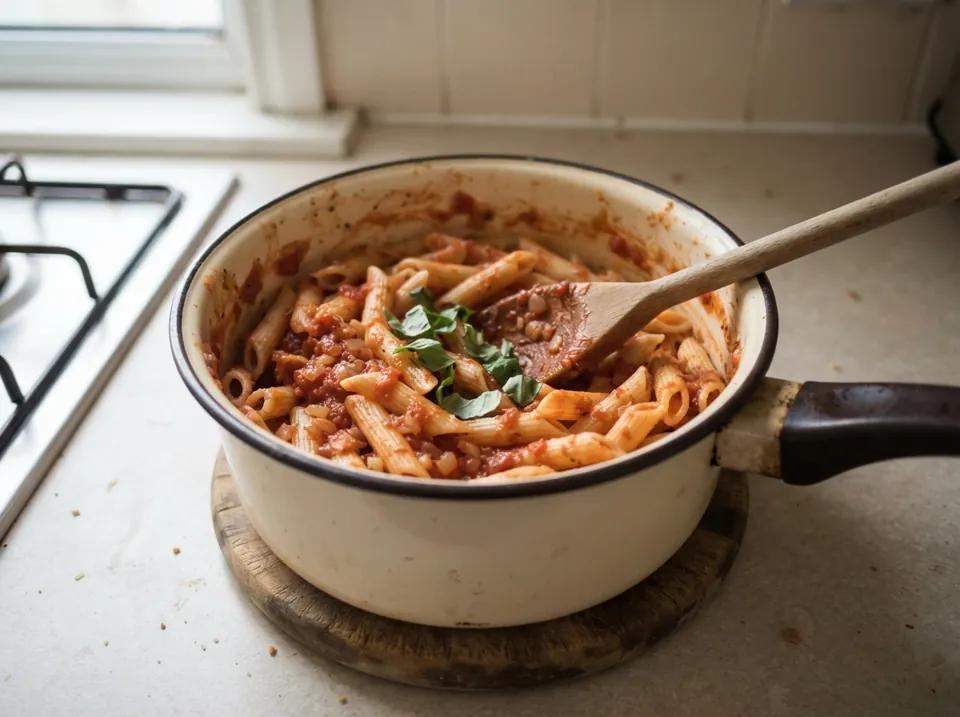
When the penne is tender with a little bite and the sauce coats it, take the pan off the heat. Stir in the torn basil and rest for 2 minutes. Check the thickness again before adding water since the starch will continue to set. Taste a coated piece of pasta and add salt or optional Parmesan if needed.
Adjust for your pan and stove
A pan that stays wet around the rim but dries underneath the pasta needs a good stir and gentler heat. If the sauce is reducing before the pasta softens, use a lid slightly ajar and check again in a minute or two. If the sauce starts to catch, stir from the base and add a small splash of hot water immediately.
Know when the penne needs water
If a tube bends but still has a hard core, the pasta needs more cooking. Add a splash of hot water only if there is very little liquid in the pan. If the penne is ready and a little sauce remains around it, give it the two-minute rest before reducing further.
Save a portion and reheat it
Refrigerate leftovers within 2 hours in a shallow covered container and use within 3 days. Add a spoonful of water when reheating, since the pasta takes up sauce in the refrigerator. Heat to 165°F (74°C), stirring so the tubes heat evenly, and add fresh basil at the table. FoodSafety.gov reheating guidance
Frequently asked questions
Can I substitute fusilli or rigatoni?
Yes. Keep the same dry weight and check the packet for a starting time. If the different shape needs longer, keep the spare hot water handy and start tasting a little before the suggested time.
Can I use fresh pasta?
Fresh pasta cooks much faster and usually needs less liquid. Base the timing on the packet and reduce the tomato sauce separately before adding it so there is less water to cook off.
When should I add spinach or peas?
Add a small handful of spinach when the penne is nearly done and stir until wilted. If using frozen peas, give them enough time to cook according to the package before you take the pot off the heat.
Estimated nutrition
395 kcal, 12.8 g protein, 6.3 g fat and 71.9 g carbohydrates per serving. The estimate excludes optional Parmesan.
Serving ideas
Serve warm with a roasted vegetable side. Roasted Broccoli with Lemon Tahini Sauce
Reader comments