

Estimated read time: 6 min 45 sec
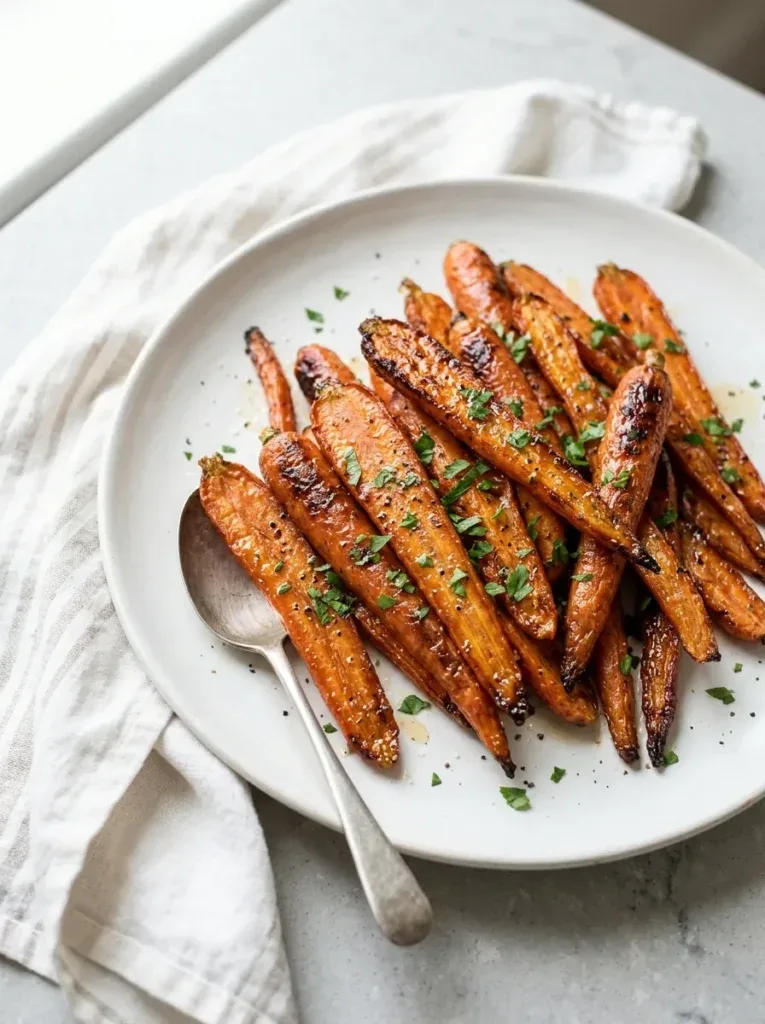
When I make honey roasted carrots in my kitchen, I always roast the batons in olive oil first, then bring in the honey and lemon only for the final stretch so the carrots develop tender centers, browned cut sides, and a glossy glaze that clings without scorching. The carrots get time to brown on the hot pan before the sugar needs your attention.
Cutting the carrots by thickness matters more than making them all the same length. A thick shoulder takes longer to cook than a narrow tip. The fork test near the end tells you when the carrots are ready for glaze, even when the carrots or oven behave differently from one batch to the next.
Serves: 4 as a side · Prep: 10 minutes · Cook: 35 minutes · Total: 45 minutes
Cuisine: International
Key Ingredients & Why They Matter
- Carrots (700 g): Cutting the widest sections down to uniform 1.5 cm batons ensures the dense root fibers soften at the same rate while giving you flat cut surfaces that caramelize against the hot sheet pan.
- Olive Oil (1½ tablespoons): Coating the carrots in fat before any sugar hits the pan conducts high dry heat evenly across the batons and prevents moisture loss while the natural sugars brown.
- Honey (1 tablespoon): Added during the final 5 to 10 minutes, its fructose and glucose rapidly reduce into a tacky amber glaze that coats the roasted carrots without turning bitter on the hot metal.
- Lemon Juice (1 teaspoon): Whisked directly into the honey, the citric acid loosens the thick sweetener for even drizzling and cuts through the rich sweetness with a clean, bright finish.
Ingredients
- 700 g carrots, scrubbed or peeled
- 1½ tablespoons olive oil
- ½ teaspoon fine salt
- ¼ teaspoon black pepper
- 1 tablespoon honey
- 1 teaspoon lemon juice
- 1 tablespoon chopped parsley, optional
Use a large rimmed metal sheet pan. Carrots of mixed sizes work as long as you cut the widest portions down to about 1.5 cm (roughly ½ inch) thick. Honey and lemon go in together at the end. Chop the parsley while the carrots roast if you plan to use it.
Instructions
Step 1. Heat the oven and trim the carrots
Heat the oven to 425°F (220°C), or 200°C fan. Scrub or peel the carrots and pat them dry. Cut them crosswise into manageable lengths, then halve or quarter thick sections lengthwise. Leave skinny tips a little longer or group them in the middle of the pan so you can lift them off early if needed.
Step 2. Season and spread them across the pan
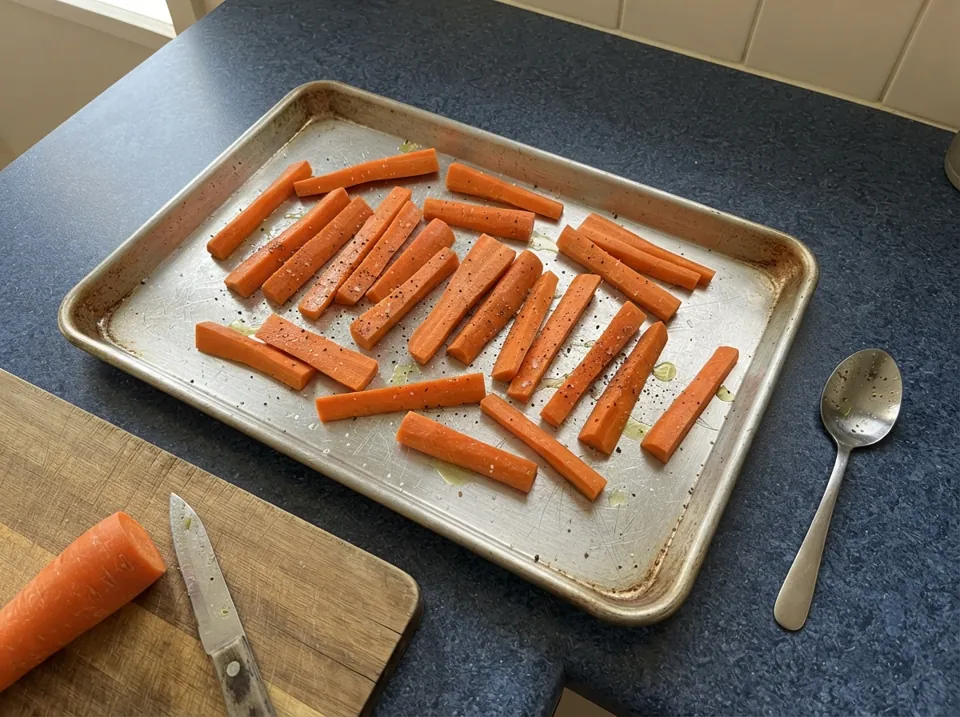
Toss the carrots with the olive oil, salt and pepper. Spread them with small gaps and place a cut side against the pan where possible. Use a second pan if you can’t see the metal between the pieces. Steam needs somewhere to go before the cut sides can color.
Step 3. Roast until almost tender
Roast for 20–25 minutes. Turn the batons after about 15 minutes and shift any quickly browning pieces away from the edges. Check one of the thickest pieces near the middle of the tray. A fork should enter with just a little resistance. If the inside still feels hard, roast a few minutes longer before adding the glaze.
Step 4. Add the honey and lemon glaze
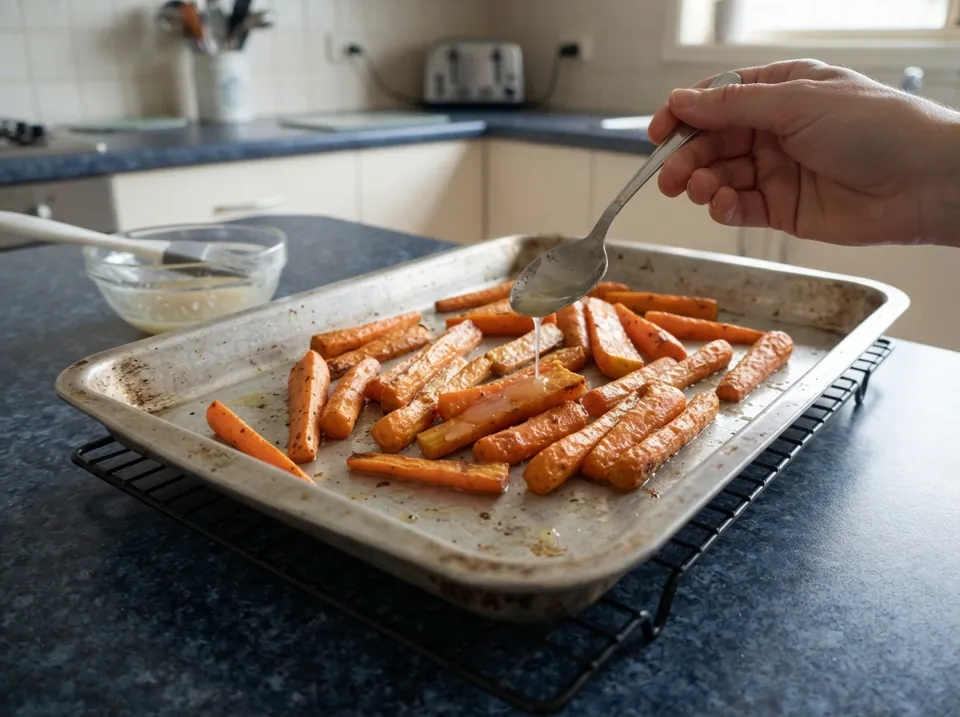
Stir the honey and lemon juice in a small bowl. Drizzle it over the hot carrots in a thin stream, then turn them with a spatula until they shine. Spread them out again and return the pan to the oven for 5–10 minutes. Check at 5 minutes, especially with a dark tray. Look for light bubbling and a thin coating around the carrots.
Step 5. Check the thickest baton and serve
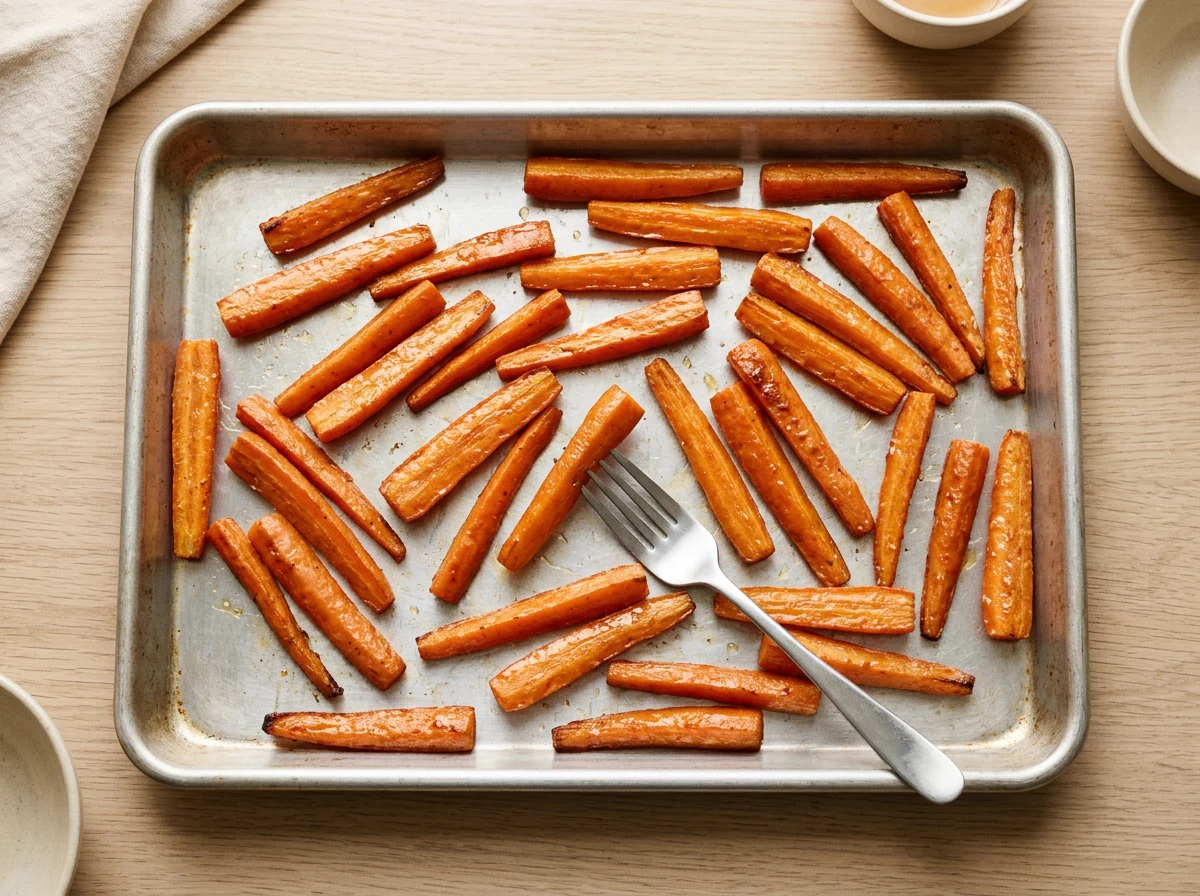
Take the tray out when a fork slides comfortably through the thickest carrot and the edges are amber. Lift off any skinny pieces that finish sooner. Transfer the carrots promptly, scraping up the light glaze that comes away easily. Taste for salt and scatter over optional parsley. Serve warm.
Fix pale carrots or glaze that darkens too fast
If the carrots are pale and sitting in liquid, spread them out or use a second tray, then give them more time before glazing. If the glaze darkens quickly and the fork already goes through, pull the tray out. Add a few drops of fresh lemon at the table for brightness if the finish tastes very sweet.
Get an even coat with a tablespoon of honey
The glaze stretches further if you drizzle it as you turn the carrots. If most landed in one spot, slide the carrots into that area for a moment and toss them before spreading them back out. Keeping the coating thin also leaves the browned sides visible. A pool at the bottom can darken well before the last carrot is done.
Cut ahead and reheat leftovers
Cut and refrigerate the carrots in a covered container up to a day ahead. Pat them dry before oiling. Refrigerate cooked carrots within 2 hours and use within 3 days. Reheat in a single layer in the oven or a skillet to 165°F (74°C), checking frequently so the sticky edges don’t burn. FoodSafety.gov reheating guidance
Frequently asked questions
Can I use baby carrots?
Yes. Dry them well and halve thicker ones lengthwise. They may finish early, so start testing the thickest pieces before the full first roast is up.
Can I make these with maple syrup?
Use the same volume and add it late with the lemon. Maple syrup is thinner, so turn the carrots well and keep the coating shallow. Check early for dark spots as it reduces.
Can I double the recipe?
Use two trays with room around the carrots. Swap the racks and turn the trays partway through cooking if the oven browns them unevenly. Glaze each tray once its carrots are nearly tender.
Estimated nutrition
135 kcal, 1.6 g protein, 5.5 g fat and 21.2 g carbohydrates per serving. Estimate excludes the optional parsley.
Serving ideas
Serve the carrots beside a savory main with enough room on the plate for their lemony glaze. Honey Mustard Glazed Ham
Reader comments