

Estimated read time: 7 min
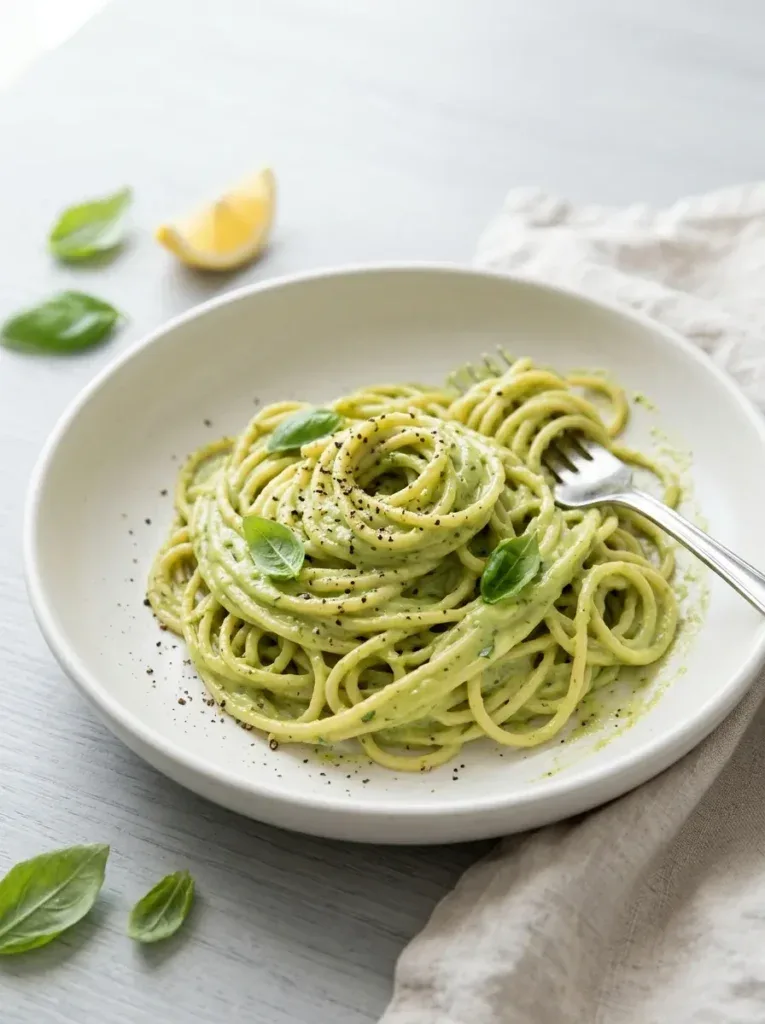
When I make creamy avocado pasta in my kitchen, I always set a mug by the stove to catch the starchy cooking water before draining, because this dish brings together hot spaghetti and a cool, lemony avocado sauce in the time it takes to cook the noodles. Ripe avocado provides the body. Just a few spoonfuls of cooking water help the sauce coat the strands without needing cream. Fresh basil adds a sweet herbal note alongside the raw garlic.
Start the sauce while the spaghetti cooks. Have a mug handy so you can scoop out the pasta water before draining. The important texture check comes after blending: the sauce should spread easily from a spoon, then cling to the warm noodles as you toss.
Serves: 2 · Prep: 10 minutes · Cook: 12 minutes · Total: 22 minutes
Cuisine: Italian-inspired
Key Ingredients & Why They Matter
- Large ripe avocado (about 150 g flesh): Rich in monounsaturated fats and soft fiber, ripe avocado blends into a naturally thick emulsion that mimics dairy cream without cooking.
- Reserved pasta water (about 100 ml, used as needed): Dissolved wheat starch in the hot cooking water binds the avocado fat and olive oil into a glossy sauce that clings to the spaghetti strands instead of clumping.
- Lemon juice (1 tablespoon): Lowers the pH of the blended avocado to slow enzymatic browning while cutting through the rich fats with bright acidity.
- Small garlic clove (1 clove) & fresh basil leaves (8 leaves): Blended raw into the cool sauce, their volatile allicin and sweet herbal oils stay punchy against the warm noodles.
Ingredients
- 180 g dried spaghetti
- 1 large ripe avocado, about 150 g flesh
- 1 tablespoon olive oil
- 1 tablespoon lemon juice, plus more to taste
- 1 small garlic clove
- 8 fresh basil leaves
- ¼ teaspoon fine salt, plus salt for pasta water
- Black pepper to taste
- About 100 ml reserved pasta water, used as needed
A ripe avocado should give gently when pressed and have flesh that scoops readily. Weigh about 150 g after removing the skin and pit. Use a small garlic clove so it stays in balance with the lemon. Plan to reserve around 100 ml pasta water. You may use only a few tablespoons.
Instructions
Step 1. Start the spaghetti
Bring a large pot of water to a boil and salt it. Add the spaghetti and stir as the strands soften so they separate. Check the packet time, but start tasting a strand about a minute early. Stop when the pasta is tender enough to bite with a little resistance in the middle.
Step 2. Blend the avocado, basil and lemon
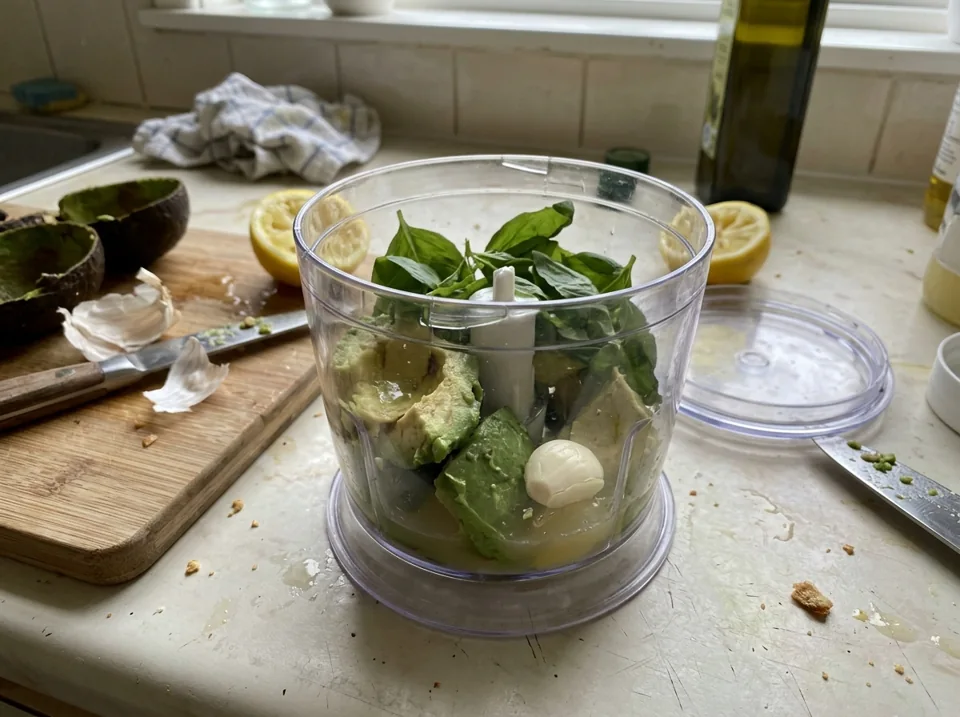
While the pasta cooks, halve and pit the avocado and scoop the flesh into a small food processor. Add the olive oil, 1 tablespoon lemon juice, garlic, basil, ¼ teaspoon fine salt and some pepper. Blend, scrape down the walls and blend again until the garlic is dispersed and you can no longer see pieces of avocado.
Step 3. Reserve pasta water and loosen the sauce
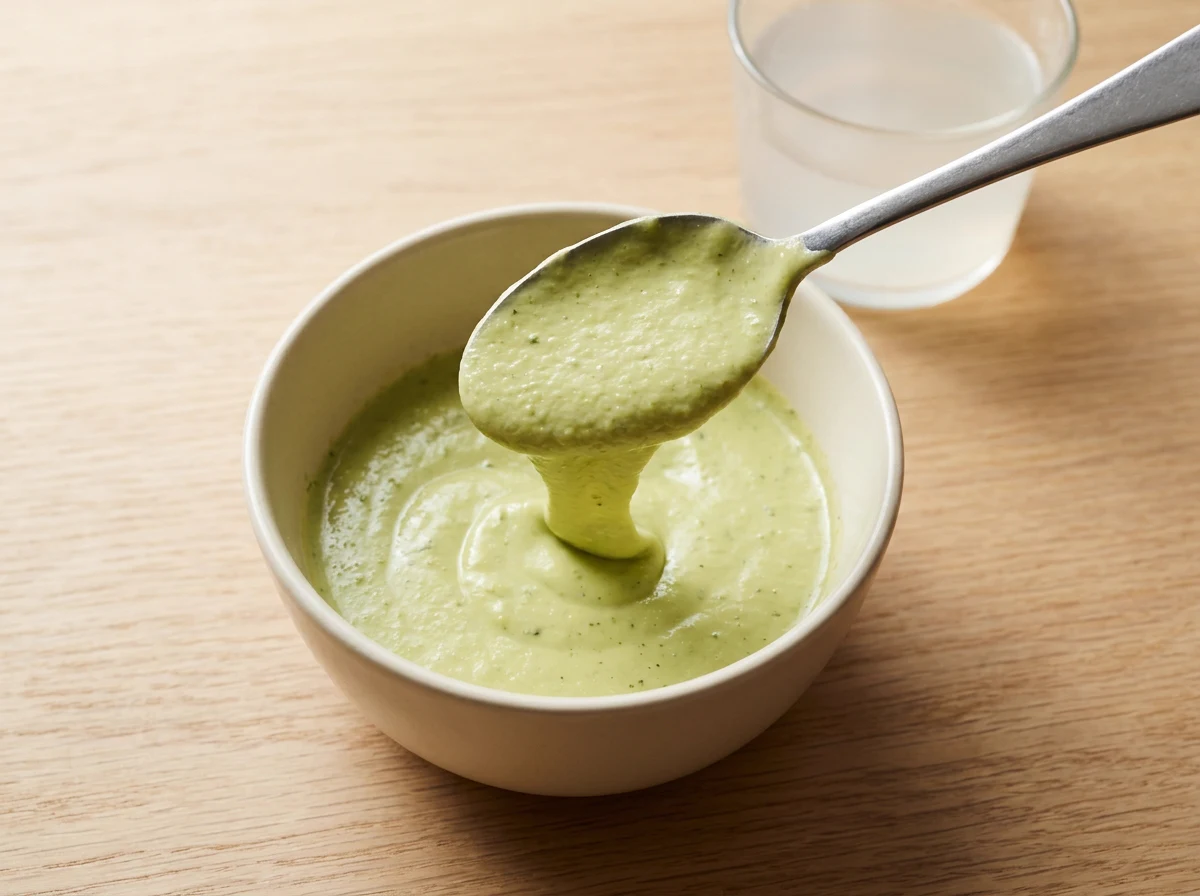
Before draining, scoop about 100 ml of the cloudy cooking water into a heatproof mug. Start with 2 tablespoons in the avocado mixture and blend briefly. The sauce should slide slowly from a spoon and leave a light coating behind. If it stands in a mound like dip, add a spoonful of water and blend again. Keep the rest of the mug for tossing.
Step 4. Toss the spaghetti off the heat
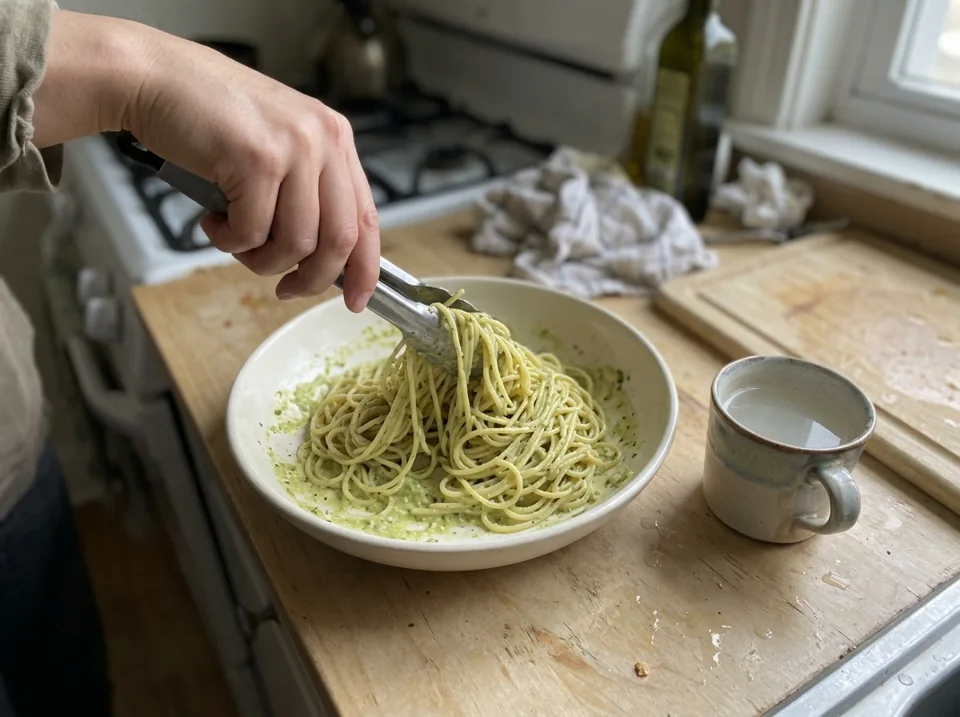
Drain the pasta and return it to the warm pot away from the burner, or use a warmed serving bowl. Add the avocado sauce and lift the spaghetti through it with tongs. If the strands stick into a bundle, add a tablespoon of pasta water around the edge and toss again. Stop when the strands move easily and look evenly green.
Step 5. Taste right before serving
Try a bite with sauce and pasta together. Add a few drops of lemon if the flavor needs brightness, or a little pepper if you want more bite. The pasta water adds salt, so taste before adding more. Divide into warm bowls and spoon any sauce left in the pot over both portions.
Fix a sauce that is thick, thin or too garlicky
When the coated pasta seems heavy, a tablespoon of cooking water usually goes further than another drizzle of oil. If the sauce is already thin, toss for another few seconds and let it coat the strands before adding anything else. A clove with a particularly sharp bite is easiest to manage before blending: start with part of it, then taste the blended sauce before committing to the rest.
Make ahead and keep leftovers
The sauce tastes freshest just after blending and may darken as it sits. To get a head start, measure the lemon juice, oil, herbs and seasonings and leave the avocado whole until the pasta water is heating. Refrigerate leftovers within 2 hours at 40°F (4°C) or below. Use them by the next day for best texture. If you plan to save half, chill the sauce and cooked pasta in separate containers and toss right before eating. If you reheat the pasta, heat it separately to 165°F (74°C) and then toss with the chilled sauce. FoodSafety.gov reheating guidance
Frequently asked questions
Can I use a different pasta shape?
Use the same dry weight of linguine, fusilli or another short shape you have. Follow its own cooking time. Ridges and twists hold more sauce, so wait until you have tossed before adding the last splash of cooking water.
What if I already poured away the pasta water?
Use warm water, a tablespoon at a time. It will loosen the avocado. Taste again because plain water brings none of the salt from the pot.
Can I make it without a blender?
Finely grate the garlic, mince the basil and mash the ripe avocado with a fork until very smooth. Stir in the remaining ingredients and enough cooking water to coat the noodles. The sauce will have a slightly chunkier texture.
Estimated nutrition
520 kcal, 13.4 g protein, 19.2 g fat and 74.7 g carbohydrates per serving. The estimate assumes 150 g edible avocado flesh for the batch.
Serving ideas
Serve the pasta as soon as it’s tossed. A crisp vegetable side works well next to the soft strands. Cabbage and Carrot Slaw

Reader comments