


Estimated read time: 8 min
Roasted butternut squash soup gets its deepest flavor from the browned edges of the squash. When I make this soup, I cut the peeled squash into even 2 cm cubes so the corners caramelize on the baking tray without the centers drying out, and I hold back a little of the stock until after blending so I can judge how the purée ribbons from the ladle. Soften the onion and ginger while the tray roasts, then hold back some stock until after blending. That leaves you room to make the soup as thick or light as you like.
Servings: 4 bowls · Prep: 20 minutes · Cook: 45 minutes · Total: 65 minutes
Cuisine: International
Key Ingredients & Why They Matter
- Peeled, seeded butternut squash, cut into 2 cm cubes (1 kg): High-heat roasting drives off excess water and caramelizes the natural squash sugars before blending, creating a sweeter, deeper soup base than boiling.
- Fresh ginger, peeled and grated (15 g): Gently warmed with softened onion and garlic so its pungent gingerols turn warm and aromatic, cutting through the natural sweetness of the squash.
- Vegetable stock (750 ml): Holding back a small portion of the measured 750 ml during the initial simmer lets you control the exact viscosity after blending in the coconut milk.
- Unsweetened canned coconut milk (150 ml) & lemon juice (1 tbsp): Coconut fat rounds out the blended squash purée into a silky ribbon, while a final tablespoon of lemon juice brightens the finish.
Ingredients
- 1 kg peeled, seeded butternut squash, cut into 2 cm cubes
- 2 tbsp olive oil, divided
- 1 medium onion, chopped
- 2 garlic cloves, chopped
- 15 g fresh ginger, peeled and grated
- 750 ml vegetable stock, plus extra if needed
- 150 ml unsweetened canned coconut milk
- 1 tbsp lemon juice
- 1/2 tsp fine salt, plus more to taste
- 1/4 tsp black pepper
Weigh 1 kg squash after removing the peel and seeds. Aim for 2 cm cubes so the corners brown before the centers dry out. Use a large rimmed baking tray and unsweetened canned coconut milk. Divide the olive oil into one tablespoon for the tray and another for the soup pot.
Instructions
Step 1. Heat the oven and cut the squash into even cubes
Heat the oven to 220°C / 425°F conventional or 200°C fan. Set out a large rimmed tray. Peel and seed the squash, then cut the flesh into cubes around 2 cm across. Split any unusually thick pieces so the tray finishes evenly. Blot the cut surfaces if you see moisture.
Step 2. Oil the squash and spread it out
Toss the cubes with one tablespoon olive oil and the half teaspoon of salt. Spread them in a single layer with a little space between pieces. Set broad cut sides against the metal and use a second tray if the cubes are crowded. Keep smaller pieces together so you can remove them early if needed.
Step 3. Roast, turn and check the center of a cube

Roast for 30–35 minutes, turning once around the midpoint. If you have two trays, swap their positions at the turn. Look for browned corners. Push a thin knife into one of the largest cubes. It should slide through easily. Keep any paler cubes in the oven briefly if the centers still feel firm.
Step 4. Soften the onion while the squash roasts
Warm the remaining tablespoon of oil in a large saucepan over medium heat. Add the chopped onion and cook for seven to eight minutes, stirring often. It should turn translucent and feel soft when pressed with a spoon. If the onion browns before softening, reduce the heat slightly.
Step 5. Add garlic and ginger once the onion is soft
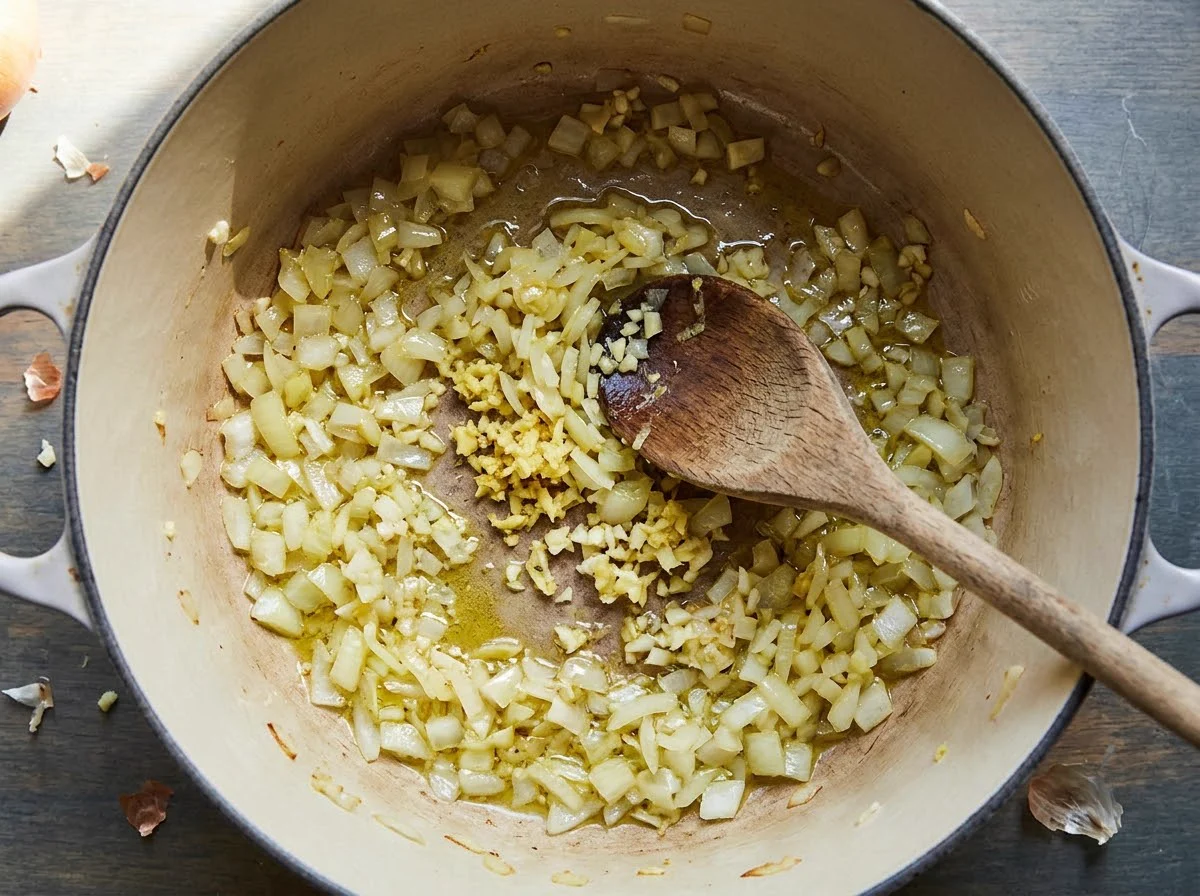
Add the garlic and grated ginger and stir for about a minute. They should smell fragrant and stay pale. If the pan dries out while the squash finishes, lower the heat and stir in a spoonful of the measured stock. Scrape the softened bits off the bottom so they go into the soup.
Step 6. Simmer the squash with most of the stock
Tip the roasted cubes into the saucepan and scrape in any soft browned pieces from the tray. Add most of the 750 ml stock, leaving a little for the final adjustment. Bring to a gentle simmer and cook partly covered for about ten minutes. Stir once or twice along the bottom.
Step 7. Take the pot off the heat and blend
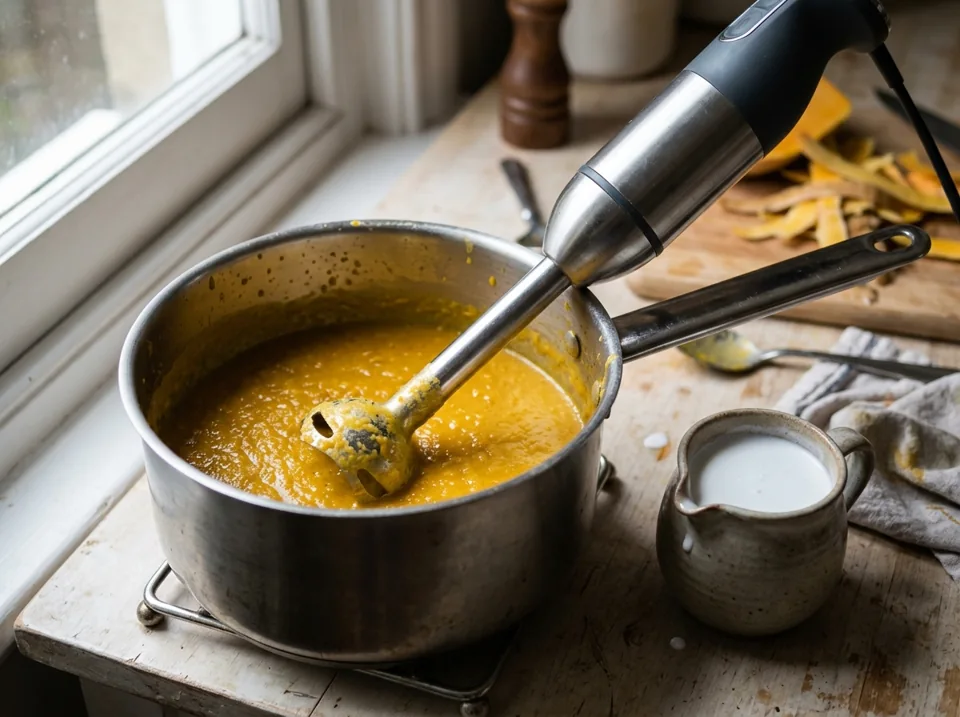
Blend in the saucepan with the immersion blender head submerged. Move it through the soup until no large pieces remain. Turn it off before lifting the head. If using a jug blender, let the soup cool and follow the manufacturer’s hot-liquid instructions, including its fill limit and venting directions.
Step 8. Add coconut milk and adjust the thickness
Stir the 150 ml coconut milk into the smooth soup. Lift a ladleful and watch it fall. A thick soup should pour in a ribbon without holding stiff ridges. For a looser bowl, add some of the reserved hot stock a spoonful at a time and check again.
Step 9. Warm through, season with lemon and serve
Return the saucepan to low heat and stir until steaming. Add the lemon juice and black pepper. Taste after stirring, then add a pinch of salt only if needed. If you add extra stock at the end, recheck both the lemon and the salt before serving.
How to store roasted butternut squash soup
Cool promptly in shallow containers and refrigerate within 2 hours. Keep refrigerated at 4°C / 40°F or below for up to 3 days, or freeze for up to 2 months. Reheat, stirring, until thoroughly hot; bring soup to a boil.
Ingredient handling: see the FDA’s safe food preparation guide.
Blend to a consistency that fits the bowl
Add most of the stock for the simmer and reserve a little to adjust after blending. Once the coconut milk is in, lift a ladleful and watch it fall. It should flow without leaving dry-looking lumps. Add hot stock a tablespoon at a time if you want a lighter bowl, then check the seasoning after the final addition.
Get roasted flavor when the tray is uneven
If the squash is tender but pale, give the paler pieces a few more minutes with a broad face against the tray. Move any cubes with deeply browned edges to a bowl first. Adding a mixture of browned and tender pieces gives the soup sweetness without making the darkest cubes bitter.
Roast ahead and blend close to serving
If you are making the soup in stages, cool the roasted squash promptly and refrigerate it covered. Simmer it with the stock when ready to blend. Cold roasted cubes drop the temperature of the pot, so start the ten-minute simmer once it’s bubbling gently again. Add the lemon after the final warm-up.
Frequently asked questions
Can I use frozen squash?
Yes. Roast from frozen on a roomy tray, allowing extra time until tender and lightly browned.
Can I make it less rich?
Replace some or all of the coconut milk with stock, adding it gradually.
Which coconut milk works best?
Unsweetened canned coconut milk gives the smoothest finish. Stir the can before measuring if the cream has separated. Light canned coconut milk will make a thinner soup, so hold more of the stock back until the end.
Estimated nutrition
Per serving, about 270 kcal, 4.2 g protein, 36 g carbohydrates and 15.2 g fat. Uses canned full-fat coconut milk and the listed amount of stock.
Serve with bread or pair a smaller bowl with Tomato and Mozzarella Toast.

Reader comments