

Estimated read time: 7 min 15 sec
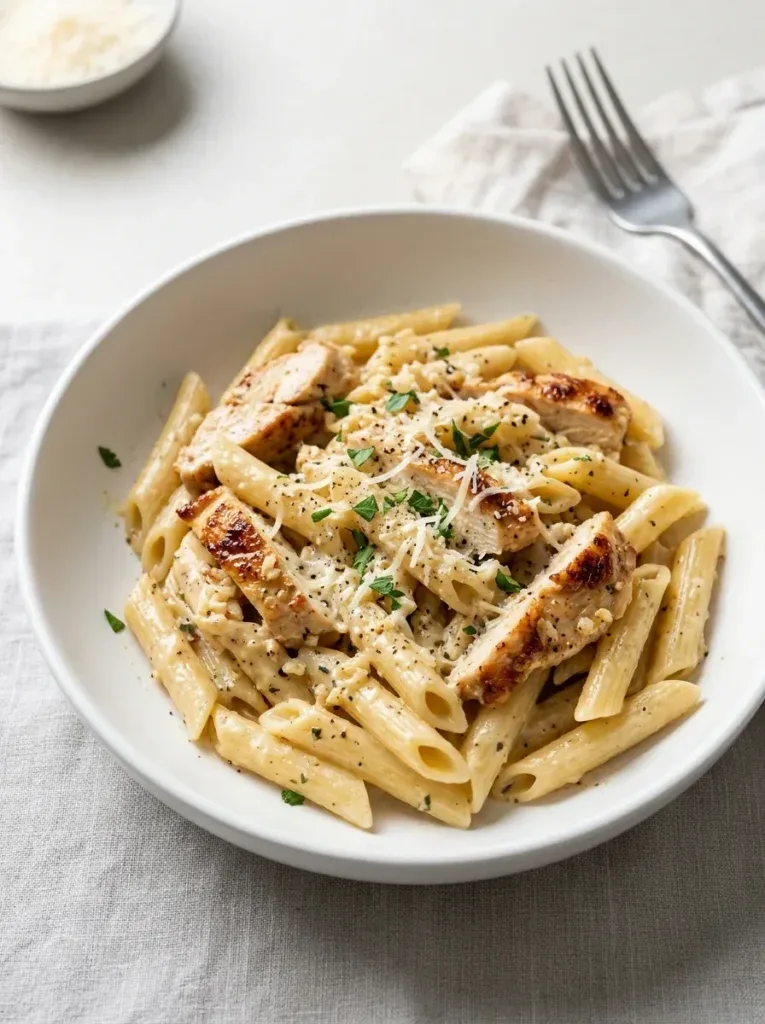
In my kitchen, I always scoop out half a cup of starchy pasta water before draining the pot and turn the burner down to low before adding the grated Parmesan so the sauce stays glossy and smooth without clumping. Creamy garlic chicken pasta uses browned pieces of chicken breast, minced garlic and Parmesan in a quick cream sauce. Save some pasta water so you can thin the sauce a spoonful at a time. The finished sauce should hold on to the pasta while still flowing enough to coat it as you toss.
Servings: 2 · Prep: 10 minutes · Cook: 20 minutes · Total: 30 minutes
Key Ingredients & Why They Matter
- Chicken Breast (250 g, cut into even pieces): Cutting the lean breast meat to a uniform thickness allows every piece to brown rapidly via the Maillard reaction while reaching 165°F (74°C) without drying out.
- Cooking Cream (200 ml): Simmered gently with the fond left in the skillet, the dairy fat and casein proteins create a stable base that carries the fat-soluble garlic and paprika aromatics.
- Grated Parmesan Cheese (30 g): Finely grated aged Parmesan melts rapidly over low heat, contributing savory glutamates and thickening the cream without needing a flour roux.
- Pasta (200 g penne or fettuccine) & Reserved Pasta Water: Dissolved amylose starch in the boiling water acts as an emulsifier that binds the melted Parmesan and cream tightly to the surface of the pasta.
Ingredients
- 200 g pasta (penne or fettuccine)
- 250 g chicken breast
- 200 ml cooking cream
- 3 garlic cloves, minced
- 30 g grated Parmesan cheese
- 1 tablespoon olive oil
- 1 tablespoon butter
- Salt and black pepper
- 1 teaspoon paprika
- Fresh parsley (optional)
Instructions
Step 1. Prepare the chicken, garlic and cheese
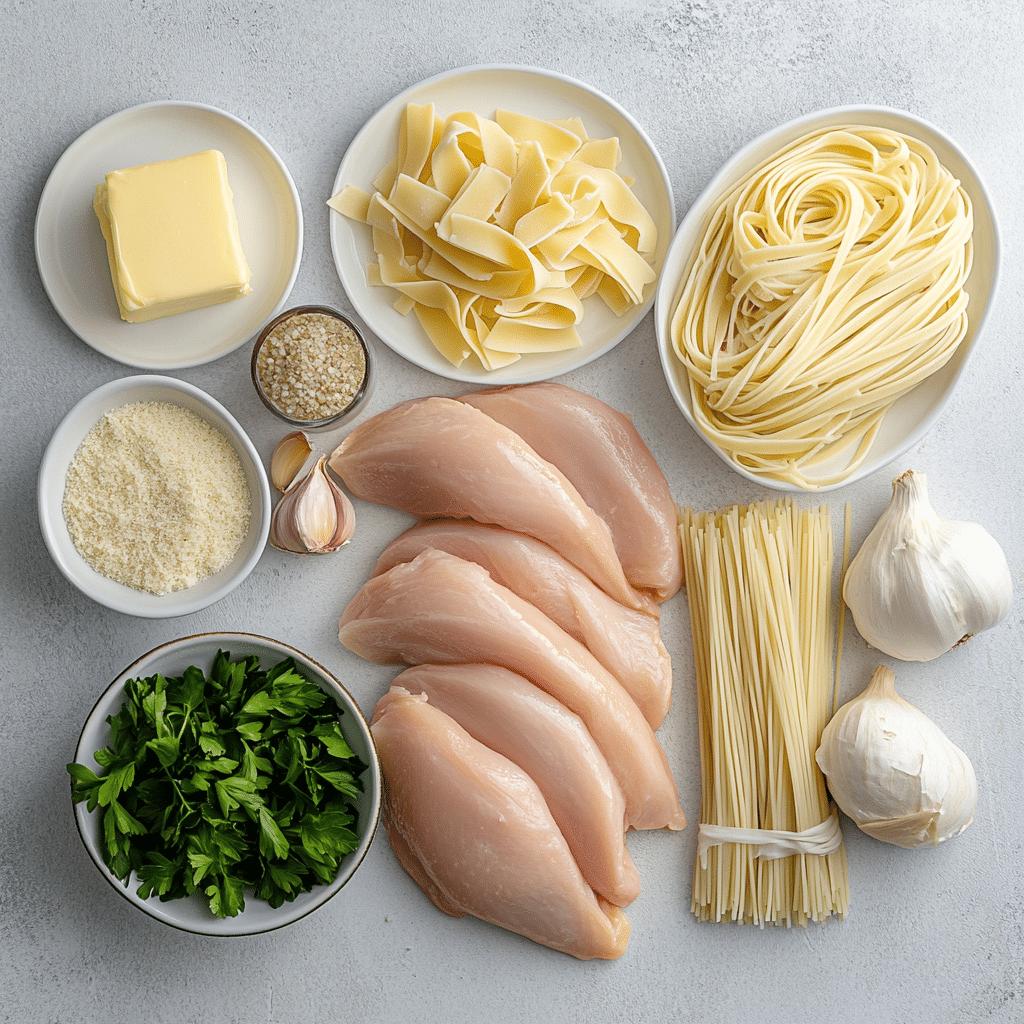
Cut the chicken breast into bite-sized pieces of similar thickness. Mince the garlic and finely grate the Parmesan before heating the skillet. Set aside extra cheese only if you want it for serving. Keep the raw chicken away from the grated cheese and optional parsley.
Step 2. Cook the pasta and save the water
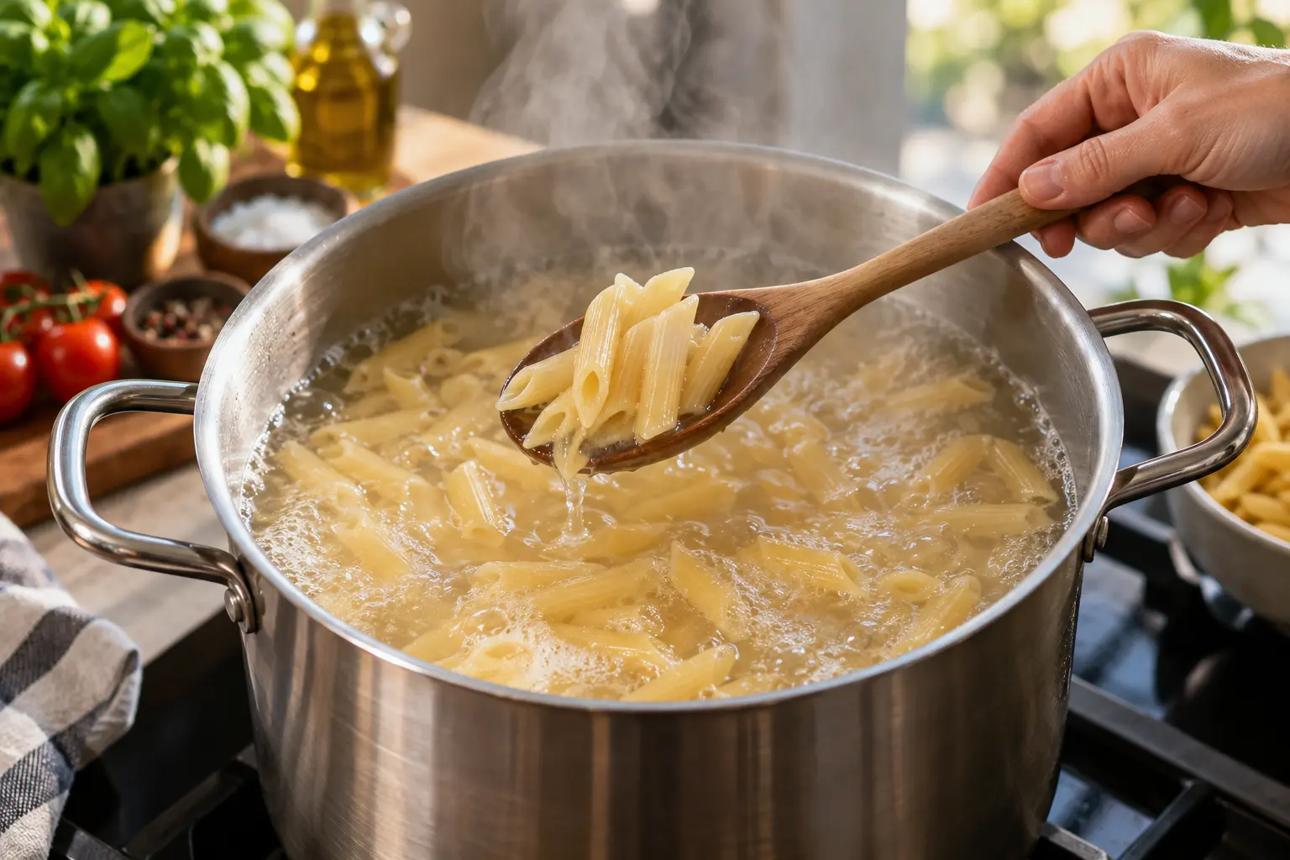
Boil the pasta in salted water until just tender. Before draining, scoop out about ½ cup pasta water. If you’re using penne, give the colander a quick shake so water doesn’t collect in the tubes. The reserved water gives you more control when you finish the sauce.
Step 3. Brown the chicken and check the thickest pieces
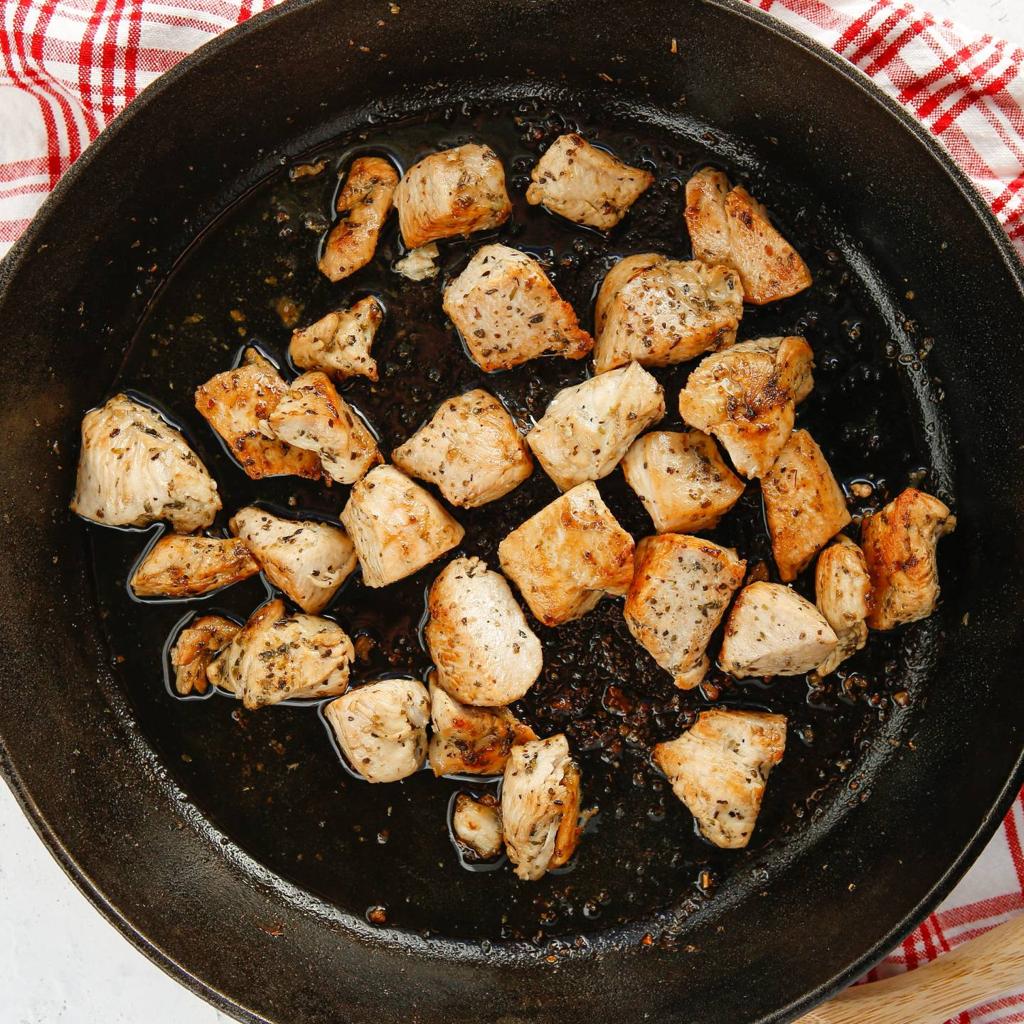
While the pasta cooks, heat the olive oil in a wide skillet. Season the chicken with salt, pepper and paprika. Cook in a single layer for about 6–8 minutes, turning as the pieces brown. Check the thickest pieces for 165°F (74°C) and transfer the cooked chicken to a clean plate.
Step 4. Soften the garlic and warm the cream
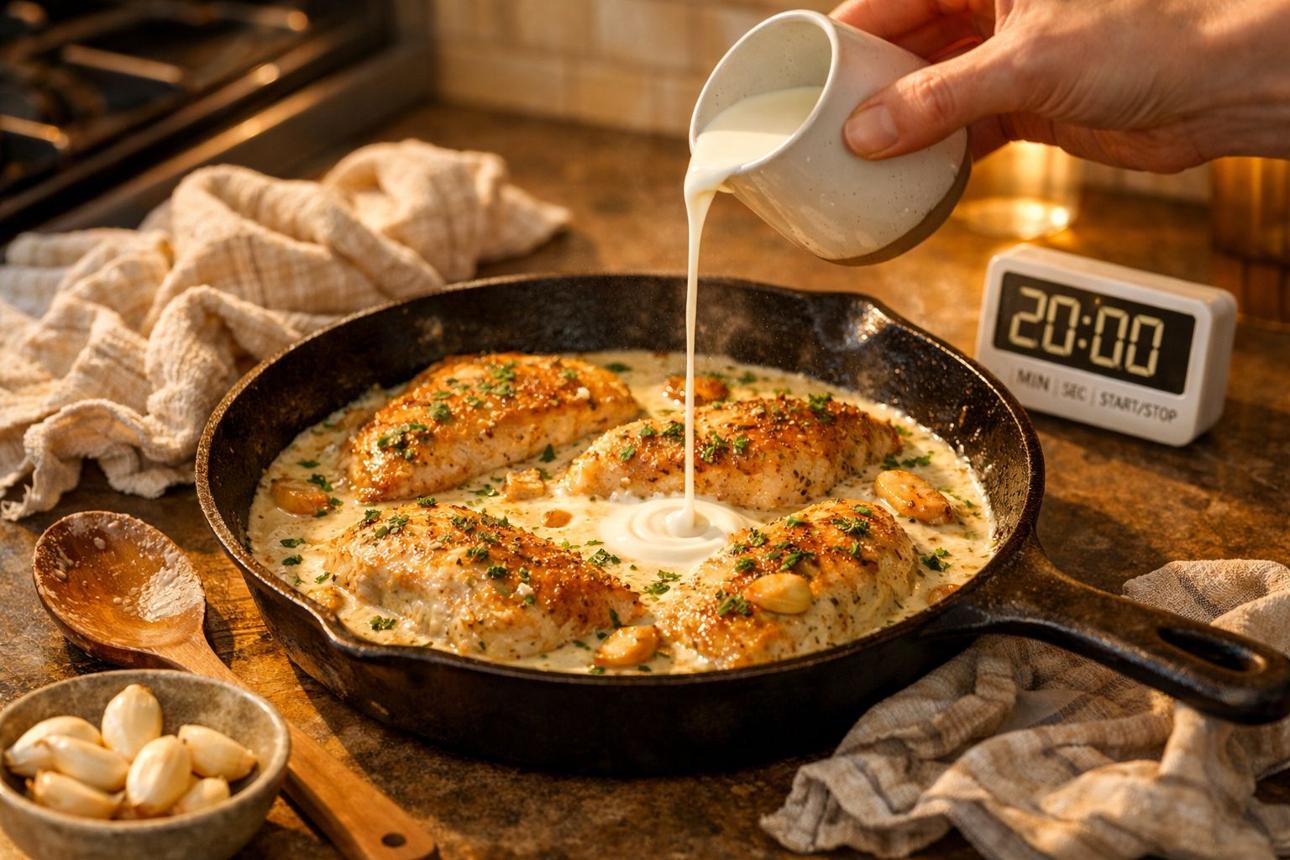
Lower the heat. Add the butter and garlic to the same skillet and stir for about 30 seconds, until fragrant. Pour in the cream and scrape up the browned bits. Let it simmer very gently for 2–3 minutes. If the garlic is turning brown, add the cream sooner.
Step 5. Melt in the Parmesan and check the sauce
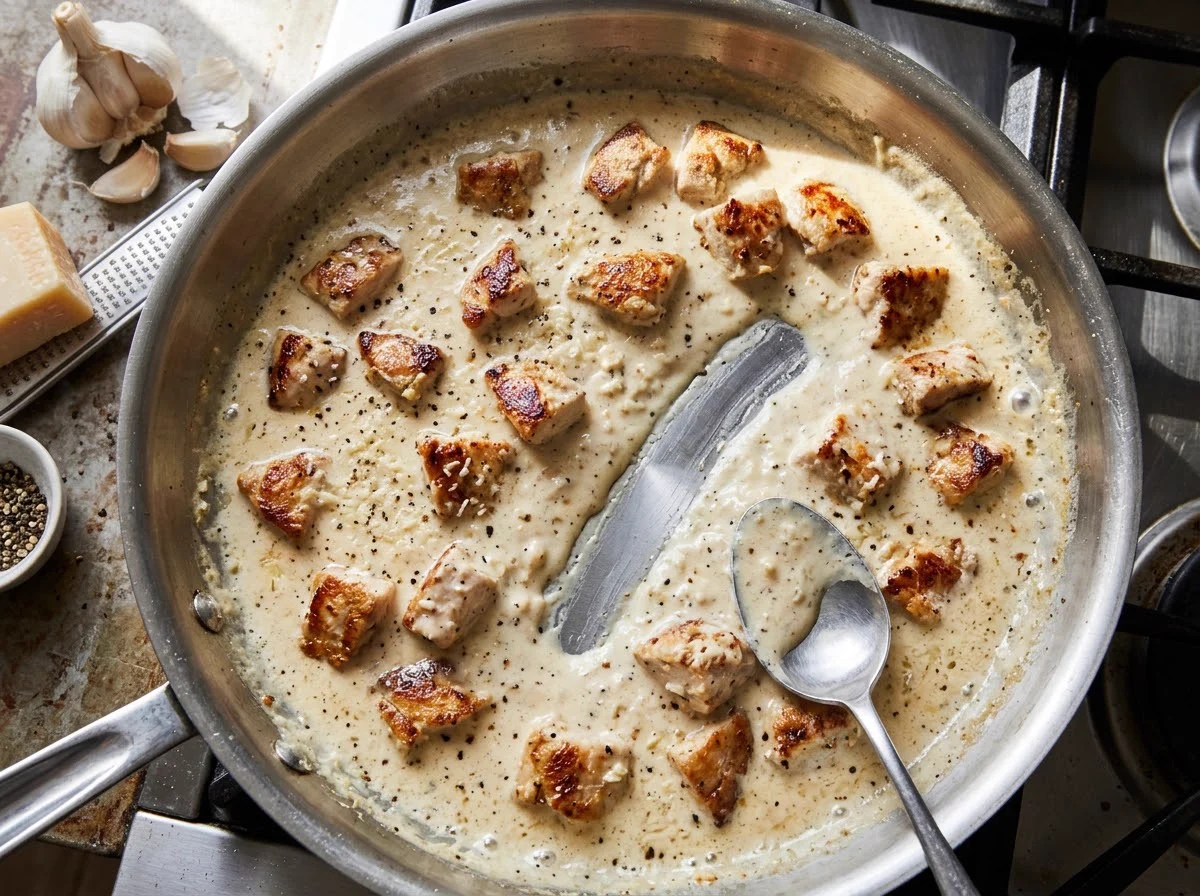
Turn the heat down to low. Stir in the Parmesan in small handfuls, then return the cooked chicken. Run a spoon across the pan. The sauce should coat its back and flow back into the trail. Stir in a spoonful of reserved pasta water if the sauce is already too thick to move.
Step 6. Toss the pasta and serve right away
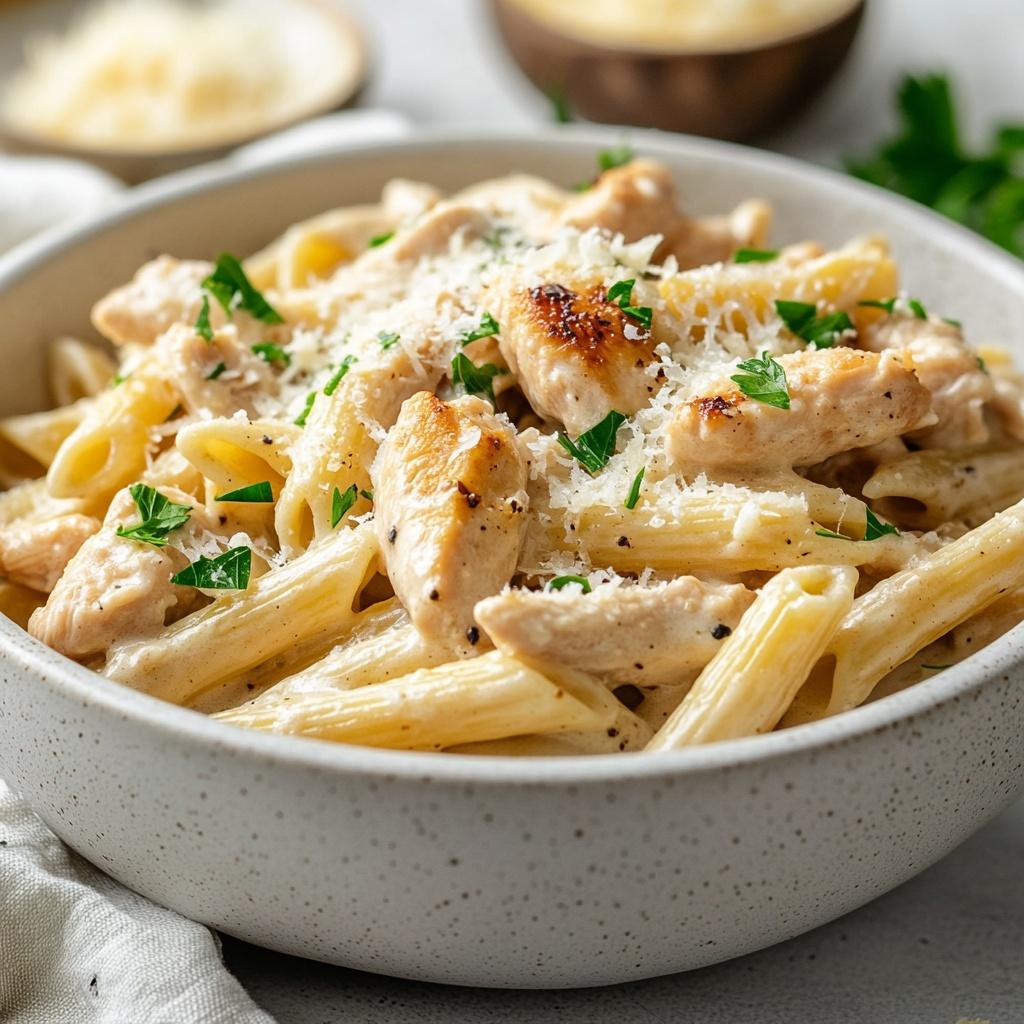
Add the drained pasta and toss over low heat until every piece is coated. Add pasta water a little at a time if the pasta looks dry or sticky. Taste before adding salt because Parmesan and the pasta water already contribute some. Top with optional parsley and serve in warm bowls.
Tips for creamy garlic parmesan chicken pasta
Reserve some pasta cooking water before draining. Add it a tablespoon at a time if the sauce becomes too thick. Lower the heat before stirring in Parmesan to help the sauce stay smooth. Penne or fusilli can replace the pasta shape; cook according to the packet. For a vegetable version, replace the chicken with browned mushrooms and cook them until their released moisture evaporates; this changes the cooking time and flavor.
How to store creamy garlic parmesan chicken pasta
Refrigerate leftovers in a shallow covered container within 2 hours, or 1 hour above 32°C (90°F), at 4°C (40°F) or below. Use within 3–4 days. Reheat with a splash of milk or water, stirring gently, until the food reaches 74°C (165°F). The pasta will absorb sauce as it stands.
Adjust the sauce to the kind of cream you use
A thicker cooking cream may need pasta water right after the cheese melts. A thinner cream benefits from another minute at a very gentle simmer before you add the pasta. Aim for an even coating on the pasta rather than a pool at the bottom of the pan. If the sauce separates, move it away from direct heat and stir in a small splash of warm pasta water.
Reheat a portion gently
Refrigerate leftovers promptly in a shallow container and use within 3–4 days. Reheat the portion over low heat with a splash of water or milk, stirring often, until it reaches 165°F (74°C). High heat can separate the sauce before the middle is warm.
See the USDA safe temperature chart for chicken and leftovers.
FAQs
Why did the sauce become too thick?
Pasta absorbs liquid as it stands. Add reserved pasta water gradually and toss over low heat until the sauce coats the pasta again.
Can I use a different cheese?
A finely grated hard cheese such as Grana Padano can replace Parmesan. Taste before adding extra salt because cheese varies in saltiness.
Serve the pasta while the sauce is silky
Toss the pasta once more before serving, loosening with a little reserved pasta water if needed so the sauce coats each piece.
Food handling: USDA leftover guidance.
Estimated nutrition
Per serving, about 895 kcal, 50 g protein, 81 g carbohydrates and 40.2 g fat. Uses light cream as a proxy for cooking cream, before optional cheese or parsley.
Reader comments