

Estimated read time: 6 min 15 sec
When I make a pot of floral herbal infusion, I keep a saucer ready to trap the fragrant vapors because rose petal tea is ready when the steam smells softly floral and the liquid tastes gentle. Use culinary dried rose petals or buds, and check the aroma before deciding whether to steep longer. Color varies from one batch of petals to another.
Prep: 2 minutes · Cook: 8 minutes · Total: 10 minutes · Servings: 1
Cuisine: International
Taste a small sip before adding any sweetener. The strength of the infusion depends on which culinary rose petals you use.
Key Ingredients & Why They Matter
- Dried Culinary Rose Petals or Buds (2 g): Weighing by gram rather than volume ensures consistent extraction of delicate rose essential oils and polyphenols whether your batch consists of airy loose petals or dense whole buds.
- Fresh Drinking Water (250 ml): Resting boiled water for 30 seconds before pouring prevents scorching delicate floral aromatics while still providing enough heat to infuse the dried petals in five minutes.
- Honey or Small Lemon Slice (optional, 1 teaspoon / 1 slice): A touch of floral honey rounds out the naturally subtle finish, while a quick dip of lemon introduces citric acid that brightens the infusion and shifts plant anthocyanins toward a soft rosy hue.
Ingredients
- 250 ml fresh drinking water
- 2 g dried culinary rose petals or buds, sold for food or tea use
- 1 teaspoon honey, optional
- 1 small lemon slice, optional
Equipment
A kettle, a small teapot or heatproof mug with a lid or saucer, and a fine strainer that catches loose petals. A scale is useful because buds and loose petals pack differently.
Instructions
Step 1. Weigh culinary petals or buds
Weigh 2 g of dried rose petals or buds sold for food or tea. Check that the packet lists rose as the ingredient if you want the flavor of plain petals. Smell them before you brew. A batch with almost no scent in its packet is unlikely to produce a strongly floral cup.
Step 2. Heat the water and set up the covered cup
Bring 250 ml of water to a boil and let it stand for about 30 seconds. Put the petals in the pot or strainer, with enough room for water to move between them. Have the lid or a clean saucer ready to put on as soon as you pour.
Step 3. Cover and steep for five minutes
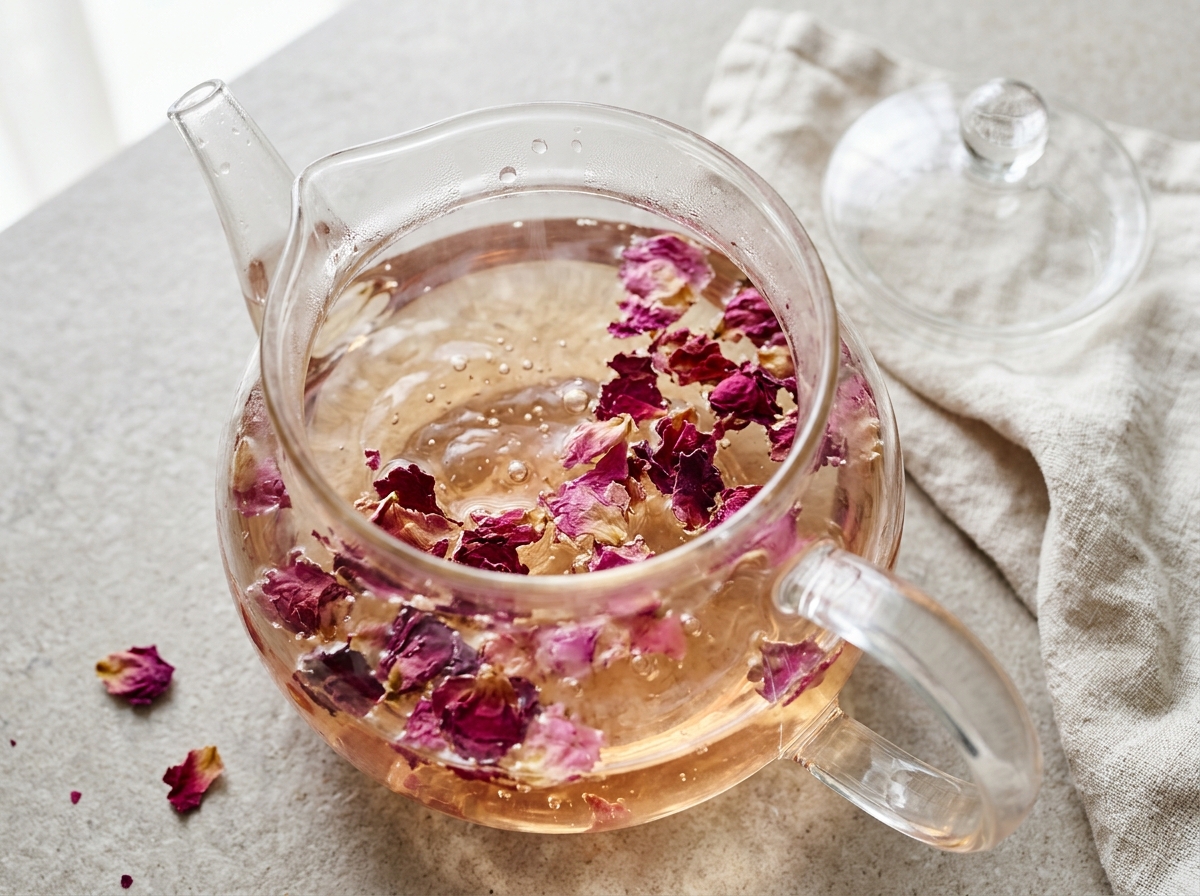
Pour the water over the petals and cover. Start the timer and leave it closed for five minutes. When you lift the cover, smell the steam before checking the liquid. A pale golden cup can have plenty of aroma.
Step 4. Taste briefly before steeping longer
Cool a small spoonful and taste. If the cup is fragrant but soft, it’s ready to strain. If it tastes faint and the petals had a clear scent at the start, give it up to two additional minutes. If it already tastes perfumed or dry, strain right away.
Step 5. Strain before adding honey or lemon
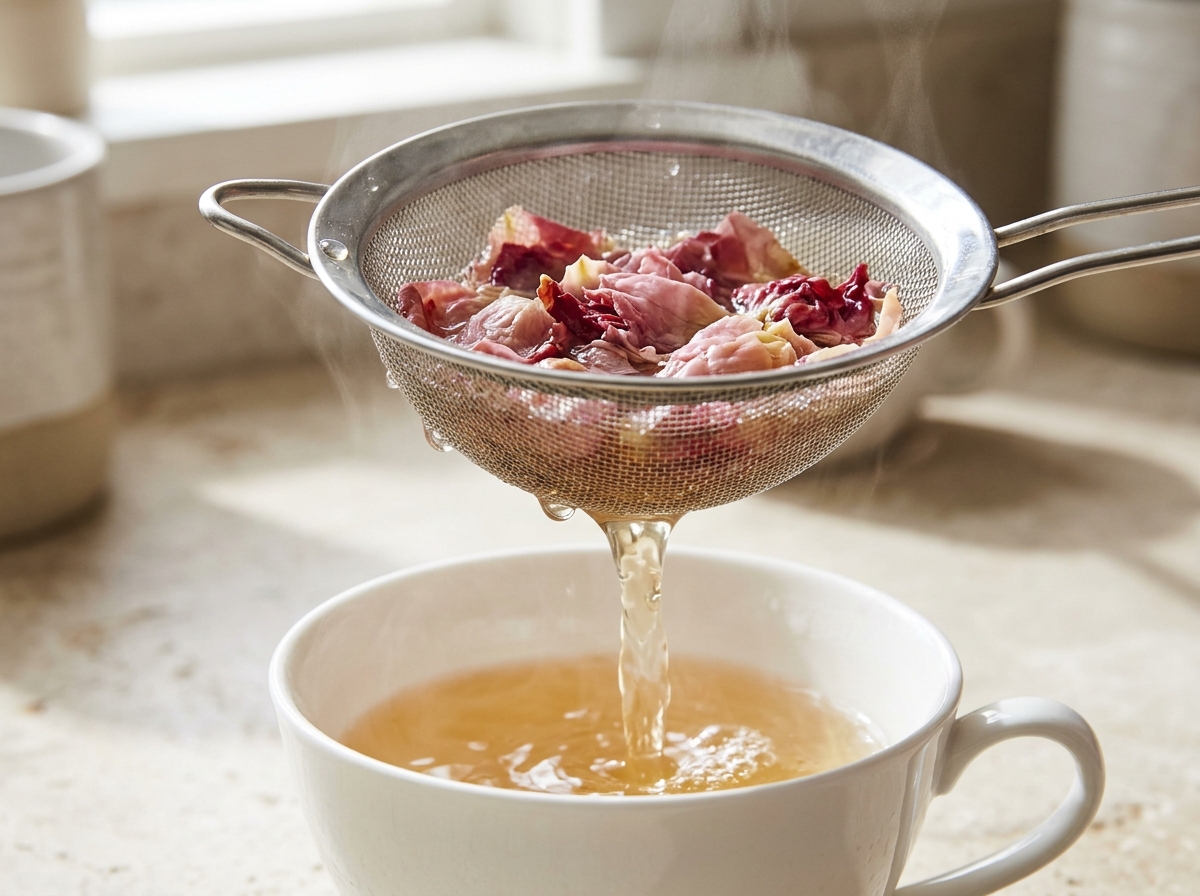
Strain into a clean cup. Taste plain first, then add a small amount of optional honey or briefly dip the optional lemon slice. Taste after each addition. Lemon can quickly become the strongest flavor in a mild rose infusion.
Choose a petal amount you can repeat
Petals are lighter and looser than compact buds, so weighing them gives you a more useful starting point than a spoonful. If the cup is too perfumed, use a little less rose next time and keep the same water and steep. If the cup is too faint, first check that the petals still smell fragrant.
Make an iced cup without watering it down
Strain the infusion while it still smells fresh, cool it and refrigerate it covered. Add ice just before pouring, or chill the glass and serve without ice if you prefer to keep the original concentration. If you’re adding honey, dissolve it while the tea is still warm.
Variations
To make a caffeinated rose and black tea blend, add the black tea only for the last 2–3 minutes and remove it with the petals. Keep the rose on its own if you want a caffeine-free infusion. Use only culinary petals, as described in the Royal Horticultural Society’s edible flower guide.
How to store rose petal tea
Best freshly infused. Remove petals, cool promptly and refrigerate covered; use within 24 hours for best flavor. Sweeten only the portion you plan to drink.
Estimated nutrition per serving
1 cup; recipe makes 1 serving. 5 kcal · Protein: 0.0 g · Carbohydrate: 0.5 g · Fat: 0.0 g
How this estimate was calculated
Calculated from the listed ingredient weights using generic USDA SR Legacy food-composition values. These are estimates, not laboratory measurements. Calories are rounded to the nearest 5 kcal. Generic unsweetened brewed herbal tea is used as a proxy for strained rose infusion; extraction varies. Optional honey and lemon excluded.
Ingredient composition sources (USDA FoodData Central): Beverages, tea, herb, other than chamomile, brewed.
Frequently asked questions
Is this caffeine-free?
Pure rose petals do not contain tea leaves. Check the packet: blends with black or green tea contain caffeine.
Why is mine not pink?
Variety, drying and water chemistry affect color. Never add non-food dyes or decorative florist petals that were not grown for culinary use.
Can I use rose water?
Not as a direct gram-for-gram substitute. Culinary rose water is concentrated; use a separate diluted recipe and follow its label.
How to serve it
Try the rose tea without sweetener on the first sip to see how floral the infusion is. Set out a few Lemon Shortbread Cookies if you want a crisp bite with the tea.
Reader comments