

Estimated read time: 10 min 15 sec
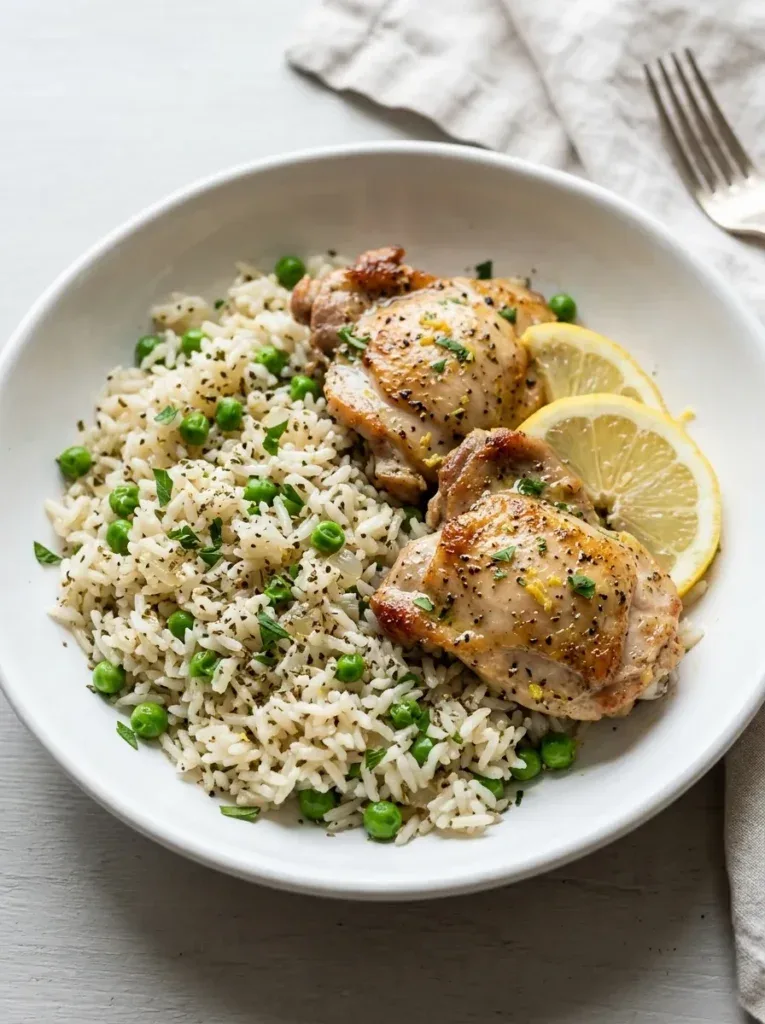
Lemon garlic chicken and rice brings browned chicken thighs, fluffy long-grain rice and green peas together in one covered pan. In my kitchen, I always rinse and drain the rice thoroughly before toasting it in the onion oil, then simmer the lemon zest with the stock while saving the fresh lemon juice to fluff in after resting. The rice absorbs the stock and browned bits from the chicken, while lemon juice added at the end keeps the finish bright rather than sharply sour. A wide pan and a gentle simmer matter more than turning up the heat.
Prep: 15 minutes · Cook: 45 minutes · Total: 65 minutes · Servings: 4
Resting: 5 minutes. This passive rest is included in the total time, not in the cooking time. Timings are estimates and may vary with the pan, hob and chicken thickness.
Cuisine: Mediterranean-inspired
Begin checking the rice once most of the broth has been absorbed. Use a thermometer to check the chicken separately.
Use regular long-grain rice and even chicken pieces
Rinse and drain the rice completely before measuring anything into the pot. Unfold the chicken thighs and check that no piece is much thicker than the others. Set a tight lid and a thermometer beside the burner so you can check the chicken without leaving the rice uncovered for long.
Key Ingredients & Why They Matter
- Boneless, skinless chicken thighs (4 large / 600 g total): Unfolding the thighs to an even 2 cm thickness lets them brown quickly and finish gently over the steaming rice to 74°C / 165°F without drying out.
- Uncooked regular long-grain white rice, rinsed and drained (250 g): Rinsing removes loose surface starch and toasting in olive oil coats the grains so they cook up separate and fluffy in the 600 ml of hot stock.
- Hot low-sodium chicken stock (600 ml): Starting with hot stock brings the wide pan back to a simmer right away so the rice hydrates evenly within the 18–22 minute covered window.
- Large lemon — zest (1 tsp) & juice (2 tbsp / 30 ml): Simmering the aromatic zest infuses the stock with citrus oil, while stirring the raw juice in off the heat preserves its bright acidity.
Ingredients
- 4 large boneless, skinless chicken thighs (600 g total), unfolded to no more than about 2 cm thick
- 250 g uncooked regular long-grain white rice, rinsed and drained well
- 2 tablespoons olive oil (27 g), divided
- 1 small onion, finely diced (100 g prepared)
- 3 garlic cloves, finely chopped (9 g)
- 600 ml low-sodium chicken stock, hot
- 150 g frozen peas, kept frozen until needed
- 1 teaspoon dried oregano
- 3/4 teaspoon fine salt, divided; reduce if the stock is salty
- 1/4 teaspoon ground black pepper
- 1 large lemon: 1 teaspoon finely grated zest and 2 tablespoons juice (30 ml); extra thin slices or wedges are optional
- 2 tablespoons chopped flat-leaf parsley (6 g)
Equipment
A heavy 28 cm saute pan, at least 3 litres in capacity, with a well-fitting lid; fine sieve; tongs; chopping board; knife; measuring jug; fork; and an instant-read food thermometer. Use a clean plate for fully cooked chicken, separate from the one that held partly cooked chicken.
Instructions
1. Prepare the rice and chicken
Rinse the rice in a fine sieve under cold running water until the water is less cloudy, then drain thoroughly. Pat the chicken dry with kitchen paper; do not wash raw chicken. Unfold the thighs so they cook evenly. Season with 1/2 teaspoon of the salt, the black pepper and oregano. Wash hands and clean any surfaces that touched raw poultry.
2. Brown the thighs
Heat 1 tablespoon of the oil in a heavy 28 cm saute pan over medium-high heat. Add the chicken in a single layer and brown for about 4 minutes per side, reducing the heat if the spices start to burn. Transfer to a plate. The chicken is only partly cooked at this stage; continue directly with the recipe.
3. Soften the onion and toast the rice
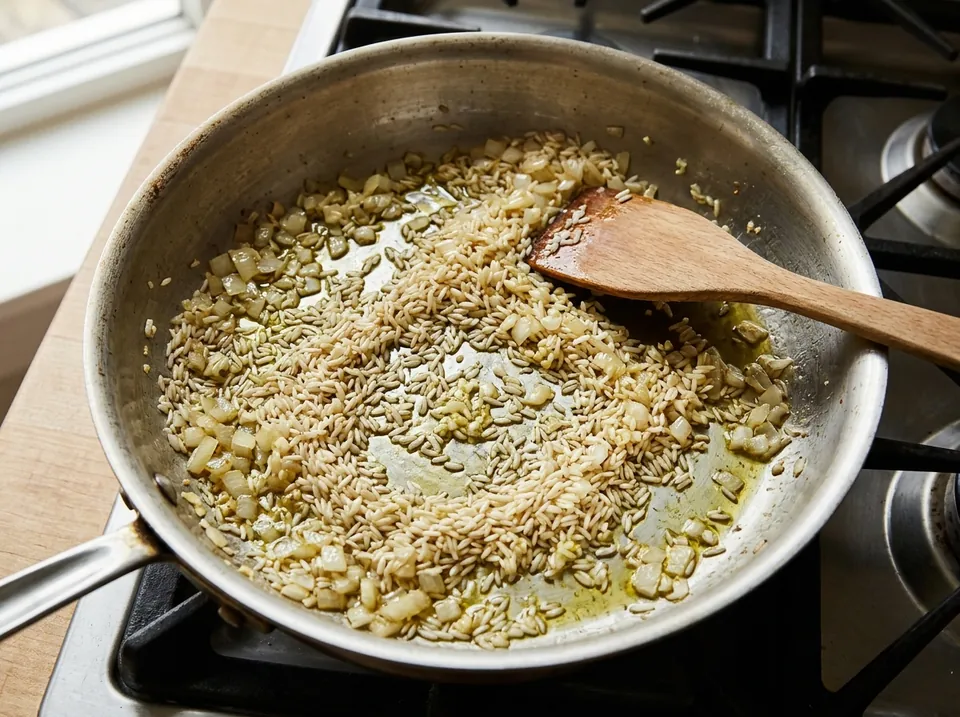
Reduce to medium heat and add the remaining tablespoon of oil. Cook the onion for about 5 minutes until softened, scraping up browned bits without letting them blacken. Add the garlic and stir for 30 seconds. Stir in the drained rice for 1–2 minutes, until the grains are coated and no puddle of rinse water remains.
4. Add the stock and return the chicken
Pour in the hot stock and scrape the bottom gently to release the browned bits. Add the lemon zest and remaining 1/4 teaspoon salt, then bring to a simmer. Nestle the chicken and its plate juices on top, leaving the rice beneath the liquid. If using thin lemon slices, tuck a couple around the chicken; reserve the measured lemon juice for the finish.
5. Cover, simmer and check doneness
Cover tightly, turn the heat to low and simmer gently for 18–22 minutes. Avoid stirring or repeatedly lifting the lid. Check that the rice is nearly tender and most liquid is absorbed. Measure the thickest part of every thigh with a food thermometer: chicken must reach 74°C / 165°F. If the rice is still firm, add 2–4 tablespoons hot water, cover and cook for another 3–5 minutes. If a thigh is below temperature, keep cooking covered and recheck; do not rely on color alone.
6. Heat the peas through
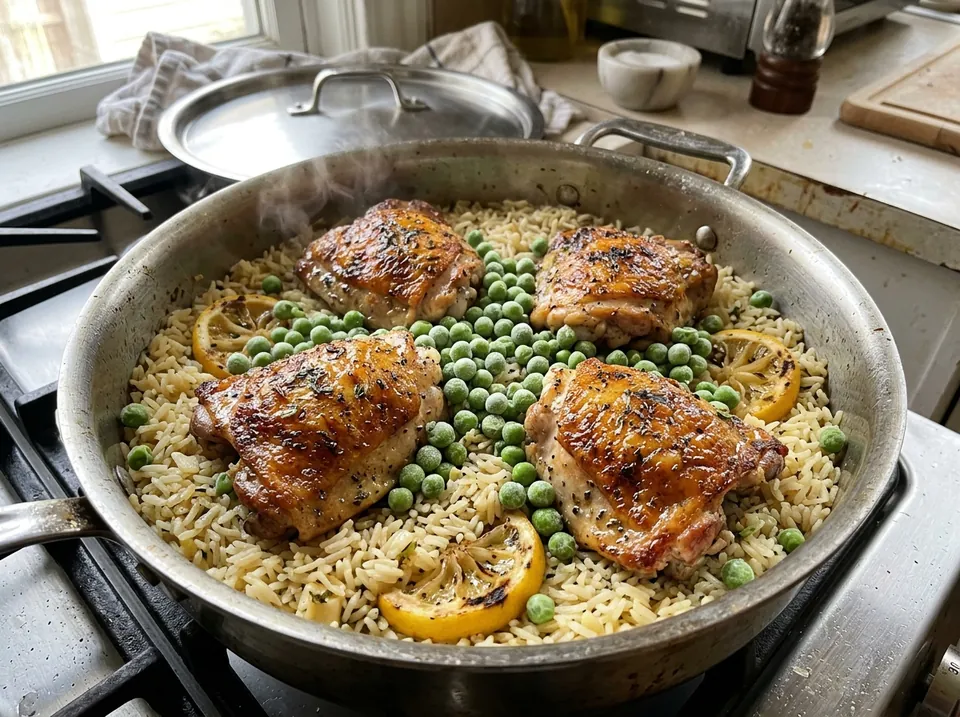
Scatter the frozen peas over the rice around the chicken. Cover and cook on low for 3–5 minutes, until the peas are piping hot, the rice is tender and the chicken still measures at least 74°C / 165°F. If the peas package calls for a longer cooking time, follow it, adding a little hot water if the rice starts to catch.
7. Rest, add lemon and serve
Take the covered pan off the heat and rest for 5 minutes. Transfer the cooked chicken briefly to a clean plate. Add the 2 tablespoons lemon juice and parsley to the rice, then gently fluff with a fork without mashing the grains. Return the chicken and serve straight away, dividing the rice and peas evenly into four portions. Optional lemon wedges can go alongside.
Tips for lemon garlic chicken and rice
- Use regular long-grain white rice. Brown rice, instant rice and risotto rice need different liquid amounts and cooking times, so they are not direct swaps.
- Drain rinsed rice well. Extra rinse water changes the measured liquid ratio and can make the rice soft.
- Keep the simmer gentle. A hard boil can scorch the bottom before the center of the chicken is cooked.
- If the rice is wet but tender, remove the fully cooked chicken and let the rice stand uncovered off the heat for a few minutes before fluffing. If it is dry and firm, add hot water in small measured amounts and continue covered.
- The measured lemon juice goes in after cooking. Start with half if your lemon is especially tart, taste the fully cooked rice, then add the rest as desired.
Substitutions and serving ideas
- Small boneless chicken breasts can be used if flattened to an even 2 cm thickness, but may dry out sooner. Check 74°C / 165°F in each piece; their cooking time is not guaranteed to match thighs.
- Use vegetable stock instead of chicken stock if preferred; the chicken remains part of the recipe, so this does not make it vegetarian.
- Dill can replace parsley. Avoid changing the rice variety without adjusting the whole method.
- Serve with a crunchy cabbage and carrot slaw or a simple cucumber salad. The recipe contains no added dairy; check stock labels for allergens.
How to store lemon garlic chicken and rice
Because this dish contains rice, divide leftovers into shallow containers and chill promptly, ideally within 1 hour. Do not leave the covered pan on the hob to cool. Refrigerate at 4°C / 40°F or colder and eat within 24 hours. For longer storage, cool quickly and freeze individual portions promptly; use within 1 month for best quality. Thaw in the fridge.
Reheat only once. Add a small splash of water, cover, and heat until the rice and the center of the chicken reach 74°C / 165°F and are steaming hot throughout. Stir the rice and turn the chicken during microwave reheating, then check more than one spot. Discard any rice that was left out overnight; reheating does not reliably remove toxins produced during poor storage.
Estimated nutrition per serving
One chicken thigh with one quarter of the rice and peas: 540 kcal · Protein: 39.5 g · Carbohydrate: 60.6 g · Fat: 14.5 g.
How the estimate was calculated
Calculated from the listed weights using generic USDA SR Legacy ingredient values, divided into four servings. This includes all measured oil and stock and assumes raw skinless chicken thigh meat. Small amounts of oregano, black pepper and lemon zest, plus optional lemon slices or wedges, are excluded. Values are estimates rather than laboratory results; trimming, stock brand and the amount of liquid left in the pan change the result. Calories are rounded to the nearest 5 kcal.
Ingredient sources (USDA FoodData Central): Lemon juice, raw; Rice, white, long-grain, regular, raw, enriched; Garlic, raw; Onions, raw; Peas, green, frozen, unprepared (Includes foods for USDA's Food Distribution Program); Parsley, fresh; Oil, olive, salad or cooking; Soup, chicken broth, low sodium, canned; Chicken, broilers or fryers, dark meat, thigh, meat only, raw.
Frequently asked questions
Can I use brown rice?
Not as a direct substitution. It takes longer and needs a different liquid balance; the chicken may overcook before brown rice softens.
Do I need to fully cook the chicken when browning it?
No. The browning stage develops flavor; the chicken finishes during the covered simmer. It must reach 74°C / 165°F in every piece before serving.
Why is my rice sticking?
The heat may be too high, the lid may leak steam or the pan may be too thin. Lower the heat, add a little hot water if the grains are still firm, and keep the lid fitted. Do not scrape burnt bits into the rest of the rice.
Can I make this ahead?
It is best served freshly cooked. If making it ahead, follow the prompt chilling and 24-hour refrigerated storage guidance above, then reheat only once.
More recipes to try
Pair dinner with crunchy cabbage and carrot slaw, or try creamy mushroom orzo for another one-pot meal. For a vegetable side, see honey roasted carrots.
Food-safety sources: FoodSafety.gov chicken and leftover temperatures and Food Standards Agency rice storage and reheating guidance.
Reader comments