

Estimated read time: 7 min 45 sec
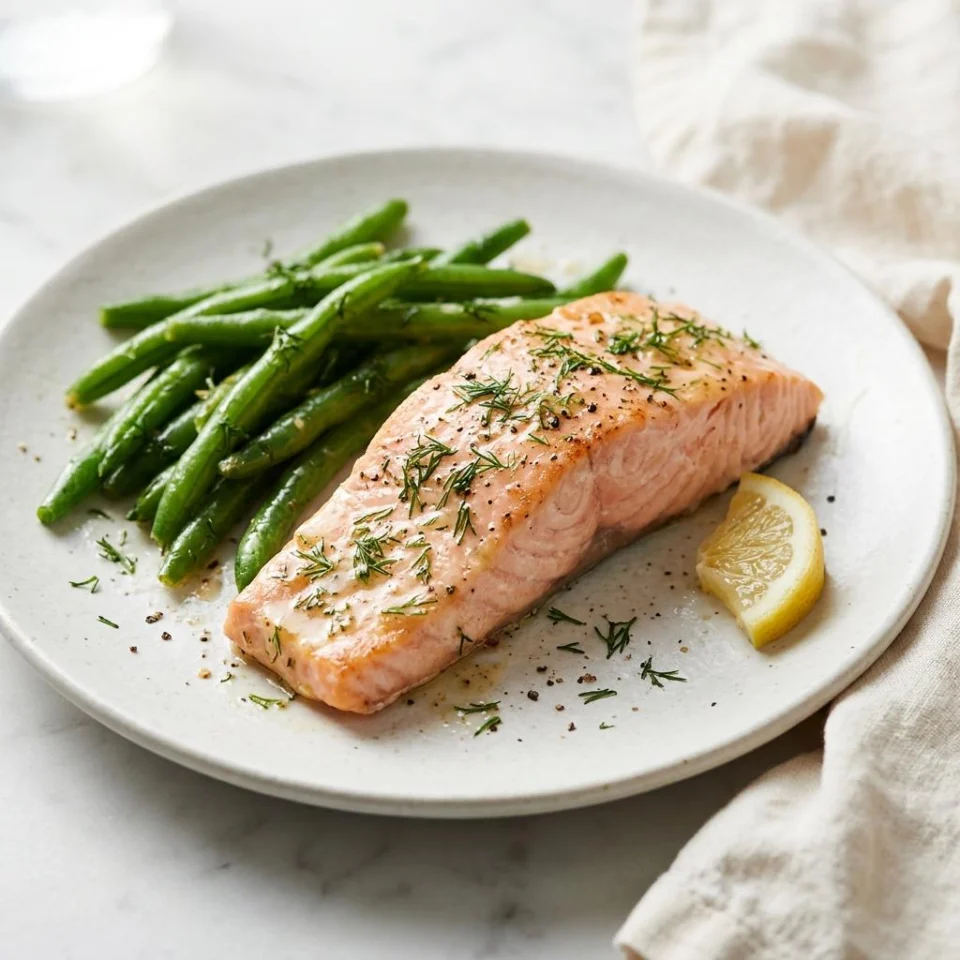
In my kitchen, lemon dill salmon with green beans works smoothly on one sheet pan when I give the vegetables a head start. I always roast the dried green beans until they begin to bend, add the mustard-coated fish, and lift each fillet and the beans off the pan as soon as they reach their mark, especially when some fillets are thinner.
Servings: 4 servings · Prep: 15 minutes · Cook: 20 minutes · Total: 35 minutes
Cuisine: European-inspired
Expect the thinner salmon fillets to finish first and check each piece separately.
Sort the salmon by thickness before roasting
Remove pin bones and check which fillet is thickest before laying out the pan. Trim the green beans so the thicker stems can be placed together. Measure the mustard, lemon and dill before handling the fish to keep the rest of the preparation quick and tidy.
Key Ingredients & Why They Matter
- Salmon Fillets (4 fillets / 150 g each): Equal-weight fillets patted dry on the surface allow the mustard-dill glaze to adhere tightly while roasting evenly to an internal temperature of 145°F (63°C).
- Green Beans, Trimmed (500 g): Giving the dense green bean pods an 8-minute head start at 410°F (210°C) softens their fibrous pectin before the fast-cooking fish goes onto the tray.
- Dijon Mustard (1 tablespoon / 15 g): Mustard acts as a natural emulsifier that binds the olive oil, lemon juice, grated garlic, and dill into a clingy glaze that shields the top of the salmon from drying out.
- Lemon Zest (1 teaspoon) and Juice (1 tablespoon / 15 ml): Combining oil-soluble aromatic zest with bright citric acid cuts through the rich marine fats of the salmon without over-thinning the glaze.
Ingredients
- 4 salmon fillets (150 g each), pin bones removed
- 500 g green beans, trimmed
- 2 tablespoons olive oil (27 g), divided
- 1 tablespoon Dijon mustard (15 g)
- 1 tablespoon lemon juice (15 ml)
- 1 teaspoon finely grated lemon zest
- 2 tablespoons chopped fresh dill (6 g)
- 1 garlic clove, finely grated (3 g)
- 1/2 teaspoon fine salt, divided
- 1/4 teaspoon black pepper
- Lemon wedges, optional for serving
Choose four fillets about 150 g each and close in thickness. Dry the beans before seasoning and use a roomy rimmed tray with parchment rated for 410°F (210°C). Divide the oil and salt in half so the beans and fish each get their share. Keep raw salmon and its utensils separate from the ready-to-serve beans.
Equipment
A large shallow sheet pan, parchment rated for 410°F (210°C), a small bowl for the mustard glaze, a fish spatula, and an instant-read thermometer.
Instructions
Step 1. Heat the oven and dry the trimmed beans
Heat to 210°C / 410°F conventional or 190°C fan. Line a large rimmed tray with suitable baking parchment. Trim the green beans and pat them dry. A dry surface helps them roast before the salmon goes in. Group the thinnest beans at one end if their sizes vary.
Step 2. Season the beans and give them a head start
Toss the beans with one tablespoon oil and a quarter teaspoon salt. Spread them out in a single layer and roast for about eight minutes. Leave a clear area where the salmon can go later, or move the beans to the side when you bring the tray out.
Step 3. Mix the lemon dill glaze while the beans roast
Whisk the remaining tablespoon of oil with the Dijon, lemon juice, zest, chopped dill and grated garlic. Stir until it looks evenly combined. Set a spoon nearby for coating the raw fish. Use a fresh utensil later to lift the cooked salmon and beans.
Step 4. Check the fish and dry its surface
Feel each fillet for pin bones and remove any you find with clean tweezers. Blot the fish with paper towels so the glaze clings, then season with the remaining quarter teaspoon salt and the black pepper. Wash your hands and discard the towels before checking the tray.
Step 5. Check the green beans before adding the fish
Lift a thick bean with tongs. It should bend a little and still have a bite. Give very stiff beans another minute or two alone. If thinner beans are nearly tender, move them together so you can lift them out quickly if they finish before the fish.
Step 6. Arrange the salmon skin-side down and coat the tops
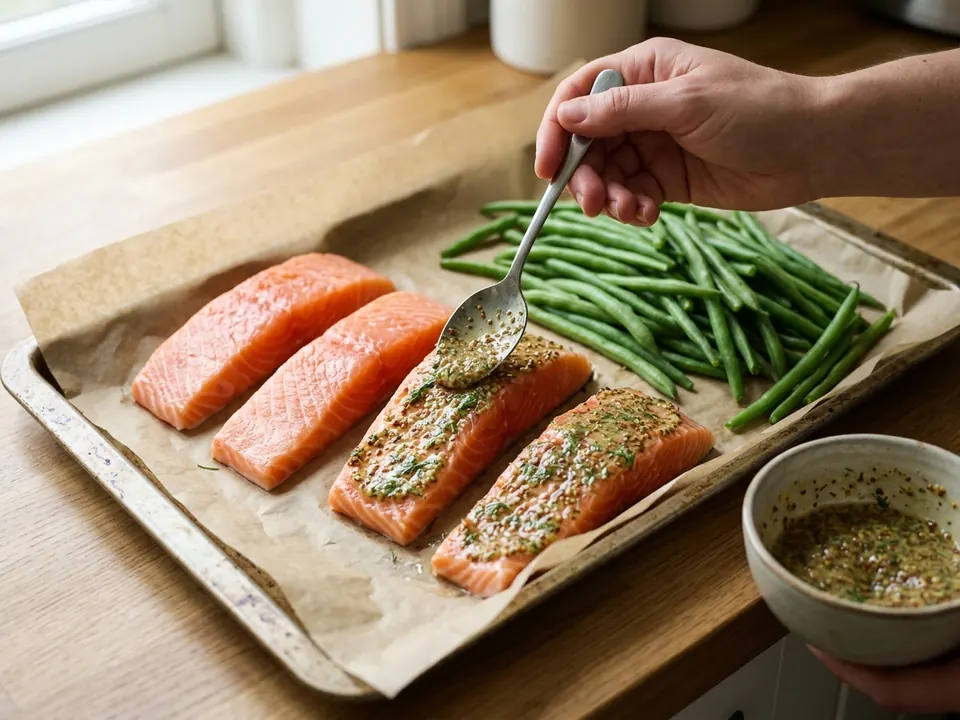
Set the portions on the tray with a little room between them. Put the skin side down if the fillets are skin-on. Divide the glaze across the tops with the spoon. Spread it thinly to the edges and avoid pools of glaze on the parchment, where they can darken.
Step 7. Roast and check each fillet in its thickest part
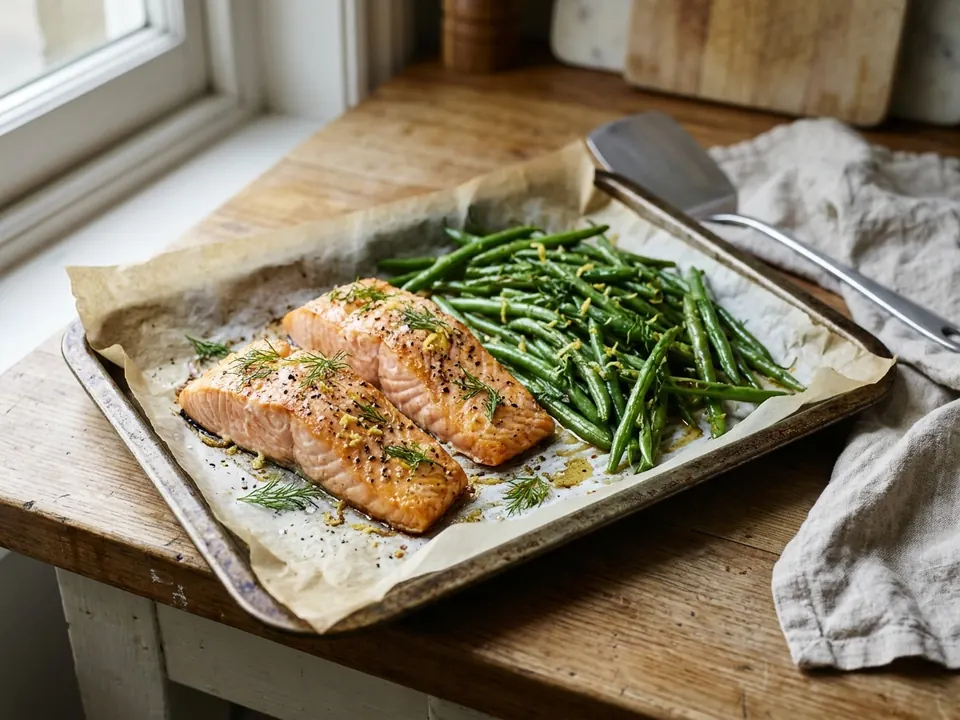
Roast the fish for about 10–12 minutes. Begin checking thinner portions earlier. Put an instant-read thermometer into the thickest part, keeping the tip clear of the tray. Each piece should reach 145°F (63°C). Remove pieces as they finish. Check that the beans are tender enough to bite easily.
Step 8. Lift the salmon and plate as soon as it’s ready
Use a broad fish spatula so each portion holds together as you lift it. Slide between the flesh and the skin if you want to leave the skin on the parchment. Divide the tender beans among the plates, add the salmon and serve with optional lemon wedges.
Take the fish and beans off on their own schedule
Check a thin fillet ahead of the others and lift it to a warm plate at 145°F (63°C). If the thickest fillet needs more time, check the beans and remove them too if tender. When shopping, pick fillets of similar thickness so the first pieces don’t sit long before serving.
Storage
Refrigerate within 2 hours in shallow covered containers at 4°C or colder and use within 2 days for best quality. Reheat gently, covered, to 74°C / 165°F. Freeze cooked salmon separately from beans for up to 1 month for quality; thaw in the refrigerator.
Keep the tail pieces from drying out
A tapered piece can be ready a few minutes before a thick center cut. Put the thinner fillets where you can lift them without moving the others. Check those first, then slide the tray back in if the rest need more time. Hold the cooked pieces briefly on a warm plate while you finish the beans.
Adjust the tray when the vegetables need longer
If the salmon is ready and the beans still feel too firm, lift the fish and spread the beans apart again. Roast the beans alone briefly and check one of the thickest stems. The same idea works with broccoli, which may need a longer head start than the beans. Season the vegetables before you add the fish.
Frequently asked questions
Can I use another fish?
Similar-thickness trout or cod can work, but timing changes. Check 63°C / 145°F in each portion.
Can I replace beans?
Thin asparagus works with a similar head start. Broccoli florets may need longer and should be checked separately.
Can I make the glaze ahead?
Yes. Mix it earlier in the day and refrigerate it covered. Stir it again before spooning it over dry fillets. Keep any glaze that has touched raw fish separate from food that’s ready to serve.
Estimated nutrition
Per serving, about 415 kcal, 33.2 g protein, 9.7 g carbohydrates and 27.3 g fat. Uses farmed Atlantic salmon and includes all the glaze.
Serve hot with bread or Make-Ahead Garlic Mashed Potatoes. See FoodSafety.gov’s temperature chart for fish and leftovers.
Reader comments