

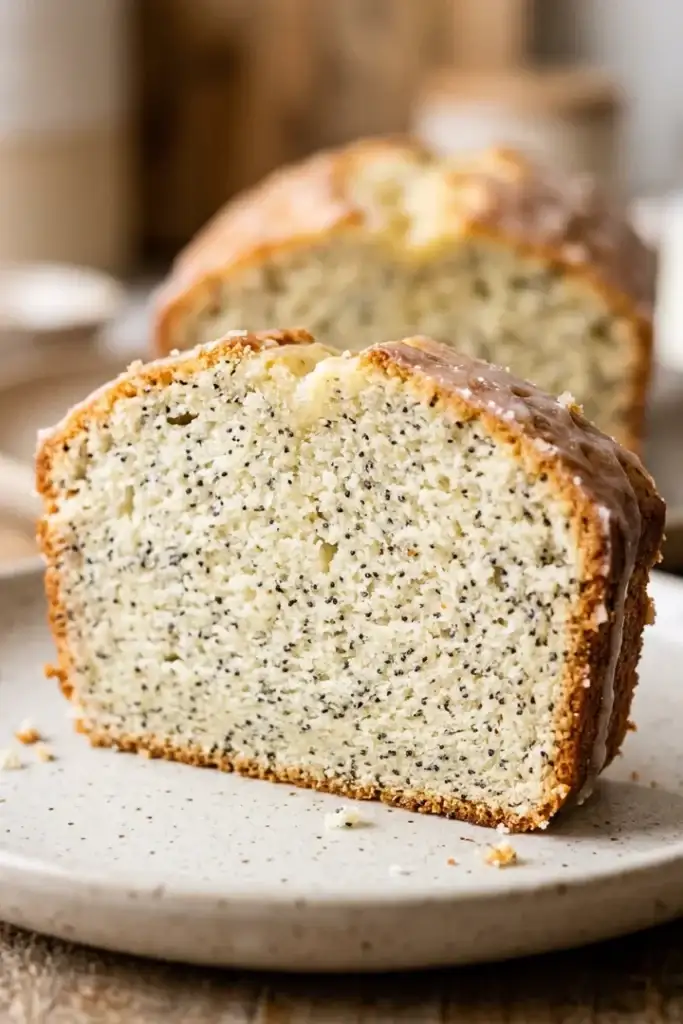
Estimated read time: 7 min 45 sec
When I bake a lemon poppy seed loaf, I always rub the fresh lemon zest into the caster sugar with my fingertips first so the citrus oils perfume the entire batter before the plain yogurt and oil go in. Using neutral oil keeps the crumb tender for days, and a single tablespoon of poppy seeds adds delicate crunch without overwhelming each slice. I bake it in a standard 900 g / 2 lb loaf tin and wait until the rack-cooled loaf feels completely cool to the touch before spooning over the lemon glaze so the opaque topping sets cleanly on the crown.
Servings: 10 slices · Prep: 15 minutes · Cook: 50 minutes · Cooling: 60 minutes · Total: 125 minutes
Zest the lemons before you juice them
Zest the fruit before squeezing it and set out two small bowls for the amounts you need in the batter and glaze. Line the loaf tin with an overhang along the long sides. Give the loaf time to cool before glazing so the coating stays where you pour it.
Key Ingredients & Why They Matter
- Plain full-fat yogurt (150 g) & neutral oil (90 ml): Yogurt’s lactic acid tenderizes gluten strands while its thick body supports the batter structure; pairing it with liquid oil (which remains fluid at room temperature) keeps the crumb moist even after cooling.
- Finely grated zest of 2 unwaxed lemons & caster sugar (150 g): Rubbing the yellow zest into the sugar crystals mechanically extracts volatile limonene oils from the peel without introducing extra liquid that would weigh down the rise.
- Plain all-purpose flour (200 g) & baking powder (2 tsp / 8 g): Eight grams of baking powder provides calibrated carbon dioxide lift for 200 g of flour, raising the dense yogurt batter evenly before the protein network sets in the loaf tin.
- Sifted icing sugar (90 g) & lemon juice for glaze (15–20 ml): Keeping the lemon juice to 15–20 ml creates a supersaturated sugar suspension that flows slowly over the cool crown and recrystallizes into an opaque, crackly glaze instead of soaking into the crumb.
Ingredients
- 200 g plain all-purpose flour
- 2 teaspoons baking powder (8 g)
- 1/4 teaspoon fine salt
- 1 tablespoon poppy seeds (9 g)
- 150 g caster or granulated sugar
- Finely grated zest of 2 unwaxed lemons, yellow part only
- 2 large eggs, about 100 g without shells
- 150 g plain full-fat yogurt
- 90 ml neutral oil, such as sunflower oil
- 30 ml freshly squeezed lemon juice for the batter
- 1 teaspoon vanilla extract (5 ml)
- 90 g icing sugar, sifted, for the glaze
- 15–20 ml freshly squeezed lemon juice for the glaze
Equipment
A 900 g / 2 lb loaf tin approximately 23 × 13 cm, baking parchment, two mixing bowls, whisk, flexible spatula, fine grater, skewer and wire rack. Tin dimensions matter more than the capacity label alone.
Instructions
1. Prepare the tin and dry mixture
Heat the oven to 180°C conventional / 160°C fan / 350°F. Grease the loaf tin lightly and line it with baking parchment, leaving two handles over the long sides. Whisk the flour, baking powder, salt and poppy seeds in a bowl so the raising agent is distributed evenly.
2. Combine lemon and wet ingredients
Rub the lemon zest into the sugar with clean fingertips until fragrant. Whisk in the eggs, yogurt, oil, 30 ml lemon juice and vanilla until evenly combined. Use only the yellow zest; the white pith underneath can make the cake taste bitter.
3. Fold and fill
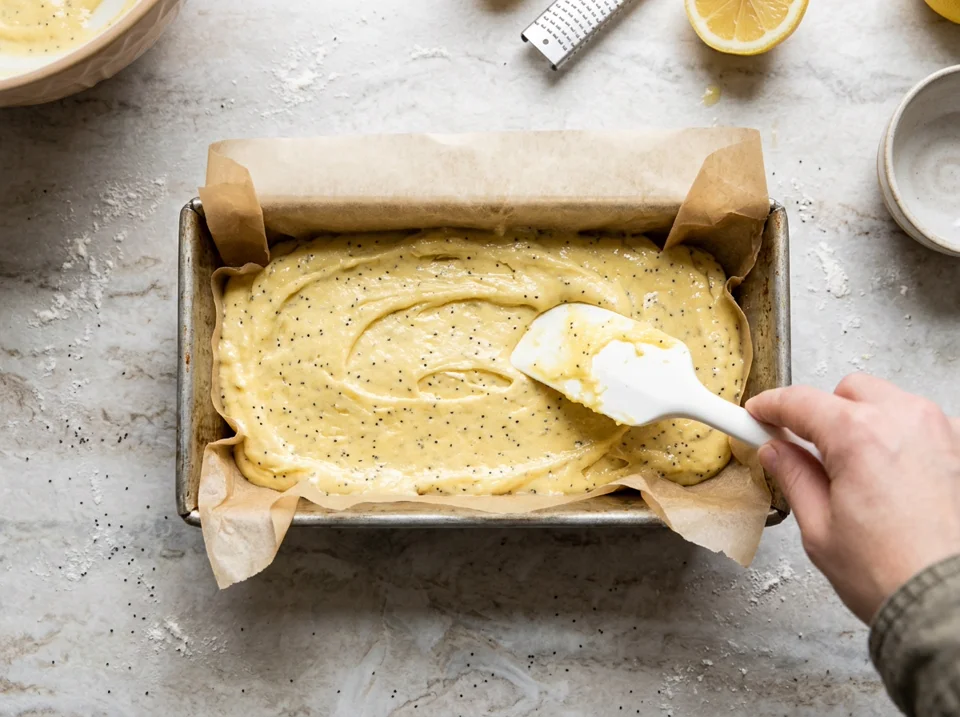
Add the dry mixture to the wet mixture and fold gently with a spatula just until no flour pockets remain. Scrape the bottom of the bowl and stop mixing once combined. Transfer to the lined tin and level the top. The batter should be thick but easily spreadable.
4. Bake and check the center
Bake on the middle shelf for 45–55 minutes. Check at 45 minutes: a skewer inserted into the center should come out clean or with a few dry crumbs, not wet batter. If the top browns before the center is cooked, loosely cover with foil. Do not seal the foil against the cake.
5. Cool and glaze
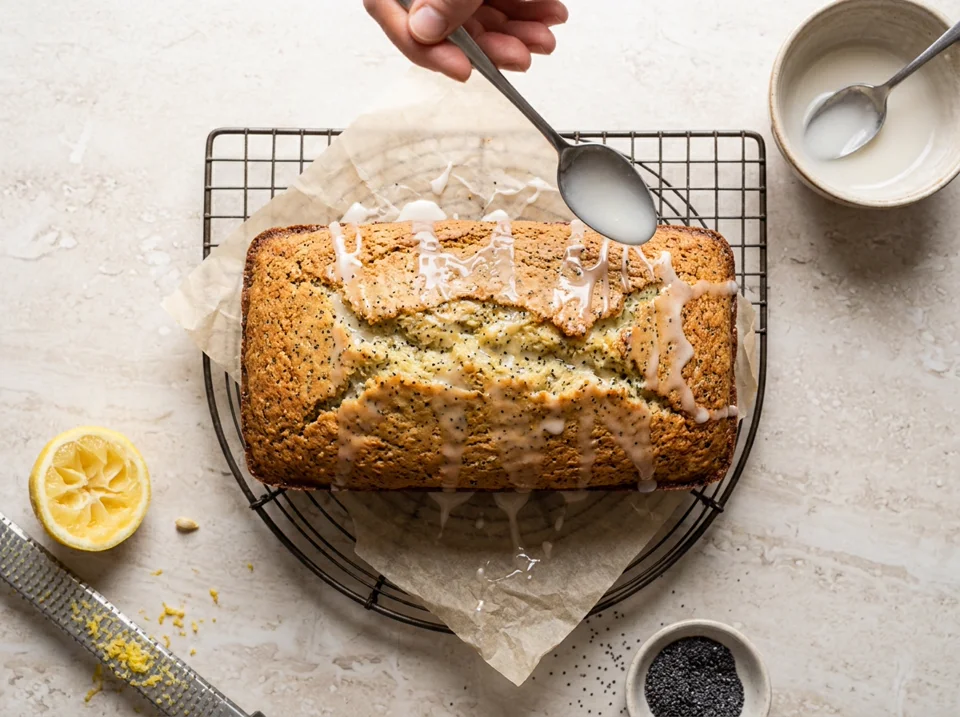
Rest in the tin for 10 minutes, then lift onto a rack using the parchment. Cool completely, about 50 minutes more or longer in a warm kitchen. Stir the icing sugar with 15 ml lemon juice, adding a little more only if needed for a thick pourable glaze. Spoon over the cool loaf and let set before slicing.
Tips for lemon poppy seed loaf
- Weigh flour rather than scooping a densely packed cup. Extra flour can make the lemon poppy seed loaf dry and cause the top to crack more deeply.
- Plain full-fat yogurt gives a reliable consistency. Very thick strained yogurt may need loosening with a teaspoon or two of water, while sweetened flavored yogurt changes the balance.
- Fold the flour in gently. Beating after the flour is added develops gluten and can make a loaf cake tough or produce tunnels through the crumb.
- Use the skewer check in the center, not just near the edge. Loaf tins vary in depth, and a deeper narrow tin may need more time than the same batter in a wider one.
- Wait until the loaf is cool before glazing. Warm cake melts the topping into a thin wet layer. Start with the smaller amount of juice to avoid a glaze that runs off.
- The total time includes about an hour of cooling. Allow additional time if your kitchen is warm or you want the glaze fully set before cutting neat slices.
How to serve lemon poppy seed loaf
Cut the lemon poppy seed loaf with a serrated knife once the glaze has set. Ten modest slices make a useful afternoon treat with tea or coffee. The cake is already lemony and sweet, so fresh fruit or plain yogurt can be served alongside without another icing or syrup. For tidy slices, wipe the knife between cuts rather than pressing down hard.
How to store lemon poppy seed loaf
Keep the fully cooled loaf covered in an airtight container in a cool kitchen for up to 2 days, or refrigerate for up to 4 days and bring individual slices toward room temperature before serving. For longer storage, freeze unglazed slices, individually wrapped, for up to 2 months. Thaw covered and add fresh glaze after thawing if desired. Avoid trapping warmth in a sealed container.
Lemon poppy seed loaf FAQs
Can I leave out the poppy seeds?
Yes. Omit them without changing the flour or liquid amounts. The cake will have the same lemon flavor with a smoother crumb.
Why did my lemon poppy seed loaf sink?
An underbaked center, inaccurate baking powder measurement or opening the oven very early can contribute. Measure carefully and check the center with a skewer before removing the tin.
Can I make the loaf without the glaze?
Yes. Leave out the icing sugar and glaze juice. The cake will be less sweet but still have lemon flavor from the batter juice and zest. Keep the batter ingredients unchanged.
Can I use bottled lemon juice?
Fresh juice gives a brighter flavor, and fresh zest supplies most of the lemon aroma. Bottled juice can replace the measured juice if needed, but keep the fresh zest and avoid added-sugar lemon drinks.
More recipes to try
Try orange yogurt loaf cake or lemon blueberry yogurt muffins.
For practical food handling advice, see FoodSafety.gov storage and preparation guidance.

Reader comments