

Estimated read time: 6 min 45 sec
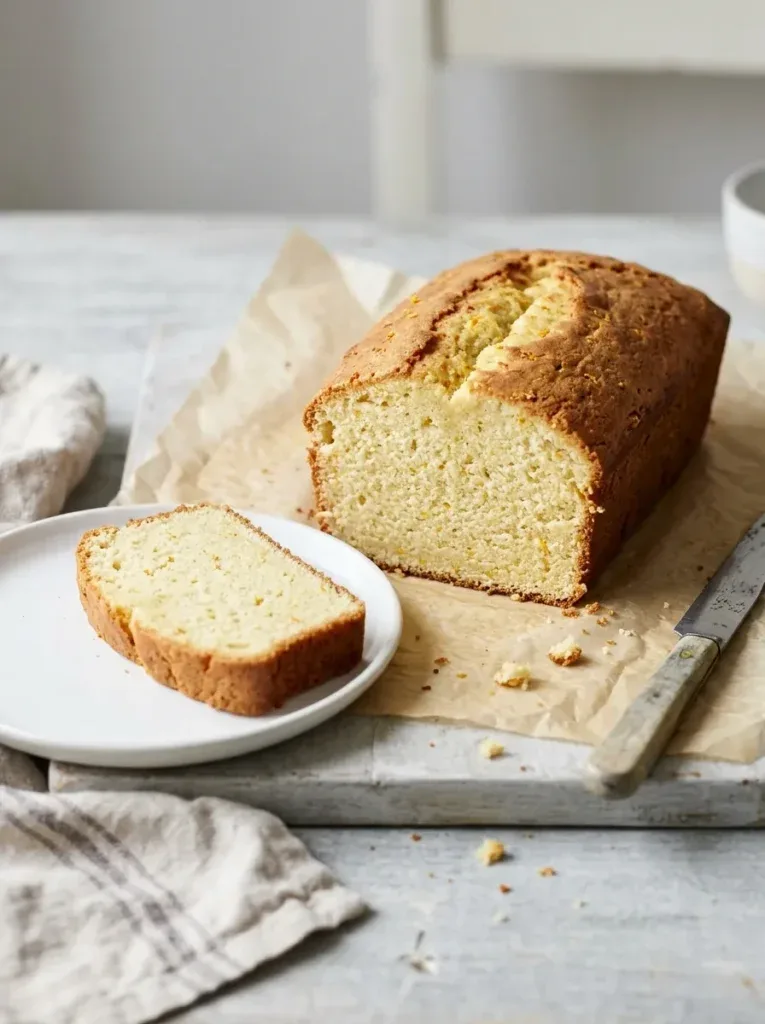
When I bake this orange yogurt loaf cake in my kitchen, I zest the orange directly over the bowl before squeezing the juice so none of those aromatic citrus oils are lost on the board. Whisking plain yogurt and neutral oil with the freshly squeezed juice keeps the batter effortless to mix by hand and gives the loaf a soft, fine crumb with enough bright orange flavor to serve without icing. I always leave long parchment handles on the tin so I can lift the warm loaf cleanly onto the rack without pressing on the tender dome.
Check the center before judging the loaf by color. The top often turns golden while the deepest part is still baking. A thin skewer and a few minutes on the rack make it much easier to tell when the loaf is ready to cut.
Serves: 10 slices · Prep: 20 minutes · Cook: 55 minutes · Total: 150 minutes
Cuisine: European-inspired
Key Ingredients & Why They Matter
- Plain all-purpose flour (200 g) and baking powder (2 teaspoons): Weighed accurately and folded just until dry streaks vanish, this ratio provides structure and steady vertical lift in a deep loaf tin without developing tough gluten strands.
- Plain yogurt (150 g): Its gentle lactic acidity tenderizes the gluten network and adds richness and moisture so the crumb stays plush for days.
- Neutral oil (80 ml): Because oil remains liquid at room temperature, it coats the flour proteins more thoroughly than solid fat and keeps every slice soft even after cooling completely.
- Freshly squeezed orange juice (60 ml) and finely grated orange zest (1 tablespoon): Zest carries fat-soluble aromatic oils that perfume the oil-and-yogurt base, while the juice adds real fruit acidity and hydration.
Ingredients
- 200 g plain all-purpose flour
- 2 teaspoons baking powder
- ¼ teaspoon fine salt
- 150 g caster sugar
- 2 large eggs
- 150 g plain yogurt
- 80 ml neutral oil
- 60 ml freshly squeezed orange juice
- 1 tablespoon finely grated orange zest
- 1 teaspoon vanilla extract
Use a 9 × 5-inch (23 × 13 cm) loaf tin and plain, unsweetened yogurt. Grate the zest before squeezing the orange. The total includes up to 55 minutes in the oven, 15 minutes in the tin and about an hour on a rack.
Instructions
Step 1. Heat the oven and line the tin
Heat the oven to 350°F (180°C), or 160°C fan. Grease the loaf tin and line the base and two long sides with parchment, leaving enough overhang to grip. Press the paper into the base so it does not bow inward. Use the middle rack so the loaf has room to rise.
Step 2. Combine the flour, baking powder and salt
Whisk the flour, baking powder and salt in a medium bowl. Break up hard bits of baking powder against the bowl. If you are measuring flour without a scale, spoon it into the cup and level it. Extra flour makes this batter stiffer and can leave the loaf dry.
Step 3. Whisk the eggs, yogurt and orange
Grate the orange into a bowl, stopping at the white pith, then squeeze and measure 60 ml juice. In a larger bowl, whisk the eggs and caster sugar until well mixed. Whisk in the yogurt, oil, orange juice, measured zest and vanilla until you can no longer see oil on the surface.
Step 4. Fold until the last flour streaks are gone
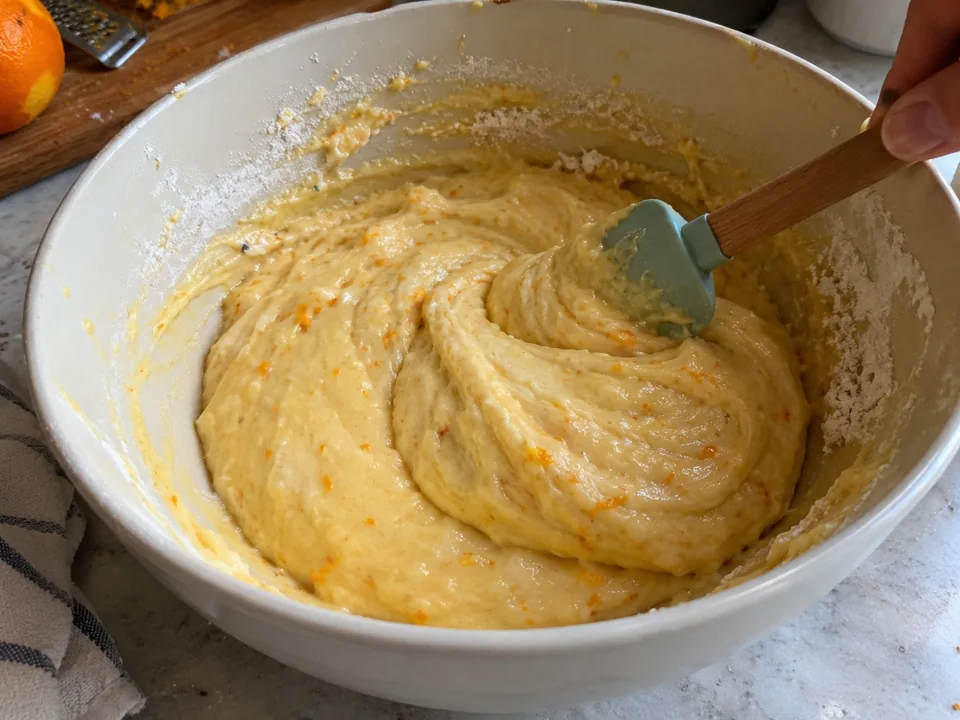
Tip the dry ingredients into the wet mixture. Fold with a flexible spatula and scrape the base of the bowl, where flour can hide. Small lumps are fine. Pour into the lined tin as soon as the dry pockets disappear, then level gently so the batter reaches the corners.
Step 5. Bake and test near the center
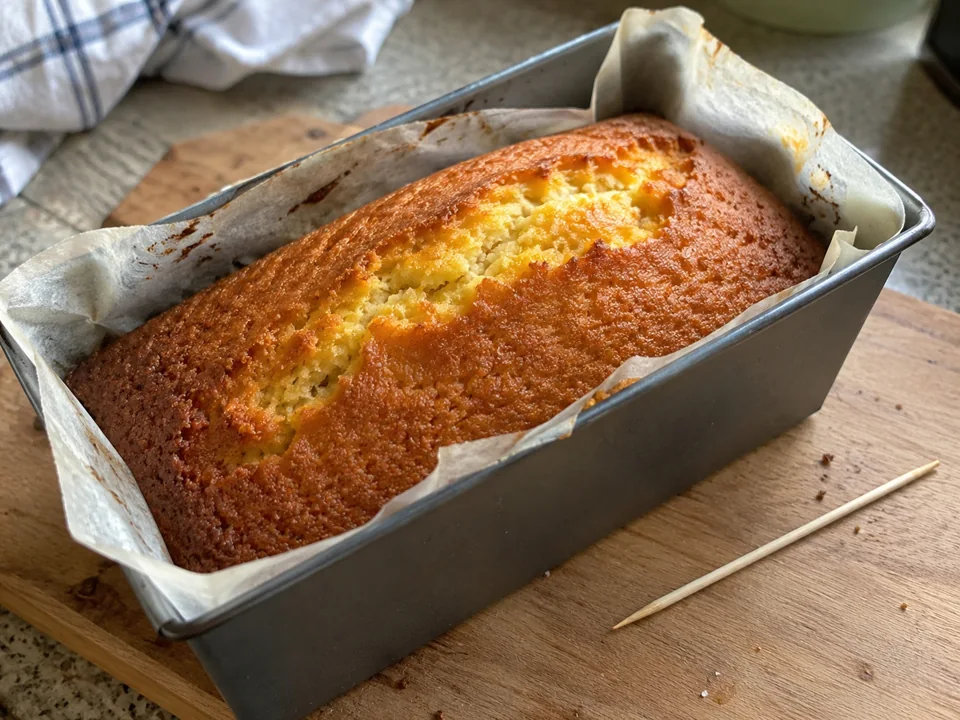
Bake for 45–55 minutes. Start checking at 45 minutes by inserting a skewer through the highest part. It should come out with no wet batter, though a few moist crumbs are fine. If the top is darkening before the center is done, tent loosely with foil after the surface sets and test again in a few minutes.
Step 6. Cool on a rack before slicing
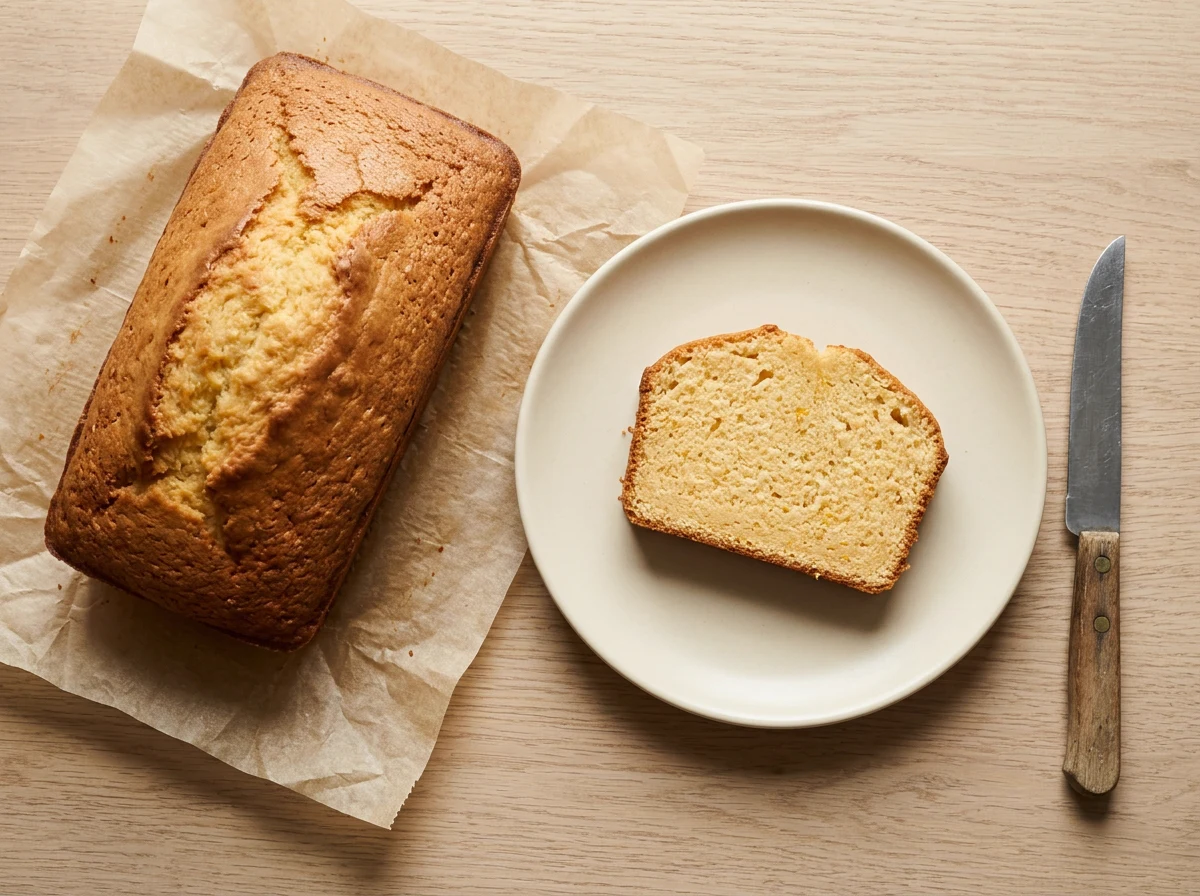
Leave the loaf in the tin for 15 minutes. Lift it with the parchment and rest it on a wire rack until the base feels cool. Peel away the paper and cut with a serrated knife using a gentle sawing motion. Look for a fine, set crumb with no wet line near the base.
What the tin and batter can tell you
A narrower loaf tin produces a deeper batter and usually needs more time. If you use a different size, check the middle rather than following the clock alone. If a cooled loaf has long tunnels or a tight, rubbery crumb, fold less the next time and check the amount of flour with a scale.
Store or freeze individual slices
Cool the loaf fully before wrapping, store at room temperature and use within 3 days for the best texture. Wrap individual slices and freeze for up to 2 months. Thaw in the wrapping at room temperature, or warm a slice briefly if you prefer it soft.
Frequently asked questions
Can I use Greek yogurt?
Regular plain yogurt is the closest match. If thick Greek yogurt is what you have, stir in a little milk until it is spoonable and falls slowly from the spoon, then weigh out the recipe amount.
Is the crack on top normal?
Yes. The surface sets while the middle continues to rise. Test in the center of the crack and a little to one side if needed. Moist crumbs are fine once there is no wet batter.
Can I bake the batter as muffins?
Use a lined muffin tin and check earlier because small portions bake quickly. Fill the wells about three-quarters full and begin checking around 18 minutes. Use a skewer through a center muffin to check for wet batter.
Estimated nutrition
225 kcal, 3.9 g protein, 9 g fat and 32.1 g carbohydrates per slice, based on ten equal slices and plain whole-milk yogurt.
Serving ideas
Serve slices with tea. Add a plate of buttery citrus cookies if you’re serving guests. Lemon Shortbread Cookies

Reader comments