

Estimated read time: 8 min 15 sec
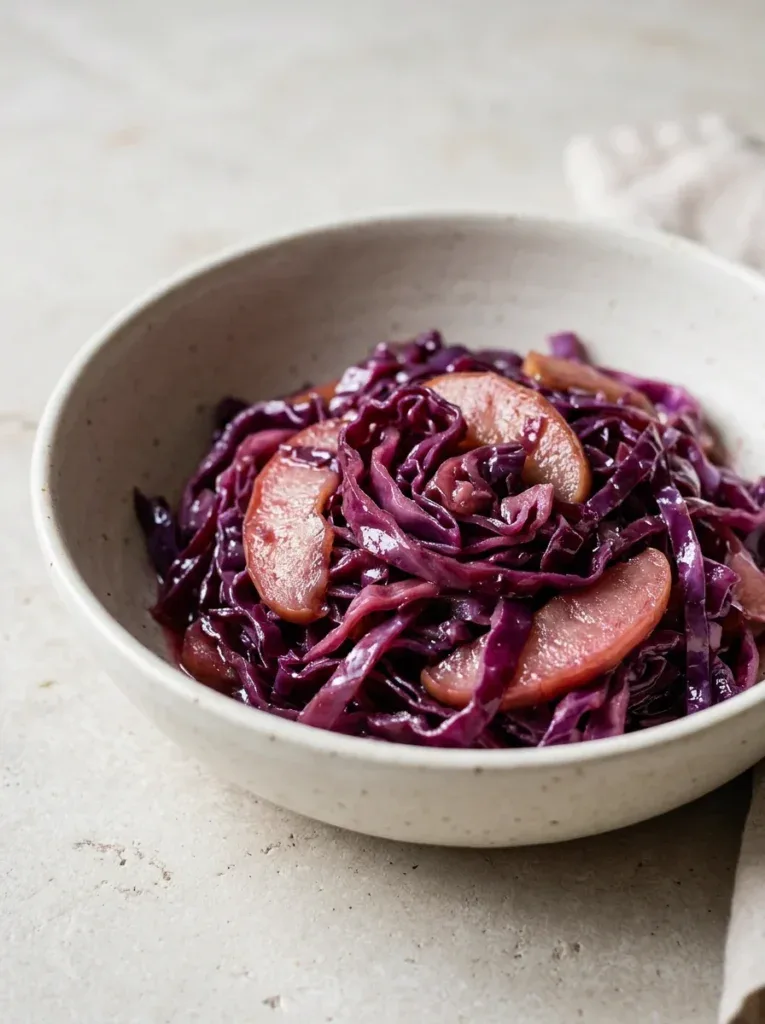
Apple cider braised red cabbage is a sweet-tart side dish with tender ribbons of cabbage and soft slices of apple. In my kitchen, I always keep the pot covered until the thickest cabbage ribs bend easily, then uncover and draw a wooden spoon across the bottom of the pan so I can watch the cider and vinegar reduce into a glossy glaze that clings to the ribbons. Serve it with roast turkey, pork, or a hearty lentil dish.
Servings: 6 side servings · Prep: 15 minutes · Cook: 50 minutes · Total: 65 minutes
Cuisine: European-inspired
Choose a tart apple and check your lid
A firm tart apple holds some shape through the covered braise. Use a pot with a well-fitting lid because the thin cabbage needs that trapped steam before the liquid is reduced. Keep the vinegar handy for the final taste, once the cider has concentrated.
Key Ingredients & Why They Matter
- Red Cabbage (1½ lb, shredded): Dense brassica leaves need a two-stage covered steam and uncovered reduction to break down tough cell walls while retaining their deep ruby pigment.
- Tart Apple (1 apple, such as Granny Smith, cored and sliced): High-pectin, high-acid apples soften during the 30-minute braise without dissolving into mush, lending natural body and tart fruitiness to the pot.
- Apple Cider (¾ cup): Unfiltered apple cider provides the steam required to tenderize the shredded leaves and reduces in the final 10 to 15 minutes into a natural, glossy fruit glaze.
- Apple Cider Vinegar (2 tbsp): Acetic acid reacts with the anthocyanin pigments in red cabbage to lock in a vibrant crimson color instead of letting the leaves turn dull blue-purple, while balancing the sweet reduced cider.
Ingredients
- 1 tbsp unsalted butter
- 1 small red onion, sliced
- 1½ lb red cabbage, shredded
- 1 tart apple, such as Granny Smith, cored and sliced
- ¾ cup apple cider
- 2 tbsp apple cider vinegar
- ½ tsp fine salt
Instructions
Step 1. Core and slice the cabbage
Quarter the cabbage and remove the firm core. Slice the leaves into thin ribbons, cutting especially thick ribs a little finer. Similar widths soften at about the same rate and remain easy to turn once the pot is full.
Step 2. Soften the sliced red onion in butter
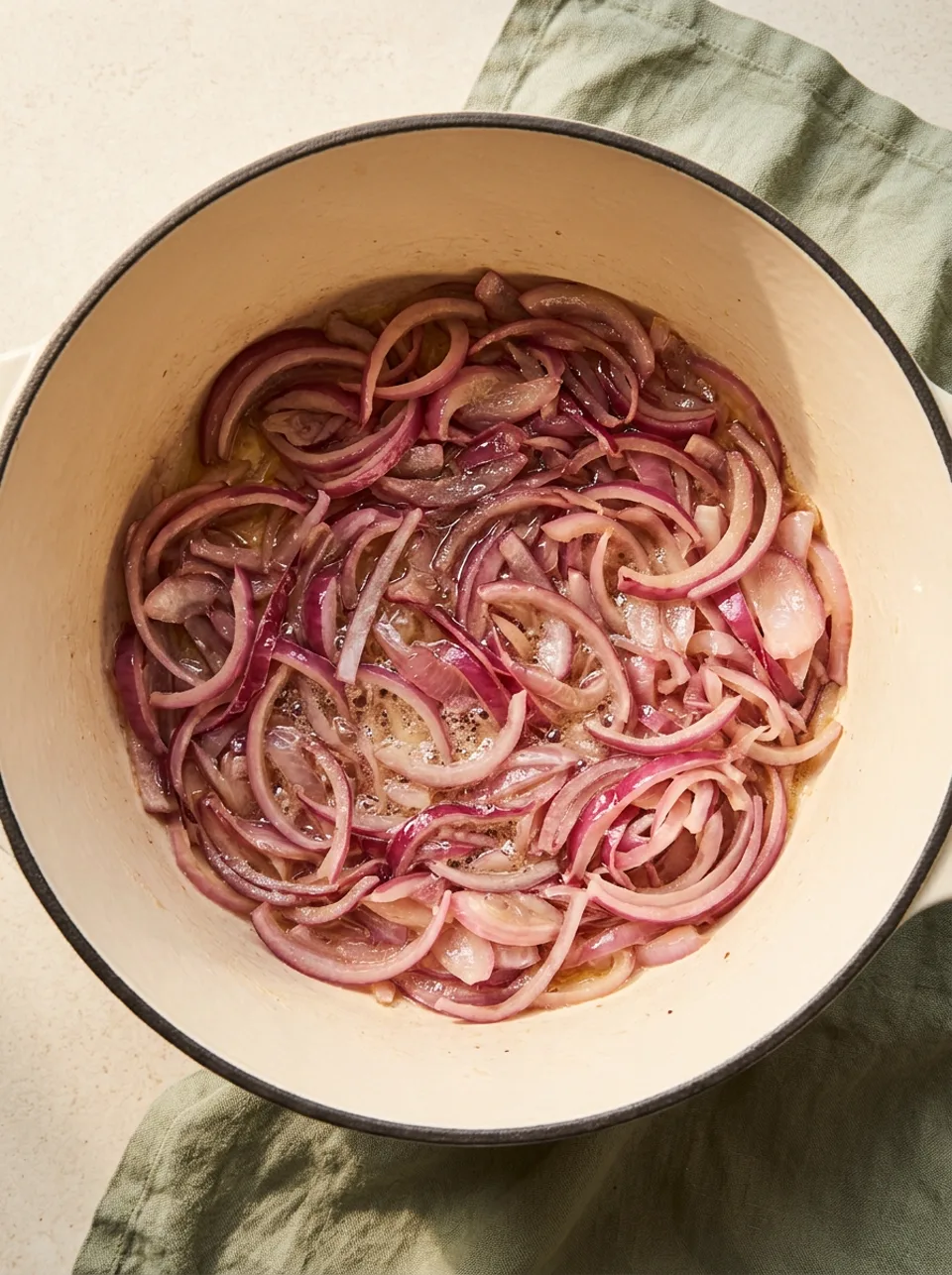
Melt the butter in a wide pot over medium heat. Add the sliced onion and cook for about five minutes, stirring occasionally. The slices should bend easily. Lower the heat if their edges turn dark before the middle softens.
Step 3. Slice the apple and add it with the braising liquid
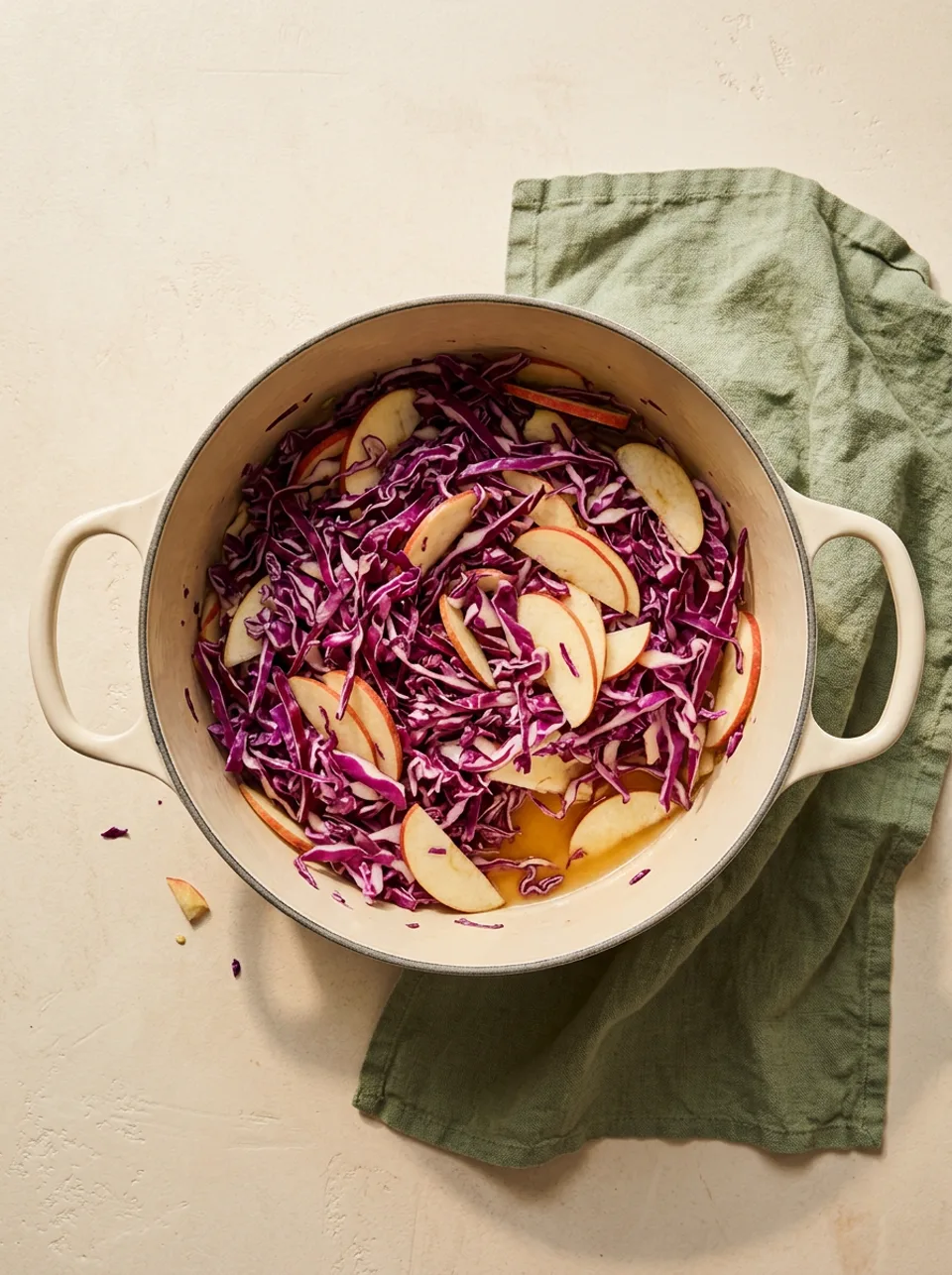
Core and slice the tart apple, then add it with the cabbage, cider, vinegar and salt. Turn the upper ribbons through the liquid until everything looks moistened. Let it heat until small bubbles appear around the sides.
Step 4. Cover and braise at a gentle simmer
Cover and simmer for about 30 minutes. Stir about every ten minutes so the lower ribbons move to the top. If the bottom dries out before the cabbage bends easily, add a small splash of water and replace the lid.
Step 5. Check the thickest ribbon before uncovering
Taste a thick ribbon once the cabbage has collapsed into the liquid. It should be close to tender before you remove the lid to reduce. Give especially thick slices a few more covered minutes so the flesh softens before the liquid concentrates.
Step 6. Uncover and reduce until glossy
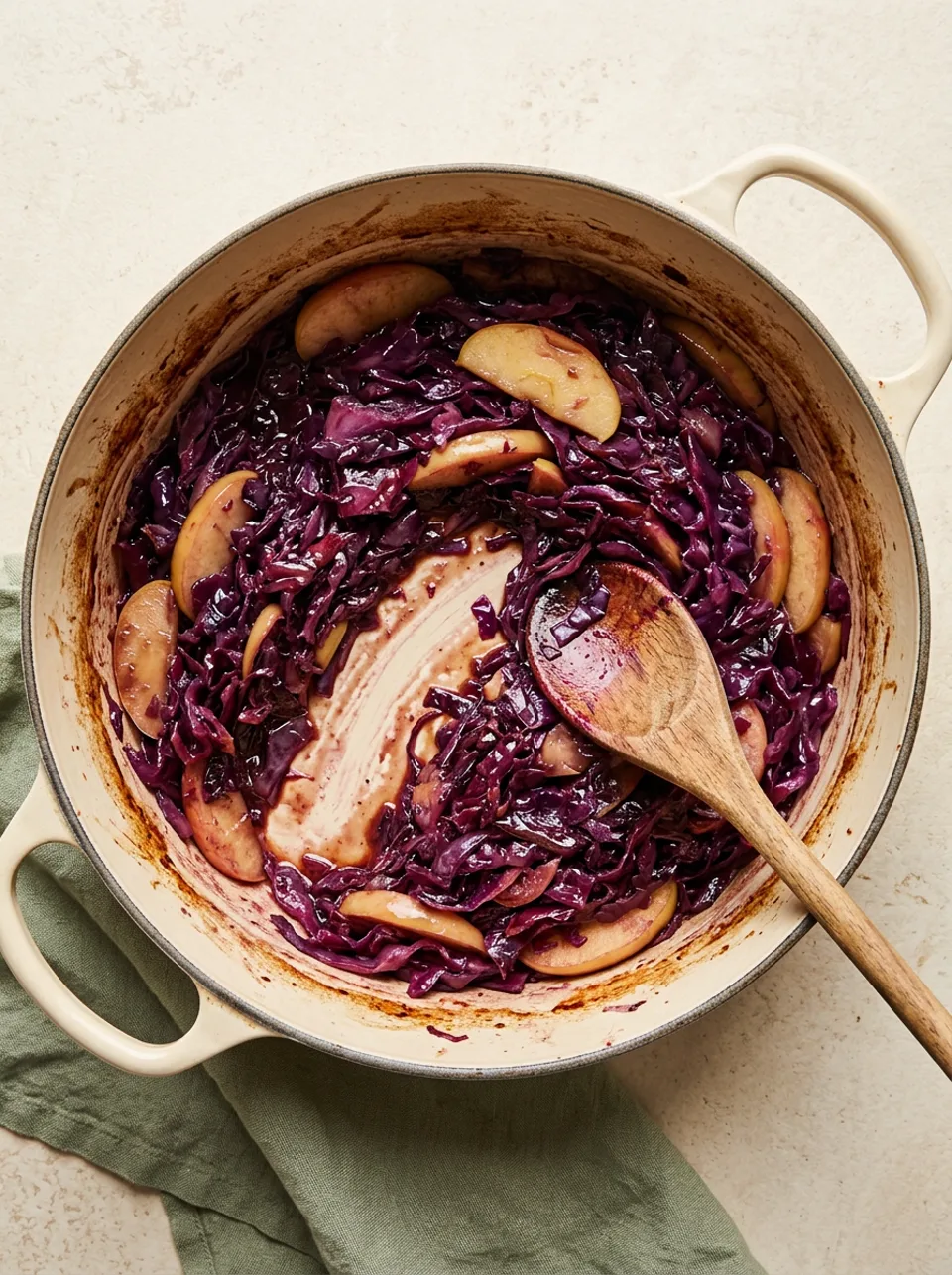
Simmer uncovered another 10–15 minutes. Draw a spoon through the base. If thin liquid immediately refills the trail, reduce a little more. Stir regularly near the end because the apples and reduced cider can catch on the bottom.
Step 7. Taste the apple and cabbage together
Taste a ribbon with an apple slice. If the apple tastes sweet and the cabbage needs more brightness, add a few drops of vinegar. If it already tastes sharp, let it stand briefly and taste again before adding anything.
Step 8. Spoon onto a warm platter
Serve when the ribbons are tender and glossy. Use a slotted spoon if you prefer less juice on the plate. The liquid can go alongside, especially if the cabbage will be served with roast meat or lentils.
Tips for Apple Cider Braised Red Cabbage
Drag a wooden spoon across the bottom of the pot. If the path fills immediately with thin liquid, keep the lid off and simmer a little longer. If the cabbage is still firm and the pan is almost dry, add a splash of water and cover it again.
- Slice the cabbage evenly. Cut the head into quarters and remove the firm core. Place each quarter flat on a cutting board and cut across it into strips about ¼ inch wide. Even strips soften together and are easy to lift with a fork.
- Choose a tart apple. Granny Smith gives the braise a bright flavor. Slice it thinly so it softens in the time the cabbage takes to cook. Leave the peel on if you like the extra texture.
- Use both cider and vinegar. Look for nonalcoholic apple cider. The cider supplies most of the cooking liquid and sweetness. The vinegar adds tang, so measure the two separately.
Make It Ahead
Apple cider braised red cabbage is a good side dish to prepare before a holiday meal because it reheats on the stovetop while the oven is busy. Let the cabbage cool briefly, transfer it into a shallow container, and refrigerate it within two hours. When reheating, add a splash of water if the juices have thickened and stir occasionally until the cabbage reaches 165°F. See the USDA’s guidance for reheating leftovers.
Change the timing based on the cut
If your knife leaves a mixture of narrow strips and thick rib pieces, check a rib to judge the covered braise. The narrow ribbons may already be tender. Move them gently when stirring so they keep their shape while the thicker pieces finish.
Separate softening from reduction
Keep the lid on while the ribbons are firm. Once they bend easily, uncover to cook down excess cider. Trying to reduce too soon can leave the bottom dry while the cabbage still needs steam. Add water a spoonful at a time if that happens and cover again.
Cool before packing for the next day
Refrigerate the cabbage in shallow containers within two hours and use within three days. Reheat a portion with a splash of cider or water to 165°F (74°C). Taste at the end because the vinegar can come through more strongly after a night in the fridge.
Frequently asked questions
Can I use apple juice?
Yes. Use unsweetened apple juice in the same amount. Taste the cabbage after reducing the liquid and add a small splash of cider vinegar if you want a sharper finish.
Can I make it a day ahead?
Yes. Braise it fully the day before, then reheat it just before serving. Keep it covered at first and uncover for the last few minutes if more liquid has collected.
Why is my cabbage tough?
Thicker strips may need more time. Cover the pot again, add a splash of water if needed, and simmer gently for another five minutes before tasting. Reduce any excess liquid after the cabbage is tender.
Which tart apples hold their shape?
Granny Smith is a useful choice. If using a softer apple, cut slightly thicker slices so they can still be separated from the cabbage after cooking.
Estimated nutrition
Per serving (1 of 6): 85 kcal, 1.9 g protein, 17.1 g carbohydrates and 2.2 g fat. Calculated using generic USDA FoodData Central values. Unsweetened apple juice stands in for cider.
The tart cider and soft apple are especially good alongside a rich roast. For a holiday dinner, use the Make-Ahead Thanksgiving Menu to decide which sides to prepare while the cabbage braises.
Reader comments