

Estimated read time: 8 min
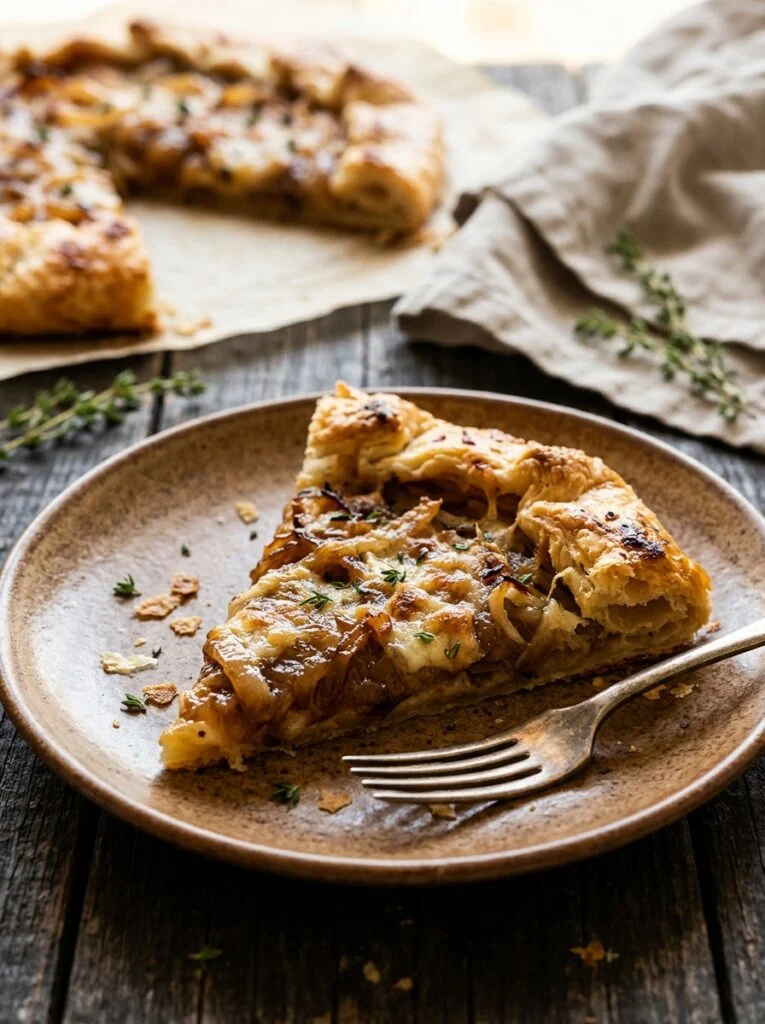
Caramelized onion and Gruyère galette pairs soft, deep-golden onions with a nutty layer of melted cheese and a folded pastry rim. In my kitchen, I always spread the hot caramelized onions out on a flat plate to let the steam escape completely before unrolling the chilled pie crust, and I scatter most of the Gruyère directly on the dough as a moisture barrier so the bottom bakes up crisp. A sheet of refrigerated pie crust makes the shaping straightforward once the onions are cool and spread in a thin, even layer.
Build the timing around the onions. They soften quickly, but turning them from pale to deep gold takes longer. Use that time to grate the cheese and pull the thyme leaves. Once the onions have cooled, the filling and folding take only a few minutes.
Serves: 6 wedges · Prep: 25 minutes · Cook: 80 minutes · Total: 115 minutes
Cuisine: French-inspired
Give the onions time to cool before assembly
Set a plate by the stove for cooling the cooked onions. Spread them out when they come off the heat so the steam clears before you put them on cold pastry. Keep the crust refrigerated until the filling is ready to spread.
Key Ingredients & Why They Matter
- Yellow Onions (600 g): Slowly cooking 600 g of sliced onions down in 25 g of butter evaporates their cellular water and concentrates natural fructans into jammy, amber sweetness without soggy liquid.
- Gruyère Cheese (100 g, divided): Placing 70 g directly on the raw dough creates a fat-rich, melted seal that shields the pastry from onion moisture, while the remaining 30 g browns on top.
- Refrigerated Pie Crust (1 sheet / 230 g): Keeping the laminated fat in the pastry cold until assembly—and baking on a lower rack at 400°F (200°C)—ensures the base blisters and turns crisp all the way to the center.
- Egg (1 whole): Brushed in a thin film over the pleated border, the egg proteins and lipids accelerate Maillard browning for a glossy, structured rim that holds the wedges together.
Ingredients
- 1 refrigerated pie crust (230 g)
- 600 g onions
- 25 g unsalted butter
- 100 g Gruyère
- 1 tsp fresh thyme
- 1 egg
Use the 230 g refrigerated crust and 600 g yellow onions measured before trimming. A wide skillet helps moisture escape. Divide the Gruyère into about 70 g for underneath the onions and 30 g for on top. The total allows the upper end of both cooking ranges and a short rest after baking. While the onions cool, preheat the oven and get the tray and other ingredients ready.
Instructions
Step 1. Slice the onions into even strips
Peel the onions and halve them through the root. Put each half flat on the board and cut into thin slices. Similar thickness matters more than exact size. Separate any thick wedges or groups of rings before they go into the pan. A few larger pieces will stay pale well after the thinner ones have browned.
Step 2. Cook the onions until deep gold and soft
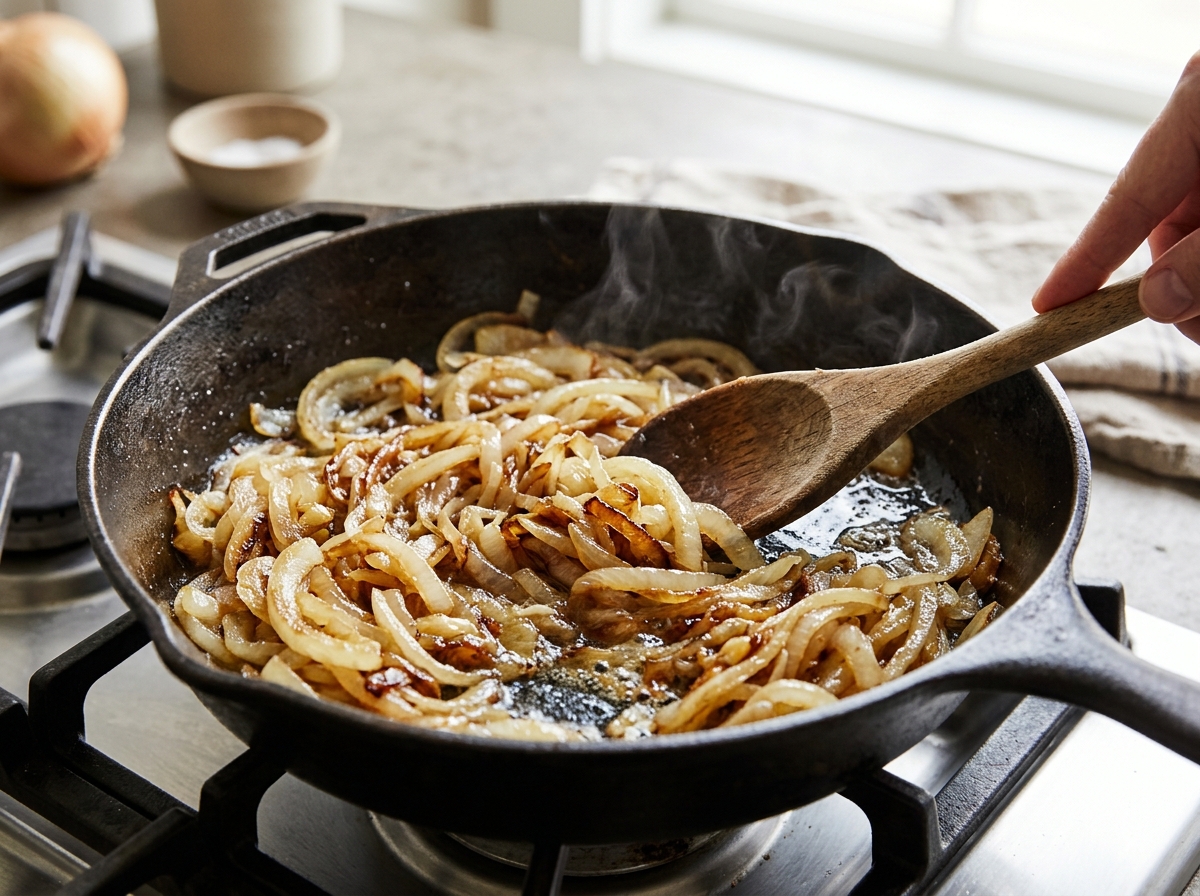
Melt the butter in a wide skillet over medium heat. Add the onions and stir until they start to soften, then reduce to medium-low. Cook for about 35–50 minutes, stirring more often as the color deepens. Scrape up golden bits as you turn the onions. If the bottom starts to catch before the slices soften, add a teaspoon or two of water and let it evaporate. Stop when the onions are soft, amber and free of loose liquid. Spread them on a plate to cool.
Step 3. Get the pastry and cheese ready
Heat the oven to 400°F (200°C) and put a rack in the lower half. Line a flat rimmed tray with parchment. Unroll the crust onto it when the onions have cooled, following the pack’s guidance if the pastry needs a few minutes to become pliable. Scatter about 70 g grated Gruyère over the center. Keep a clean border about 2 inches (5 cm) wide so it can fold without a mound of cheese in the way.
Step 4. Add the onions, fold and brush the rim
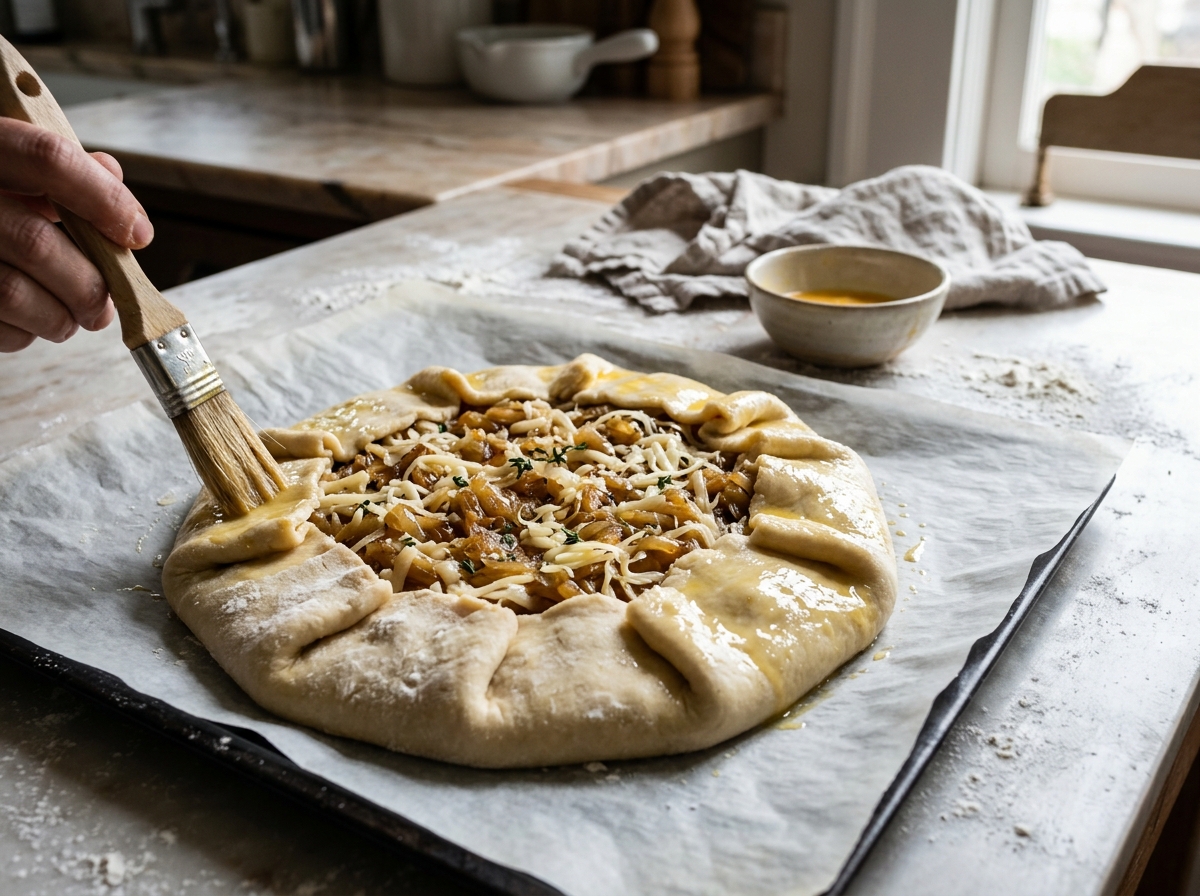
Spread the cooled onions over the cheese in a single, loose layer. Sprinkle on the thyme and remaining Gruyère. Lift the edge of the dough and fold it over the filling a short section at a time, overlapping the folds. Gently press each seam to keep it closed. Beat the egg and brush a thin film over the folded pastry. Avoid letting egg wash pool underneath the edge.
Step 5. Bake until the bottom is golden
Bake for 25–30 minutes, checking near the lower end. The folded edge should have an even golden color and the exposed cheese should melt. Lift an edge carefully with a thin spatula and check the bottom. If the rim is brown but the base still looks pale and feels soft, tent the rim loosely and give it a few more minutes on the lower rack.
Step 6. Rest before cutting into wedges
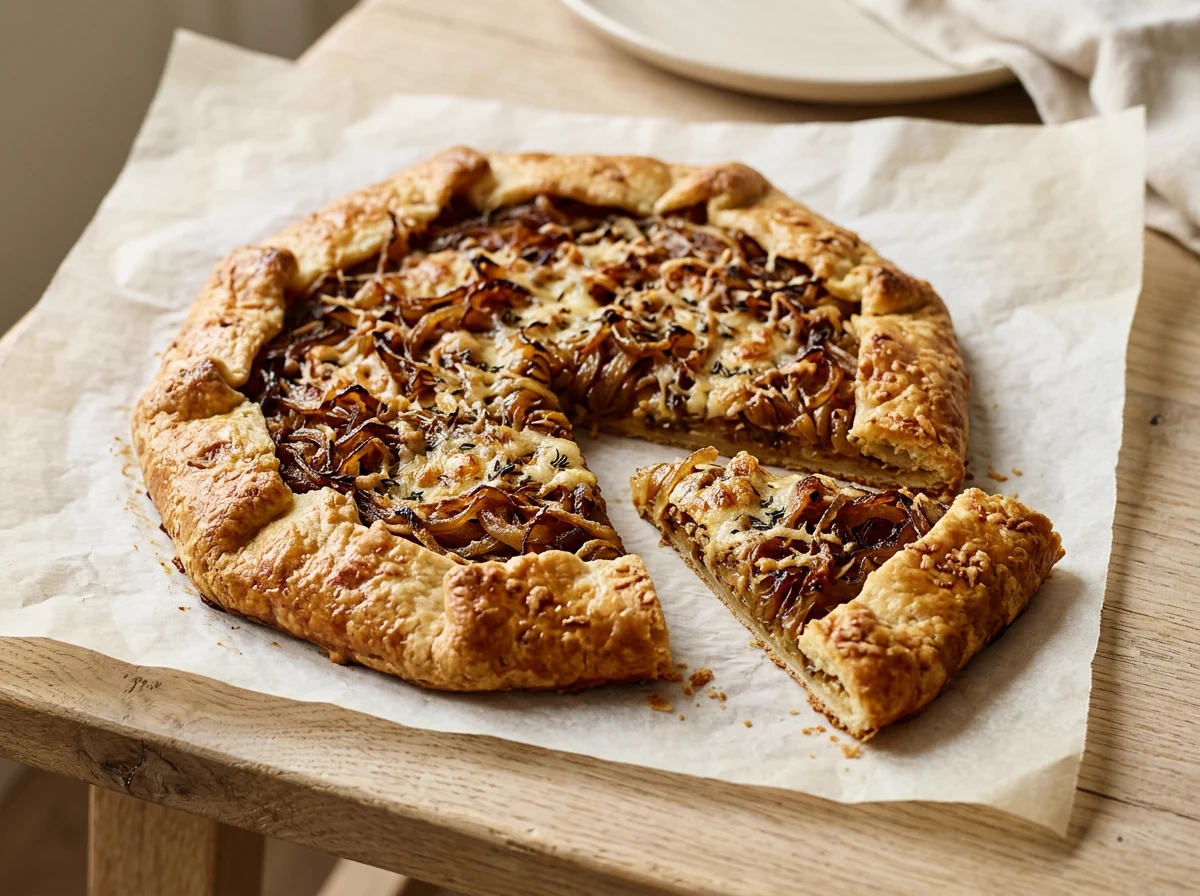
Let the galette stand for about 10 minutes on the tray. The cheese will settle and the onion layer will hold together better when you lift a wedge. Use a sharp knife and cut cleanly through the folded crust first. Slide a broad spatula under each wedge to keep the thin center from bending.
Get the onions dark without drying them out
The onions start by giving off water. Let that moisture escape and stir whenever a patch of onion begins to stick. As they shrink, lower the heat if you see dry dark flecks before the rest turns gold. When the onions are ready, they should stick together softly on a spoon and leave little liquid behind. Spread them out to cool so steam escapes instead of collecting in the center of the filling.
Why a galette base stays soft
A warm or wet filling softens the dough before it gets to the oven. Cool the onions on a plate and use a thin layer over the cheese. If the dough feels floppy after folding, chill the assembled galette briefly before baking. Check the underside before taking it out, since a well-colored rim alone tells you how much heat the edge has had.
Make ahead and keep the crust crisp
Cook the onions a day ahead, refrigerate within 2 hours and drain off any liquid that collects before assembling. Refrigerate leftover wedges within 2 hours and use within 3 days. Reheat them on a tray in the oven until they reach 165°F (74°C). A microwave warms the filling quickly but softens the pastry. FoodSafety.gov reheating guidance
Frequently asked questions
Can I use another cheese?
Use a grateable cheese that melts, such as Comté or a firm Swiss cheese. It will change the flavor, but keep the measured weight and leave the pastry border clear.
What if the pastry cracks as I unroll it?
Give it a few minutes to soften following the package. Press a small crack closed with your fingertips. Keep the finished round chilled while any still-warm onions cool.
Can I assemble the whole galette the day before?
For best texture, cook and chill the onions ahead and assemble when the oven is heating. Keeping the filling and pastry separate gives the base a better chance to turn crisp.
Estimated nutrition
About 285 kcal, 8 g protein, 18 g fat and 27 g carbohydrates per wedge. The estimate uses refrigerated pastry and assumes roughly half of the egg wash stays on the galette.
Serving ideas
Serve warm in wedges with a bright, cool salad. Orange Fennel Farro Salad
Reader comments