

Estimated read time: 8 min
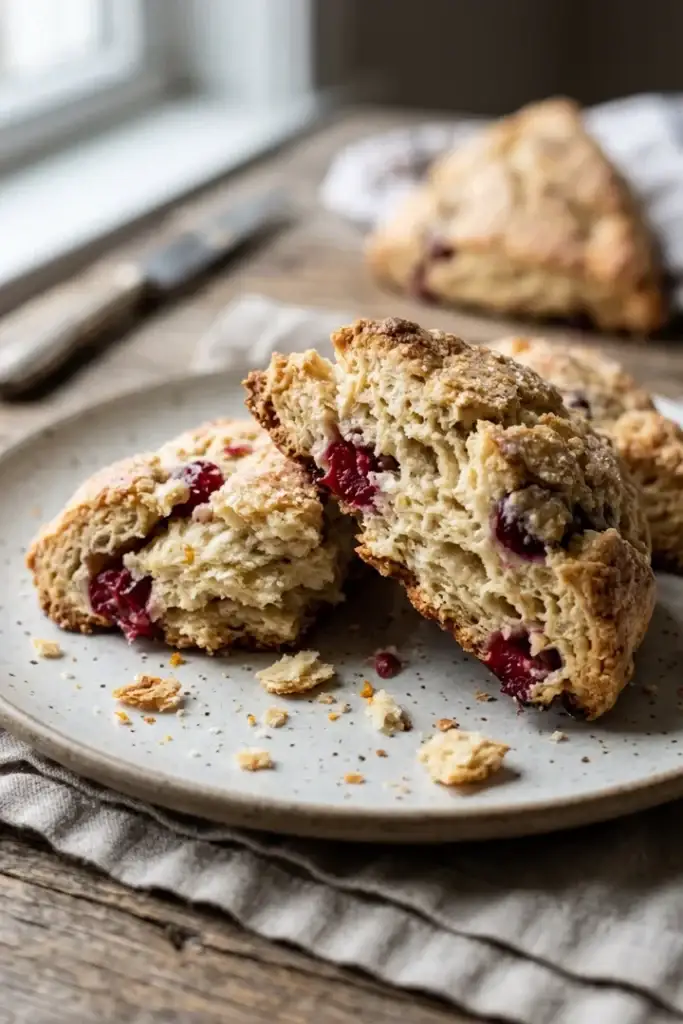
In my kitchen, I always rub the fresh orange zest directly into the sugar until it feels slightly damp and fragrant before building these cranberry orange scones. Keeping the cubed butter thoroughly chilled gives the baked wedges a tender crumb with visible flaky layers and tart pockets of fruit. I fold the cream in only until a handful holds together when squeezed, stopping even while a few dusty streaks of flour remain so the crumb stays soft.
Servings: 8 scones · Prep: 20 minutes · Cook: 22 minutes · Total: 47 minutes
Cuisine: British-inspired
Chill the butter and protect the cranberries
Cube the butter and return it to the refrigerator while you zest the orange. If using frozen berries, measure them while frozen and fold them in just before shaping. Have the baking sheet ready so the cut scones spend less time warming on the counter.
Key Ingredients & Why They Matter
- Cold unsalted butter, cubed (115 g): Flattening cold butter cubes into thin flakes coats portions of the flour to limit gluten development and releases steam in the 400°F oven to lift the crumb into tender layers.
- All-purpose flour (280 g) & baking powder (1 tbsp): This ratio provides enough structure to support bursts of juicy fruit while the generous tablespoon of double-acting baking powder ensures a high, light rise before the crust sets.
- Granulated sugar (65 g) & zest of 1 large orange: Rubbing the zest crystals against the sharp sugar granules ruptures the citrus oil glands, binding the fat-soluble orange aroma evenly throughout the dry mix.
- Heavy cream (120 ml) & large egg (1): The high butterfat in heavy cream tenderizes the dough without adding excess water, while the egg protein sets the crumb structure around the tart cranberries so the wedges hold their shape.
Ingredients
- 280 g all-purpose flour
- 65 g granulated sugar
- 1 tbsp baking powder
- ½ tsp fine salt
- Zest of 1 large orange
- 115 g cold unsalted butter, cubed
- 110 g fresh or frozen cranberries
- 120 ml heavy cream, plus more to brush
- 1 large egg
Use cold cream and butter. If the cranberries are frozen, keep them in the freezer until the butter has been rubbed into the flour and add them straight from frozen. Set aside a spoonful of extra cream for brushing. The total includes five minutes of cooling on the pan.
Instructions
Step 1. Heat the oven and chill the butter
Heat the oven to 400°F (200°C) and line a sheet pan with parchment. Cut the butter into small cubes and refrigerate them while measuring the remaining ingredients. If the kitchen is warm, put the bowl and a flexible spatula in the fridge for a few minutes too.
Step 2. Rub the orange zest into the sugar
Zest the orange over the sugar so the fragrant oils land in the bowl. Rub the two together until the sugar looks slightly damp and smells strongly of orange. Stop grating when you reach the white pith, which can taste bitter. Stir in the flour, baking powder and salt.
Step 3. Rub in the cold butter
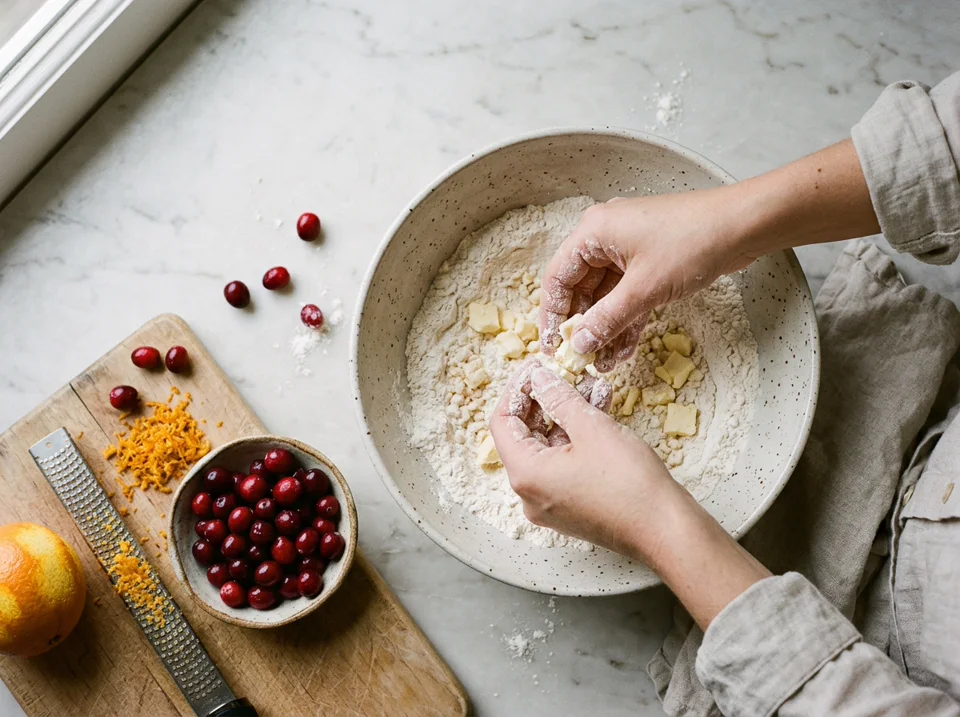
Add the chilled butter and flatten some of the pieces between your fingers. Work through the flour until you see thin bits of butter and a few pea-sized pieces. If the butter starts to smear like a spread, chill the bowl briefly and continue once the cubes feel firm again.
Step 4. Fold the cranberries into the dry mix
Add the cranberries and toss once or twice so the fruit is spread through the flour. If a few frozen berries are stuck together, separate them before they go in. Whisk the 120 ml cream and egg in a second bowl, then keep that mixture chilled while you clear a space to shape the dough.
Step 5. Add the cream and egg and check the dough
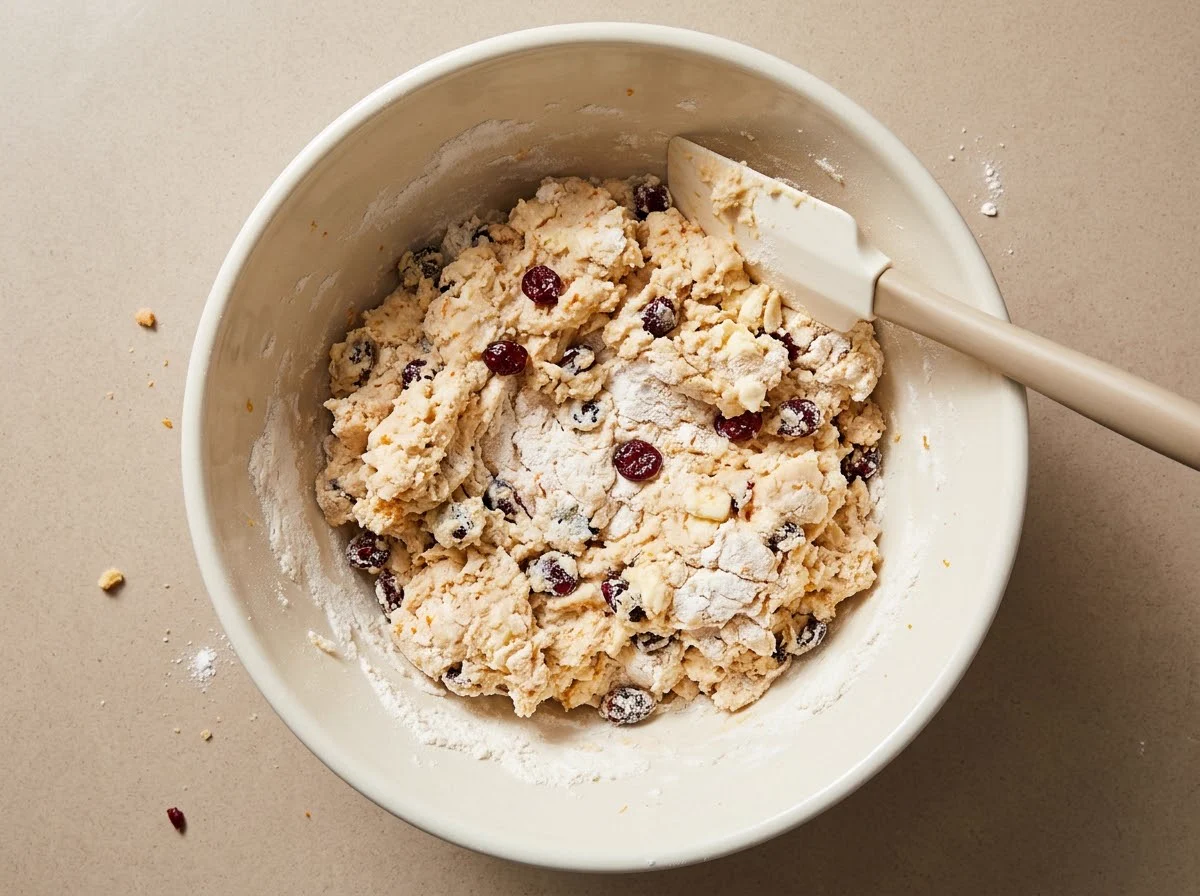
Pour the liquid into the bowl and fold with a spatula, scraping the bottom to pick up loose flour. Stop when a handful holds together with a squeeze. A few floury streaks can remain. If a handful falls apart immediately, add extra cream a teaspoon at a time before pressing it together again.
Step 6. Pat the dough into an even disc
Turn the rough dough onto the work surface. Press loose pieces into the sides and pat it into a disc about 2.5 cm thick. Check it at the middle and edges. If the center is taller, flatten it lightly with your palm so all eight wedges bake at about the same rate.
Step 7. Cut eight wedges and brush the tops
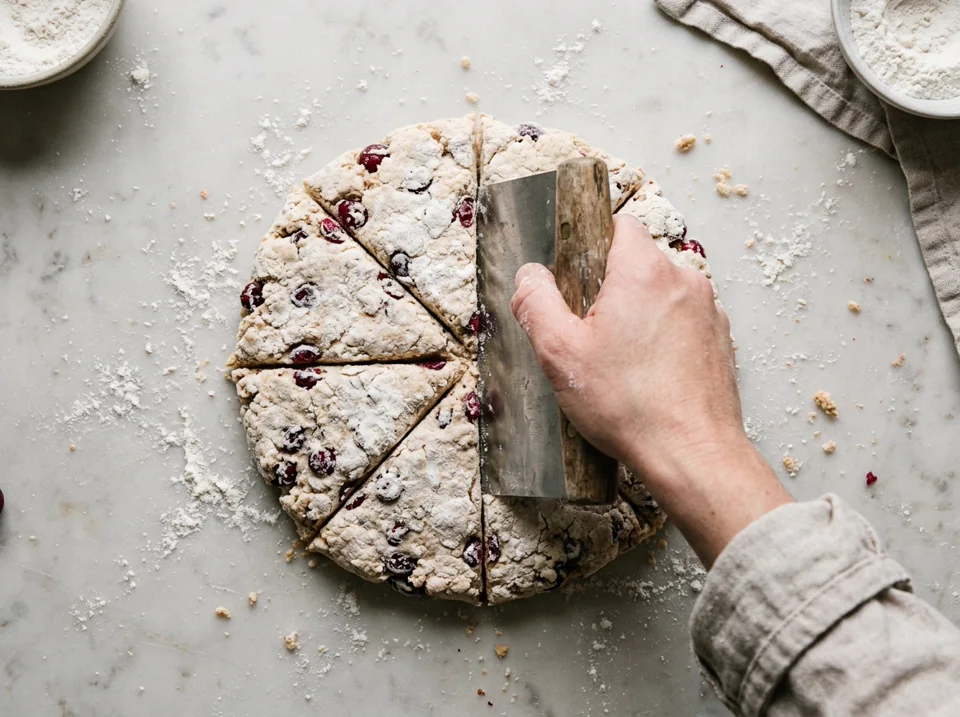
Cut straight down with a sharp knife. Slide the wedges onto the pan with a thin spatula and leave room between them. Brush a light coat of cream across the tops. Keep the cut sides free of cream and wipe the knife before another cut if dough begins to cling.
Step 8. Bake and check a split near the tip
Bake for 18–22 minutes. Look for golden edges and a center that feels set when you touch it gently. If a split in a thicker wedge exposes damp dough, leave the tray in for another minute or two. Check the thickest wedge before removing the whole batch.
Step 9. Cool briefly on the pan, then move to a rack
Leave the scones on the tray for five minutes so the tips firm up enough to move. Slide a spatula underneath and transfer them to a rack. Let air reach the bottoms as they cool. Serve slightly warm or wait until they are fully cool before storing.
Adjust to the feel of the dough
A shaggy dough should hold together when squeezed. If it crumbles apart after you’ve pressed in the dry bits, add another teaspoon of cream and fold once. If it feels sticky, chill it briefly before cutting and dust the knife instead of working in more flour. Too much flour can make the baked scones dry at the tips.
Bake a few now and keep some for later
Freeze shaped, unbrushed wedges on the tray, then pack them in a sealed container once solid. Brush with cream immediately before baking from frozen. Start checking at the usual time and add a few minutes if the centers need it. Cool any baked scones fully before storing so their bottoms don’t trap steam.
Store the scones after the bases cool
Keep cooled scones in an airtight container at room temperature for a day or two, or freeze separately and wrap once firm. Warm thawed scones for a few minutes in a low oven if you want to bring back the firm edges. Keep the cut fruit side facing up on the tray so steam doesn’t pool around it.
Frequently asked questions
Can I use frozen cranberries?
Yes. The recipe allows fresh or frozen cranberries; fold them in gently so the dough is not overworked.
Why are my scones tough?
Too much mixing develops the flour. Fold just until the mixture holds together and press any remaining dry flour in gently.
How do I know the scones are baked?
Check within the 18–22 minute range for golden edges and set centers. Cool on the tray for 5 minutes before moving to a rack.
Can I use dried cranberries?
Yes. Use a little less by weight because dried cranberries are concentrated and often sweetened. Scatter them evenly and expect chewier pockets and less tart juice than with fresh fruit.
Estimated nutrition
Per serving, approximately 335 kcal, 5 g protein, 38 g carbohydrates and 18.5 g fat. Includes a light cream brushing.
Serve warm with coffee or tea. For a softer breakfast bake that also uses fresh citrus, try Lemon Blueberry Yogurt Muffins.
Reader comments