

Estimated read time: 7 min
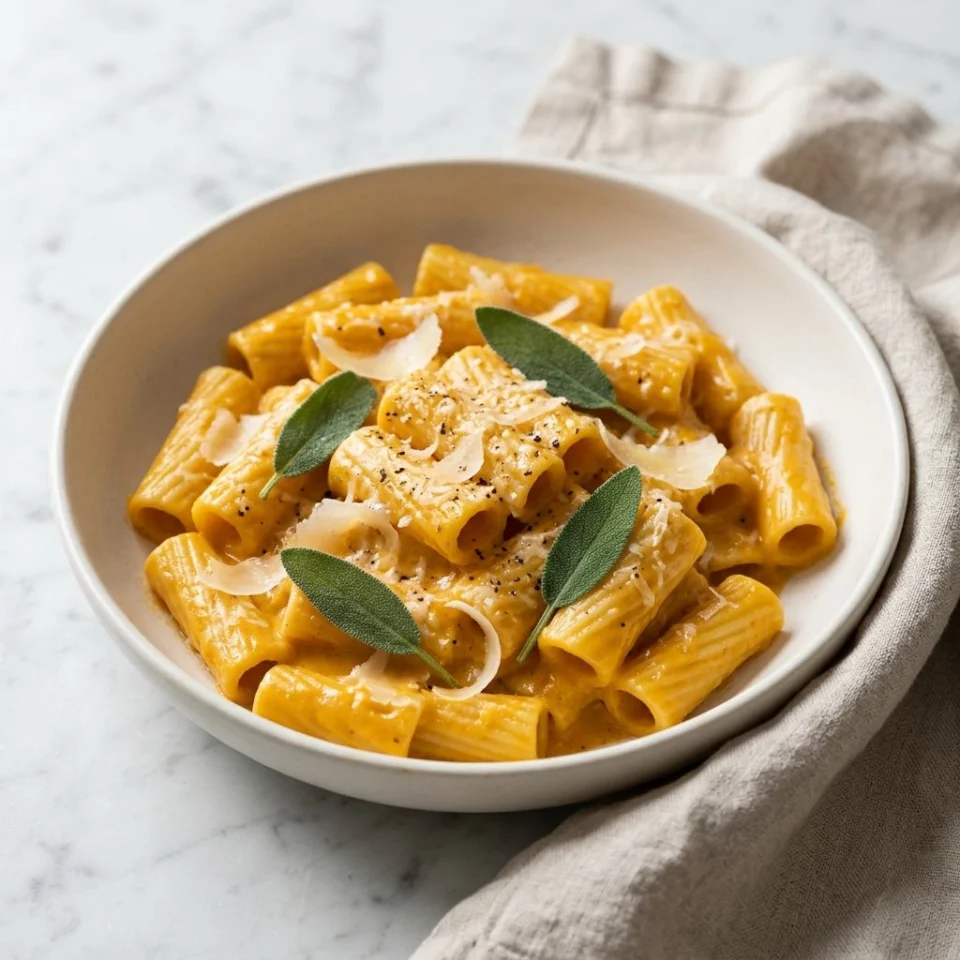
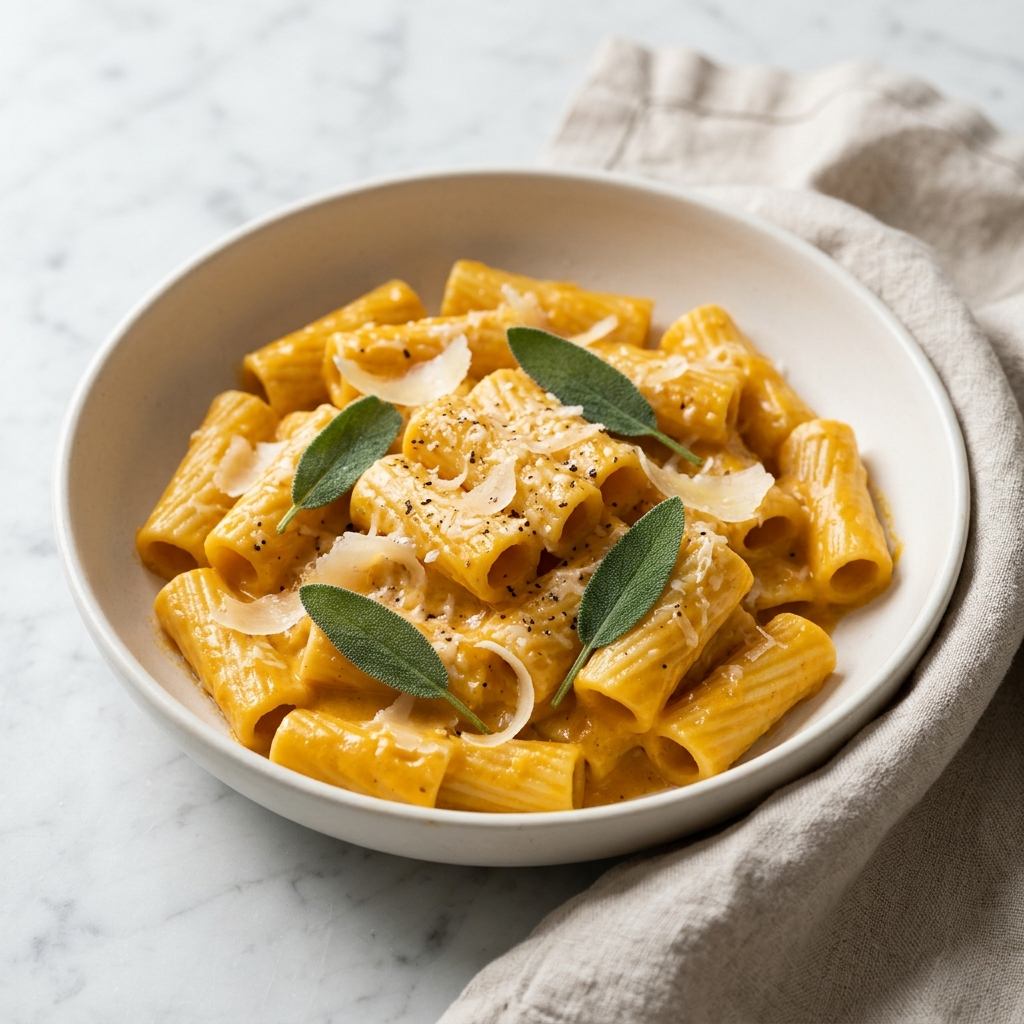
Creamy pumpkin pasta turns plain pumpkin purée into a silky garlic-Parmesan sauce infused with fresh sage. When I make this dinner, I always warm the minced garlic and sliced sage gently in olive oil until fragrant before stirring in the pumpkin purée, and I keep a mug of starchy pasta water by the stove so the finished sauce coats the ridges of the rigatoni smoothly instead of sitting heavily in the bowl.
Servings: 4 servings · Prep: 10 minutes · Cook: 20 minutes · Total: 30 minutes
Keep a cup by the pasta pot
Use plain pumpkin purée so its seasoning matches the savory sauce. Set a mug next to the colander before boiling the pasta so you can save some cooking water. Add it in small splashes if the sauce is thick enough to gather around the pasta in clumps.
Key Ingredients & Why They Matter
- Plain unsweetened pumpkin purée (300 g): Its natural pectin and soluble fiber give the sauce body right in the skillet without needing a roux or blender, while choosing plain purée keeps the dish savory.
- Dry rigatoni or penne (300 g) and reserved pasta water (up to 250 ml): Tubular shapes trap sauce inside and along their ridges, while the dissolved starch in the boiling water binds the pumpkin fiber, cream and cheese into a glossy coating.
- Fresh sage leaves (4 finely sliced, plus 4 small leaves to garnish) and garlic (3 cloves): Gently warming sliced sage and garlic in olive oil releases fat-soluble aromatic compounds that cut through the sweetness of the pumpkin.
- Single cream (120 ml) and finely grated Parmesan-style hard cheese (50 g plus 10 g to serve): Simmering the cream gently and folding the grated cheese in off the heat enriches the purée with dairy fat and umami without splitting or turning grainy.
Ingredients
- 300 g dry rigatoni or penne
- 1 tablespoon olive oil (15 ml)
- 3 garlic cloves, finely minced
- 4 fresh sage leaves, finely sliced, plus 4 small leaves to garnish
- 300 g plain unsweetened pumpkin purée, not pumpkin pie filling
- 120 ml single cream
- 100 ml low-sodium vegetable stock
- 50 g finely grated Parmesan-style hard cheese, plus 10 g to serve
- 1/4 teaspoon fine salt, plus salt for pasta water
- 1/4 teaspoon freshly ground black pepper
- Up to 250 ml reserved pasta cooking water, as needed
Equipment
A large saucepan, colander, wide deep skillet, measuring jug and fine grater. A wide skillet gives you room to toss the pasta without spilling the sauce.
Instructions
1. Boil the pasta
Bring a large saucepan of salted water to a rolling boil. Add the rigatoni and cook according to its packet until just tender with a slight bite. Before draining, scoop out 250 ml of the starchy water into a heatproof jug. Do not rinse the pasta; the surface starch helps the sauce adhere.
2. Warm the garlic and sage
While the pasta cooks, heat the olive oil in a wide skillet over medium-low heat. Add the garlic and sliced sage. Stir for 45–60 seconds, until fragrant but not browned. If the garlic begins to color, reduce the heat immediately; burnt garlic will make the finished sauce bitter.
3. Make the pumpkin sauce
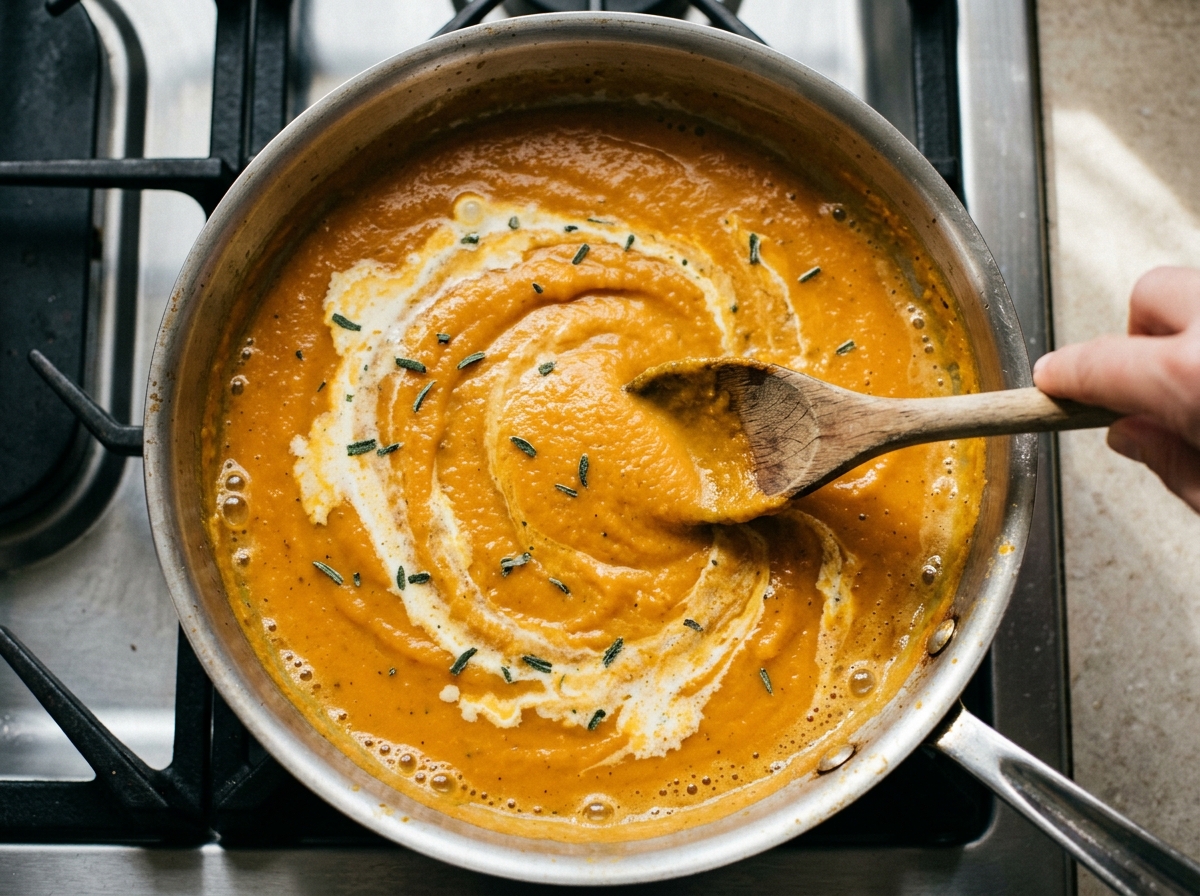
Stir the pumpkin purée into the garlic oil, then gradually stir in the cream and stock. Add the measured salt and pepper. Simmer gently for 4–5 minutes, stirring frequently, until evenly hot and smooth. Keep it below a vigorous boil to protect the cream from splitting.
4. Toss until silky
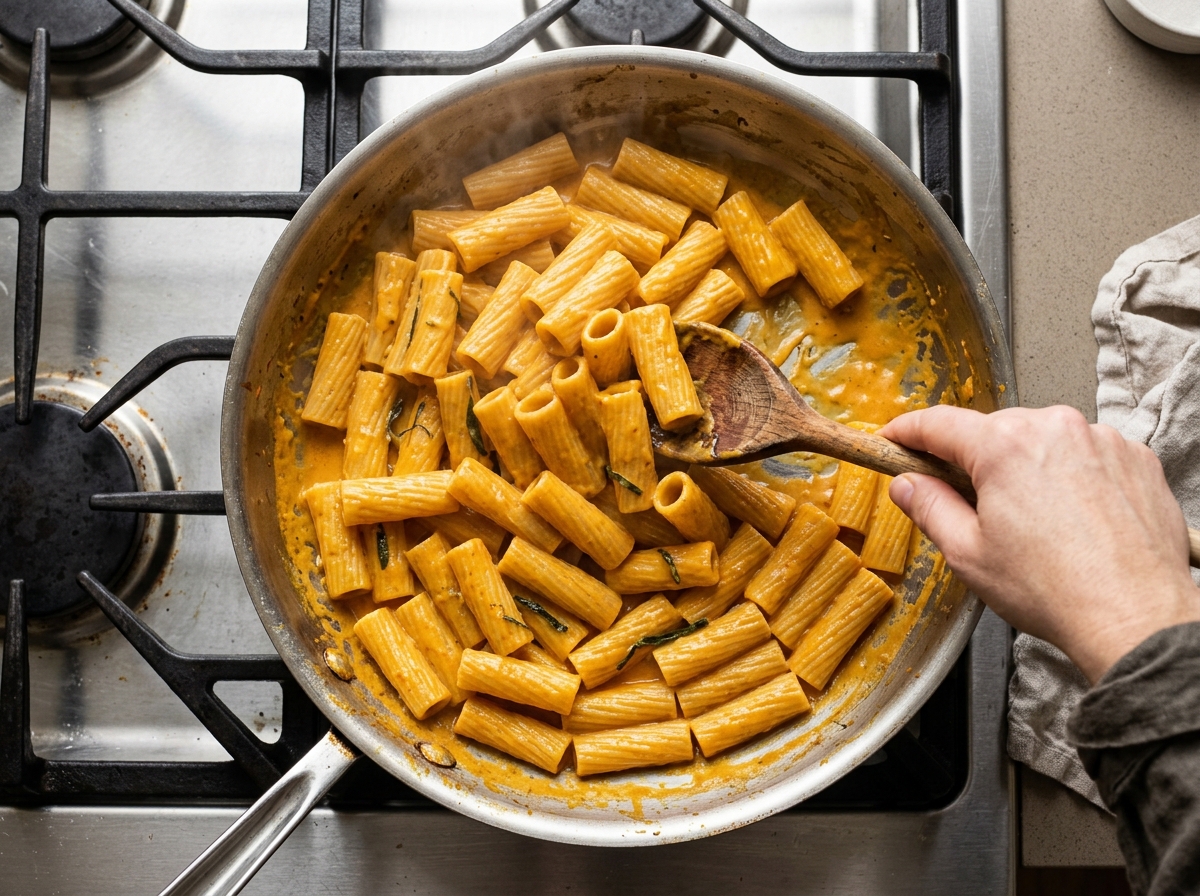
Add the drained pasta and 60 ml of the reserved pasta water. Toss over low heat for 1–2 minutes. Remove the skillet from the heat and stir in the 50 g grated cheese in two additions. Add more pasta water a tablespoon at a time until the sauce flows around the pasta and lightly coats each piece.
5. Taste and serve
Taste before adding extra salt, because stock and cheese vary. Divide between four warm bowls. Finish with the remaining 10 g cheese and the four small sage leaves. Serve straight away; the sauce will thicken as the pasta stands.
Tips for silky creamy pumpkin pasta
- Choose plain pumpkin purée. Sweetened pie filling contains sugar and spices that do not suit this savory sauce. If using homemade purée, drain watery purée before weighing it.
- Grate cheese finely from a block so it melts quickly. Add it off the heat; very hot sauce can make hard cheese clump and become grainy.
- Keep the reserved cooking water within reach. A thick sauce needs water, not another handful of cheese. Loosen it before serving rather than waiting until it sticks to the skillet.
- For a vegetarian meal, choose a vegetarian-labelled Parmesan-style hard cheese. Traditional Parmesan can contain animal rennet.
How to serve creamy pumpkin pasta
Serve smaller portions with apple walnut salad or a crisp cabbage slaw. This sauce also works with fusilli or shells. Use the same dry weight and follow the packet cooking time, as shapes and brands cook differently.
How to store creamy pumpkin pasta
Cool leftovers promptly in shallow containers and refrigerate within 2 hours at 4°C or below. Use within 3 days. Reheat gently with a splash of water, stirring until steaming hot throughout and 74°C / 165°F in the center. Freezing can make the cream sauce separate; freshly cooked pasta has the best texture.
Creamy pumpkin pasta FAQs
Can I make creamy pumpkin pasta without cream?
Replace the cream with 120 ml unsweetened evaporated milk for a lighter sauce. Keep the heat gentle and add the cheese off the heat. Ordinary milk makes a thinner sauce, so start with 80 ml and add more only if needed.
Can I use roasted pumpkin instead of canned purée?
Yes. Blend soft roasted pumpkin without skin, seeds or added sweetener, then weigh 300 g. Different pumpkins hold different amounts of water, so adjust the finished sauce with pasta water rather than relying on a fixed extra amount.
Why does my pumpkin pasta sauce look too thick?
Pumpkin fiber and cheese both thicken the sauce, and cooked pasta continues absorbing liquid. Add hot reserved water in small splashes and toss over low heat. Stop when the sauce looks slightly looser than you want on the plate.
More recipes to try
Try creamy mushroom orzo or roasted butternut squash soup.
For safe storage, follow FoodSafety.gov food-handling guidance.
Reader comments