

Estimated read time: 6 min 15 sec
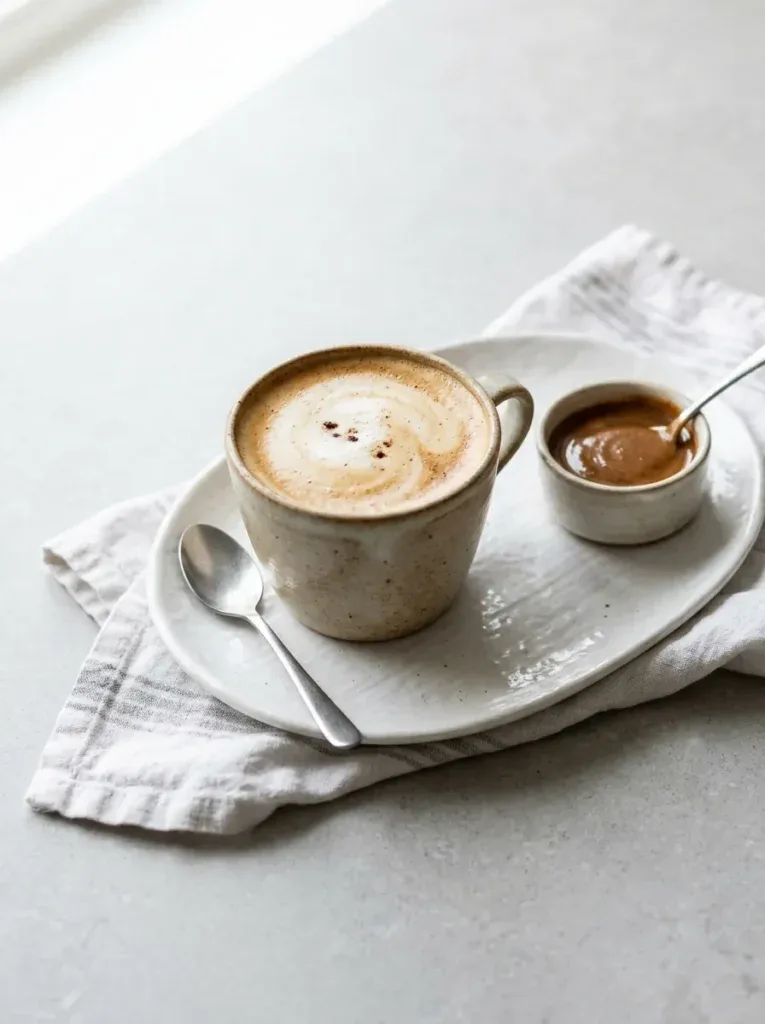
In my kitchen, I always emulsify the nut paste with cold milk before turning on the stove because this hazelnut latte uses roasted hazelnut butter, espresso and warm whole milk. The useful check comes before you heat the pan: a small amount of milk should loosen the nut butter into a paste that leaves no thick streaks on the spoon. Add the rest of the milk once the paste is smooth.
Prep: 3 minutes · Cook: 4 minutes · Total: 7 minutes · Servings: 1
Cuisine: Coffeehouse-inspired
If you’re garnishing with chopped hazelnuts, keep them separate from the milk until the latte is poured.
Key Ingredients & Why They Matter
- Smooth Unsweetened Roasted Hazelnut Butter (10 g): Delivers authentic toasted nut oils and finely ground hazelnut solids for genuine roasted flavor without the artificial sweetness of commercial syrups.
- Whole Milk (150 ml / about 155 g): Adding the milk in two stages—first 2 tablespoons to hydrate and emulsify the dense nut butter, then the remainder—prevents fat separation and clumps during heating.
- Freshly Brewed Espresso (60 ml, about a double shot): Provides the concentrated coffee acidity and bitter notes needed to balance the rich lipids of the roasted hazelnut butter and whole milk.
Ingredients
- 60 ml freshly brewed espresso, about a double shot
- 150 ml whole milk (about 155 g)
- 10 g smooth unsweetened roasted hazelnut butter
- 1 teaspoon sugar, optional
Equipment
A scale for the hazelnut butter, a small saucepan, a whisk, and a roughly 250 ml cup. A handheld frother and thermometer help judge the texture and temperature.
Instructions
Step 1. Stir the hazelnut butter before weighing it
Stir the jar until the hazelnut solids and oil look evenly mixed. Weigh 10 g after stirring. Use a smooth, unsweetened roasted nut butter. A piece of dry paste from the bottom of the jar will take longer to mix than a well-stirred spoonful.
Step 2. Make a paste with part of the milk
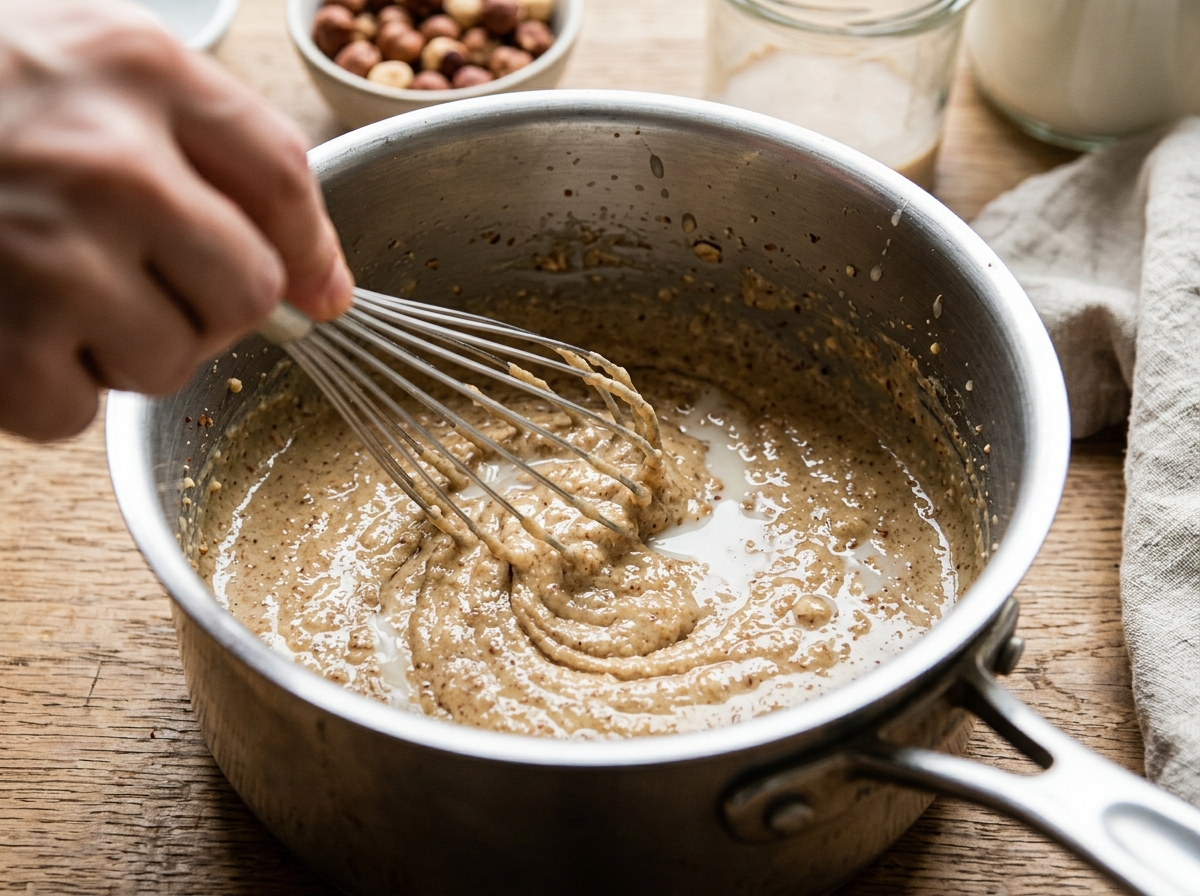
Whisk the nut butter with 2 tablespoons of the measured milk in the small saucepan. Pause to press any dark, thick lumps against the side with a spoon. The paste should smear smoothly and fall from the whisk with no separate pool of oil. Once it does, whisk in the rest of the milk.
Step 3. Warm the base and make espresso
Warm the hazelnut milk over low heat, stirring until it reaches about 60–65°C (140–149°F). Brew the espresso while the milk warms if your setup lets you watch both. If working one at a time, brew into the warmed cup and finish the milk last so the small layer of foam is fresh.
Step 4. Check the surface before pouring
Take the saucepan off the heat. Whisk just long enough for a fine layer of bubbles. If you see a sheen of oil, stir gently from the base and pour soon after. A handheld frother can add more air quickly, so stop once you have enough foam for a thin cap.
Step 5. Pour over the espresso
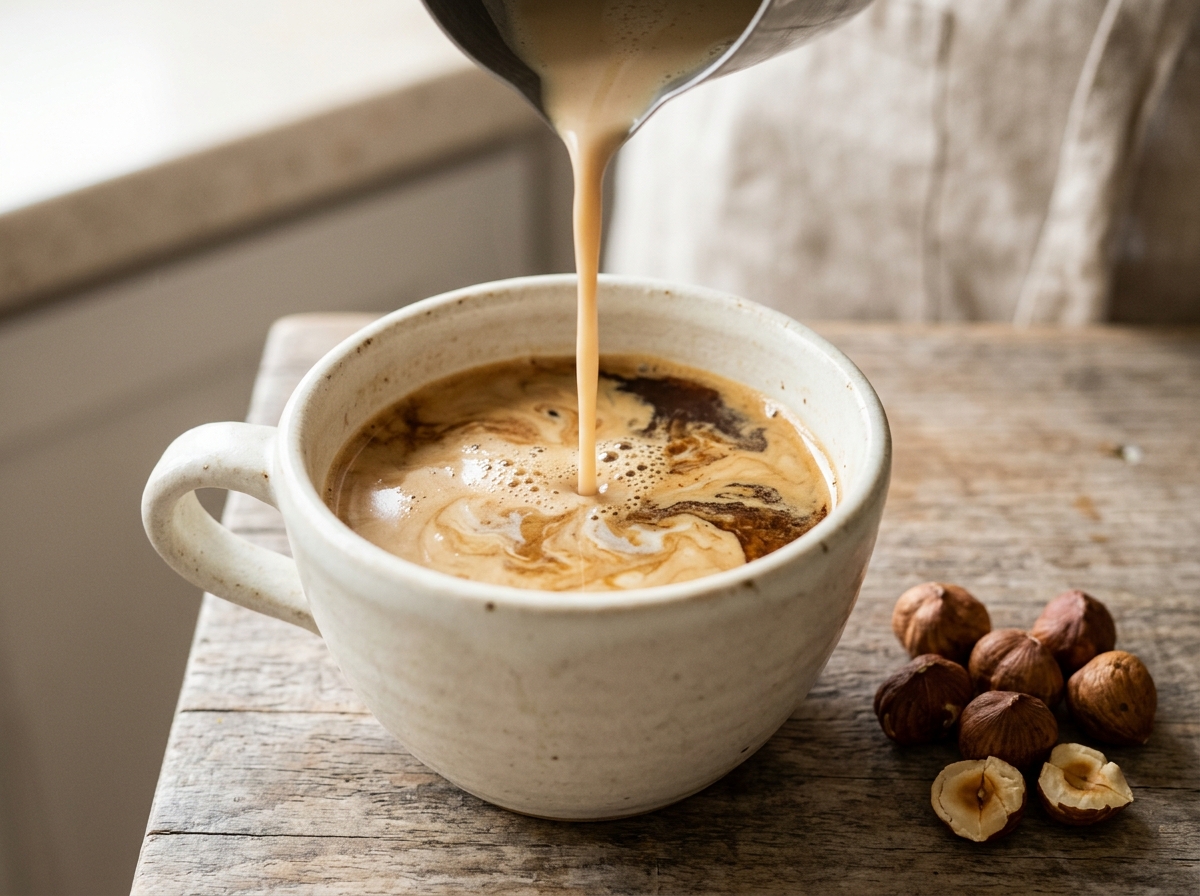
If using the optional sugar, dissolve it in the 60 ml espresso. Pour in the hazelnut milk in a steady stream and give the cup one gentle stir. Taste. A few tiny hazelnut flecks are normal, and a final stir helps if they settle toward the bottom.
Fix a gritty or oily cup
If there are thick clumps, work the paste longer with the first two tablespoons of milk next time. If the latte separates into oil and liquid, stir the jar more thoroughly before weighing and whisk again before pouring. For a smoother sip, strain the warmed base before adding the foam. Straining can remove some of the nut solids and flavor.
Choose a milk substitute deliberately
Barista oat drink can give a full texture, but its sweetness varies. Taste before adding the optional sugar. A thinner oat drink may make smaller bubbles, although it still carries the hazelnut flavor. The drink contains tree nuts with either milk.
Variations
For a moka-pot version, use 60 ml strong moka-pot coffee. Taste before adding sugar. Different brewing methods can make this cup taste heavier or lighter even at the same volume.
How to store hazelnut latte
Make to order. Refrigerate any leftover within 2 hours and use within 24 hours for quality. Reheat gently and whisk again; froth will not keep its original texture.
Estimated nutrition per serving
1 latte; recipe makes 1 serving. 165 kcal · Protein: 6.5 g · Carbohydrate: 10.2 g · Fat: 11.4 g
How this estimate was calculated
Calculated from the listed ingredient weights using generic USDA SR Legacy food-composition values. These are estimates, not laboratory measurements. Calories are rounded to the nearest 5 kcal. Roasted hazelnuts are the composition proxy for 100% roasted hazelnut butter. Optional sugar excluded.
Ingredient composition sources (USDA FoodData Central): Beverages, coffee, brewed, espresso, restaurant-prepared; Milk, whole, 3.25% milkfat, with added vitamin D; Nuts, hazelnuts or filberts, dry roasted, without salt added.
Frequently asked questions
Can I use hazelnut syrup?
Yes, but it is a different recipe balance. Omit the nut butter and optional sugar, then follow the syrup label for a starting amount.
Why does it feel slightly grainy?
Real nut butter contains very fine solids. Use a smoother brand and disperse it fully in warm milk.
Is it suitable for a nut allergy?
No. Hazelnut is a tree nut; do not serve it to someone avoiding hazelnuts or affected by cross-contact.
How to serve it
Finish the latte with a pinch of the chopped hazelnuts if you’re serving it with a spoon. Chocolate Tahini Oat Cookies make a good pairing when you want a little dark chocolate alongside the coffee.

Reader comments