

Estimated read time: 11 min
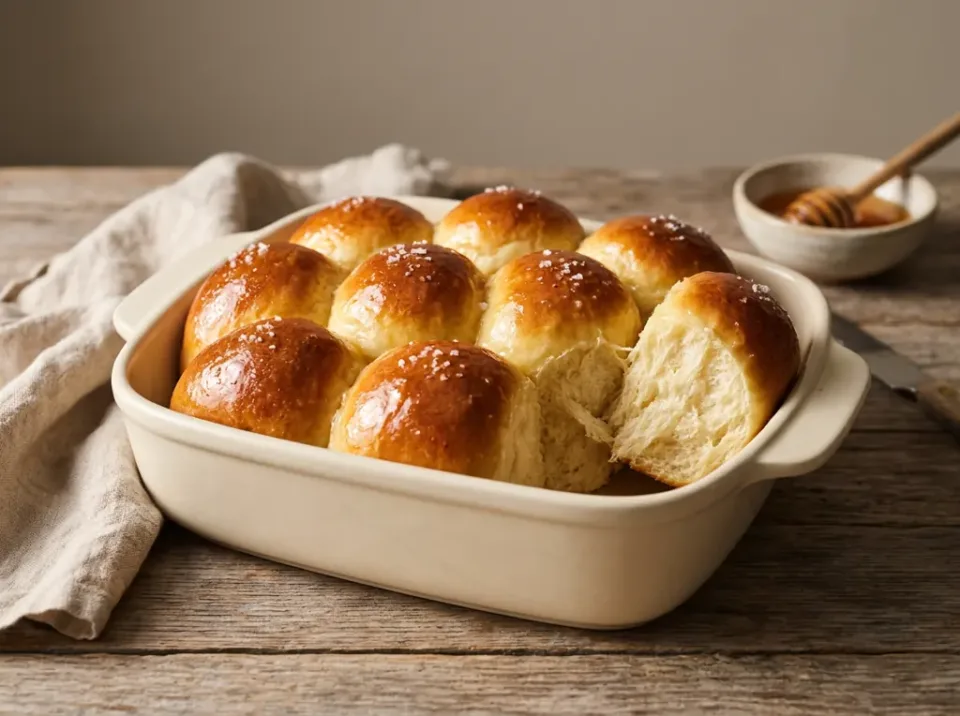
Nothing makes a dinner table feel warmer or more welcoming than a baking pan of homemade honey butter dinner rolls pulled fresh from the oven, their golden tops glistening with melted honey butter that trickles down into the pull-apart seams. Whenever I bake yeasted dinner rolls for a holiday meal, my goal is a feathery, pillow-soft interior that tears apart in long, tender strands rather than crumbling like a scone. Getting that bakery texture at home comes down to three reliable cues: measuring the bread flour by gram weight so the dough stays supple, kneading softened butter into the hydrated dough until it passes the windowpane test, and brushing the warm honey-butter glaze on the instant the pan leaves the oven.
Servings: 12 · Prep: 25 minutes · Cook: 22 minutes · Total: 197 minutes
Cuisine: American
How I Set Up My Kitchen for Two Smooth Dough Rises
Before I stir the yeast into the flour, I clear a draft-free corner of the counter (or inside an turned-off oven with the oven light switched on) for the two rises and set out my 45 g of dough butter so it softens to a pliable, cool room temperature. Notice that the recipe calls for butter and honey in two separate stages: 45 g of softened butter and 1 tablespoon of honey go directly into the enriched bread dough, while 25 g of melted butter and the remaining 1 tablespoon of honey are whisked together at the end for glazing the hot tops. Dividing those amounts on the counter first keeps you from accidentally dumping the full glaze portion into the mixer.
Key Ingredients & Why They Matter
- Bread Flour Measured by Weight (420 g): Bread flour has a higher protein content (around 12% to 12.7%) than all-purpose flour, which forms a stronger gluten mesh capable of supporting the weight of butter, egg, and whole milk while still rising tall and fluffy.
- Warm Whole Milk (240 ml) + 1 Large Egg: Whole milk and egg yolk enrich the crumb with fat and natural emulsifiers (lecithin) so the rolls stay soft for days after baking and brown evenly at 375°F.
- Softened Butter Added in Stages (45 g): Fat coats flour proteins and slows down initial gluten formation. By mixing the flour, yeast, milk, egg, and honey into a cohesive dough first and then kneading the softened butter in piece by piece, the dough builds strong elasticity before being tenderized by the butter.
Ingredients
- 420 g bread flour
- 7 g instant yeast
- 1 tsp fine salt
- 240 ml warm whole milk
- 1 large egg
- 45 g unsalted butter, softened
- 2 tbsp honey, divided
- 25 g melted butter for brushing
Use 1 tablespoon honey in the dough and reserve the second tablespoon for the finishing glaze. The total time above reflects the upper end of both rises in a cool kitchen; depending on your room temperature, allow 95 to 150 minutes total for bulk fermentation and final proofing, relying on the visual volume and fingertip-dent cues below rather than the clock alone.
Instructions
Step 1. Measure the flour and mix the dough
Weigh 420 g bread flour on a kitchen scale (or fluff the flour with a spoon, scoop it gently into dry measuring cups, and level with a straight blade). Whisk the flour, 7 g instant yeast, and 1 teaspoon fine salt together in your mixer bowl. Add the warm whole milk (around 100°F–105°F / 38°C–40°C—pleasantly warm to the touch, never hot), the egg, and 1 tablespoon honey. Mix until no dry flour remains at the bottom of the bowl.
Step 2. Knead in the softened butter
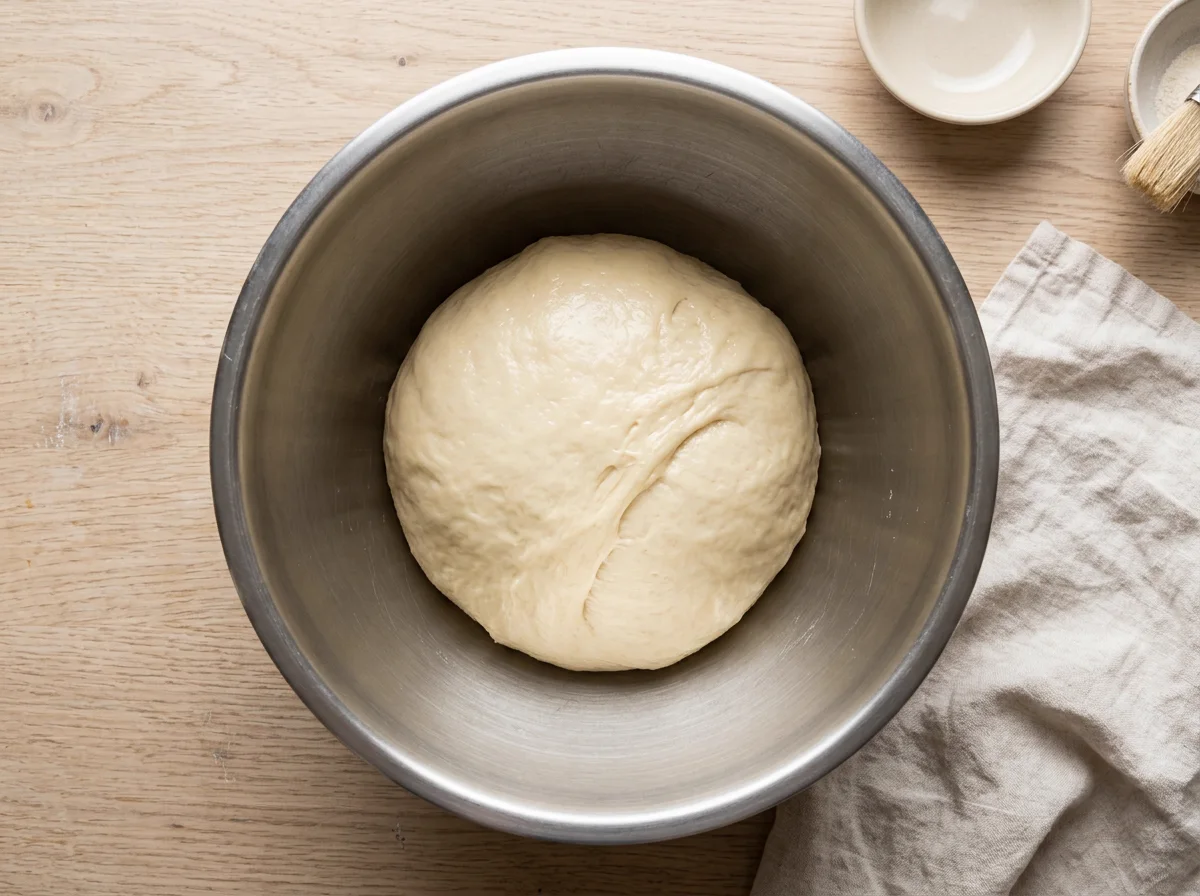
Add the 45 g softened butter a few small pats at a time while kneading on medium-low speed (or by hand on the counter). The dough will look slippery and disjointed for a minute as each pat smears in, then pull back together into a satiny, supple ball that slaps cleanly against the sides of the bowl. Pinch off a walnut-sized piece and stretch it gently between your fingers: it should form a thin, translucent membrane without tearing (see our full windowpane test guide).
Step 3. Let the dough rise until doubled
Shape the kneaded dough into a smooth round, set it in a lightly greased bowl, cover tightly, and let it rise in a warm spot until doubled in volume. I start checking at 60 minutes, though a cool 65°F autumn kitchen may take 85 to 90 minutes.
Step 4. Divide the dough into 12 equal pieces
Turn the risen dough out onto a clean, un-floured counter and gently press out the largest gas pockets. For 12 identical rolls that bake at the exact same rate, I weigh the entire dough ball on my scale (usually around 795 g) and divide by 12 so each portion weighs roughly 66 g. Keep the cut pieces loosely covered under a towel or sheet of plastic wrap while you shape them one by one.
Step 5. Shape the balls and arrange them in the pan
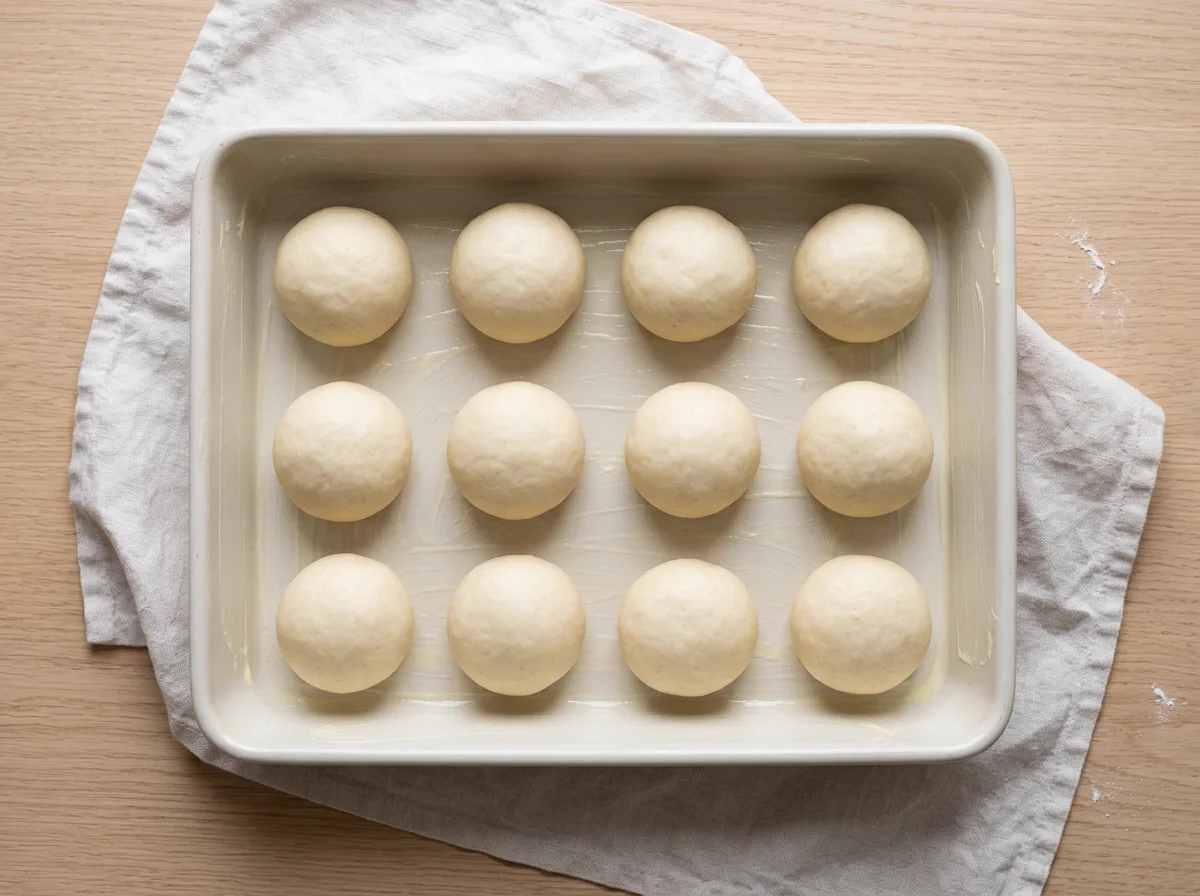
Take one piece of dough, fold its outer edges underneath toward the center, and pinch the bottom seam closed. Then cup your hand like a claw over the ball on the un-floured counter and roll it in tight circles against the surface tension of the counter until the top skin stretches smooth and taut. Arrange the 12 balls seam-side down in three rows of four inside a buttered 9-by-13-inch metal baking pan.
Step 6. Proof until puffy and perform the poke test
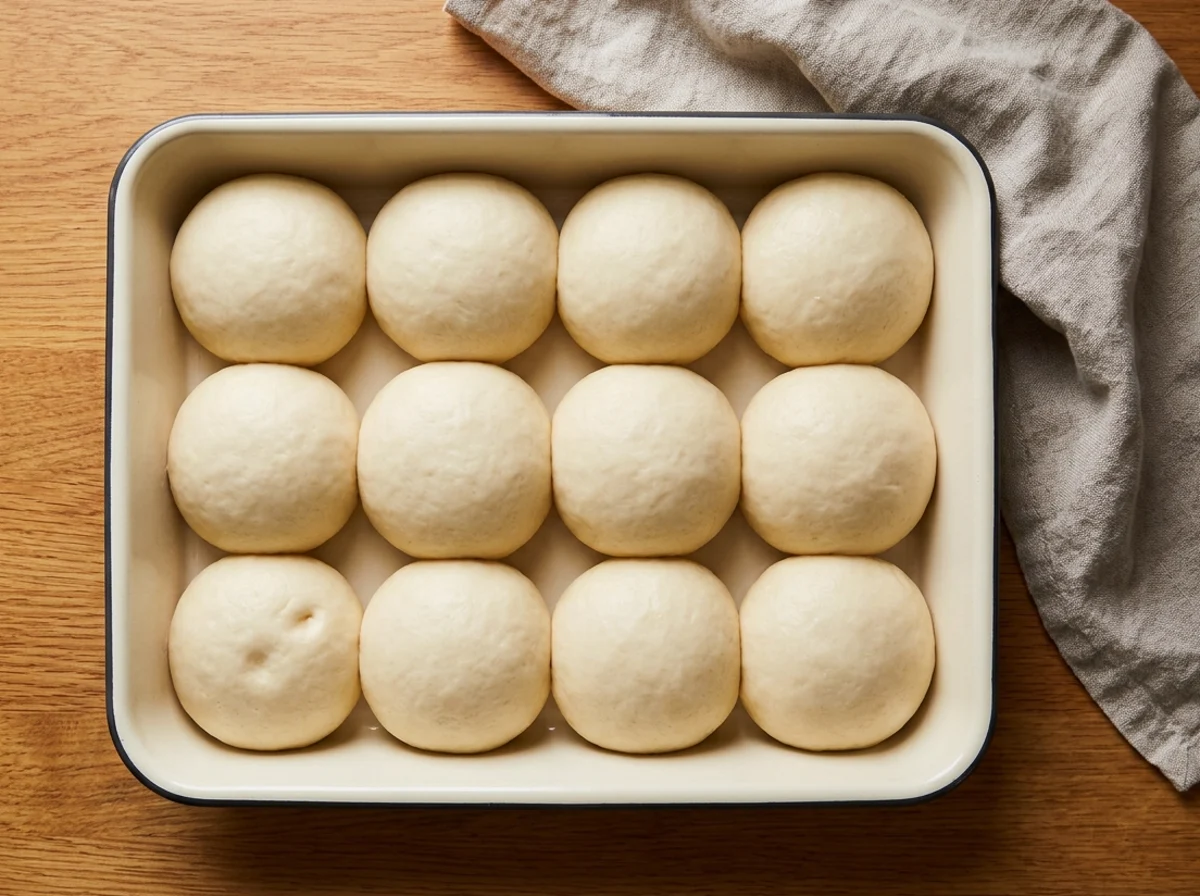
Cover the pan and let the shaped rolls proof for 35 to 60 minutes until they swell into puffy cushions that press against their neighbors. To confirm they are ready for the oven, lightly flour your fingertip and press a ¼-inch dent into the side of a roll: if the dent springs back immediately, give the pan 10 more minutes; if the indentation slowly fills halfway back in, the gluten is at peak expansion. Preheat your oven to 375°F (190°C) during the last 15 minutes of proofing.
Step 7. Bake and check a roll in the center
Bake on the center rack at 375°F (190°C) for 18 to 22 minutes until the tops are deep golden brown across the entire pan. Because the four center rolls are insulated on all sides by neighboring dough, I always insert my instant-read thermometer into a side seam of a center roll before pulling the pan: 190°F (88°C) guarantees the centers are fully baked and won’t collapse into doughy streaks as they cool.
Step 8. Brush the hot rolls with honey butter
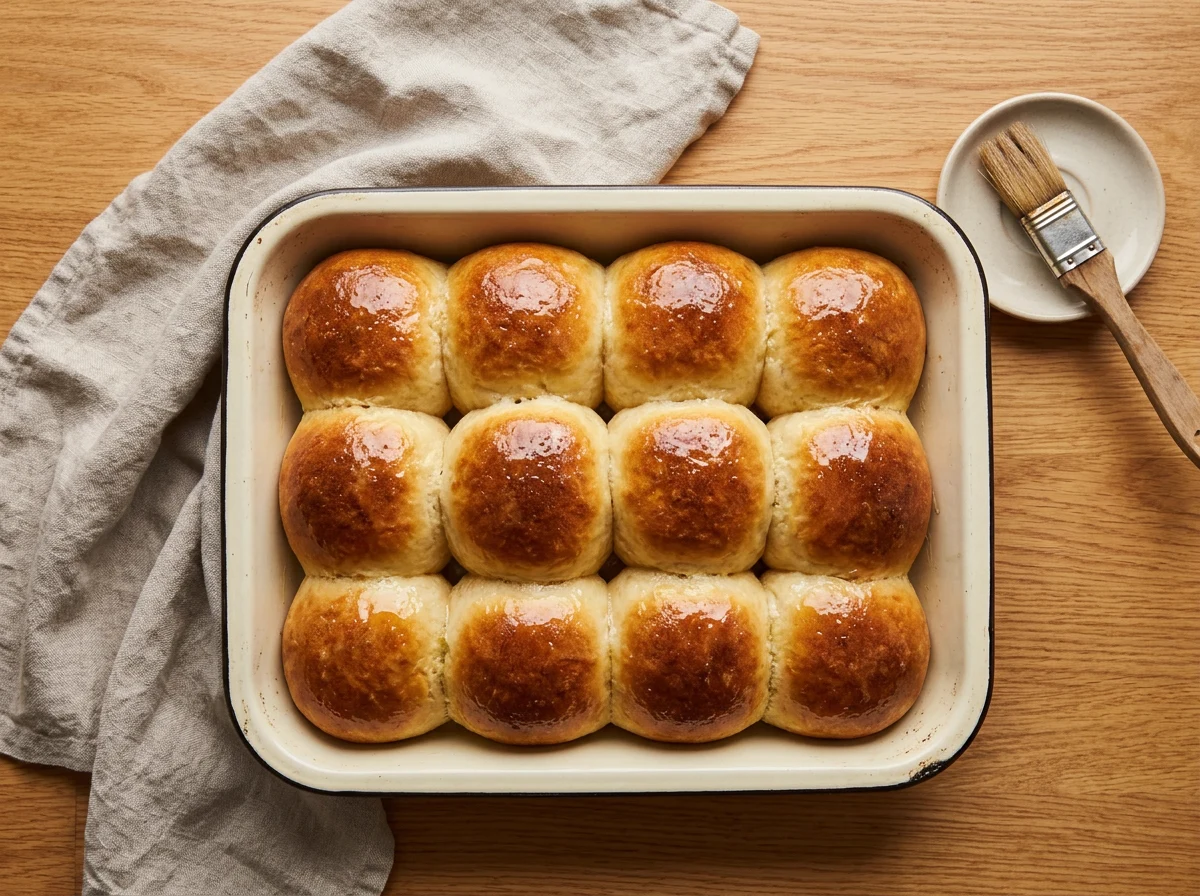
While the rolls are in the oven, melt the reserved 25 g unsalted butter in a small ramekin and stir in the remaining 1 tablespoon honey until smooth. The moment the hot pan comes out of the oven, brush the warm honey-butter glaze generously over the domed tops and down into the pull-apart creases—the hot crust drinks in the butter and stays glossy and soft.
Step 9. Rest briefly before pulling apart
Let the glazed rolls rest in the pan for 5 minutes so the fragile steam-filled crumb sets up and absorbs the honey butter, then lift them out and pull them apart warm at the table.
3 Essential Tips for Feather-Light Dinner Rolls
- Resist Adding Extra Flour During Kneading: Scooping flour straight from the bag can pack 15% to 20% too much flour into a dry cup (see how to measure flour accurately). Properly hydrated roll dough should feel slightly tacky after the butter is kneaded in; if it clings to your hands, cover the bowl and let the flour finish hydrating for 5 minutes rather than dusting in extra flour.
- Use Un-Floured Counter Friction for Shaping: When rolling the 66 g portions under your cupped palm in Step 5, work on a bare counter with zero bench flour. A tiny bit of tackiness between the dough and the counter creates the friction needed to pull the top skin taut so the rolls rise upward instead of spreading flat.
- Match Your Pan Material to the Bake Time: A light-colored aluminum 9-by-13-inch pan conducts heat rapidly and bakes evenly; if you use a dark nonstick pan (which browns bottoms faster) or a heavy ceramic casserole dish (which heats slower in the center), tent the top loosely with foil at 15 minutes if the domes are golden before the center roll reaches 190°F.
Overnight Make-Ahead Schedule & Reheating
To keep your oven and mixer free on a busy holiday afternoon (see our Make-Ahead Thanksgiving Menu), mix the dough, complete the first rise, and shape the 12 balls into your greased 9-by-13-inch pan the night before. Cover the pan tightly with plastic wrap and refrigerate overnight. On dinner day, set the cold covered pan on the counter 60 to 90 minutes before baking so the chilled dough warms up and puffs until it passes the fingertip-dent test.
Alternatively, you can bake the rolls earlier in the day, let them cool completely on a rack, and warm them wrapped loosely in foil at 300°F (150°C) for 10 minutes right before dinner, saving the warm honey-butter brushing for the moment they come out of the oven.
Frequently asked questions
Can I make these with all-purpose flour instead of bread flour?
Yes. All-purpose flour works with the exact same 420 g weight; the rolls will bake up slightly more tender and cake-like with a little less chew. Because all-purpose flour absorbs slightly less liquid than high-protein bread flour, hold back 1 tablespoon of the warm milk at first and add it only if the dough feels stiff.
What if my dough keeps shrinking back when I try to shape the balls?
That just means the gluten is tight from dividing. Cover the 12 weighed pieces with a kitchen towel and let them rest on the counter for 5 minutes so the protein strands relax before rounding them.
Can I freeze baked honey butter dinner rolls?
Yes! Cool the baked rolls completely to room temperature, wrap the whole slab tightly in plastic wrap and foil, and freeze for up to 2 months. Thaw wrapped at room temperature, warm in foil at 300°F until heated through, and brush with fresh melted honey butter.
Can I bake a half batch of 6 rolls?
Yes. Cut all ingredient weights in half (whisking 1 whole egg in a small bowl and weighing out 25 g of beaten egg for the dough), shape 6 rolls, and arrange them in an 8-by-8-inch square pan or a 9-by-5-inch loaf pan.
Estimated nutrition
About 200 kcal, 5.5 g protein, 6.4 g fat and 31 g carbohydrates per roll. This estimate uses whole milk and bread flour and includes the honey butter glaze.
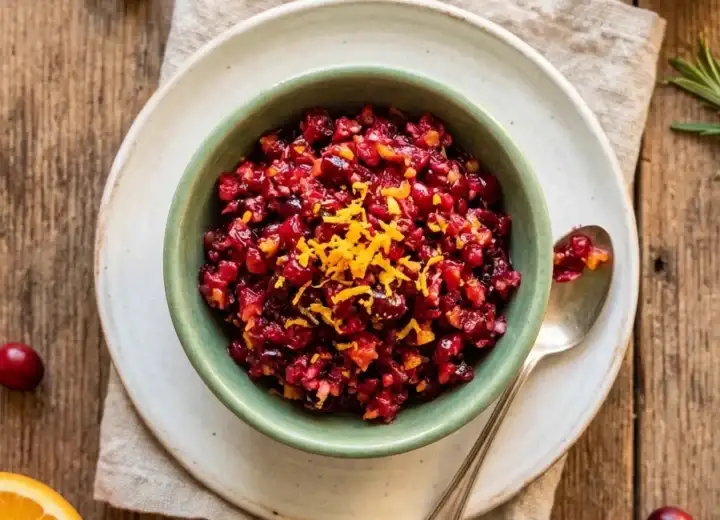
Serve these warm pull-apart rolls alongside Garlic Herb Roast Turkey Breast and Turkey Gravy Without Drippings, or split leftover rolls the next day for miniature holiday turkey sliders with Cranberry Orange Sauce.
Reader comments