

Estimated read time: 7 min 30 sec
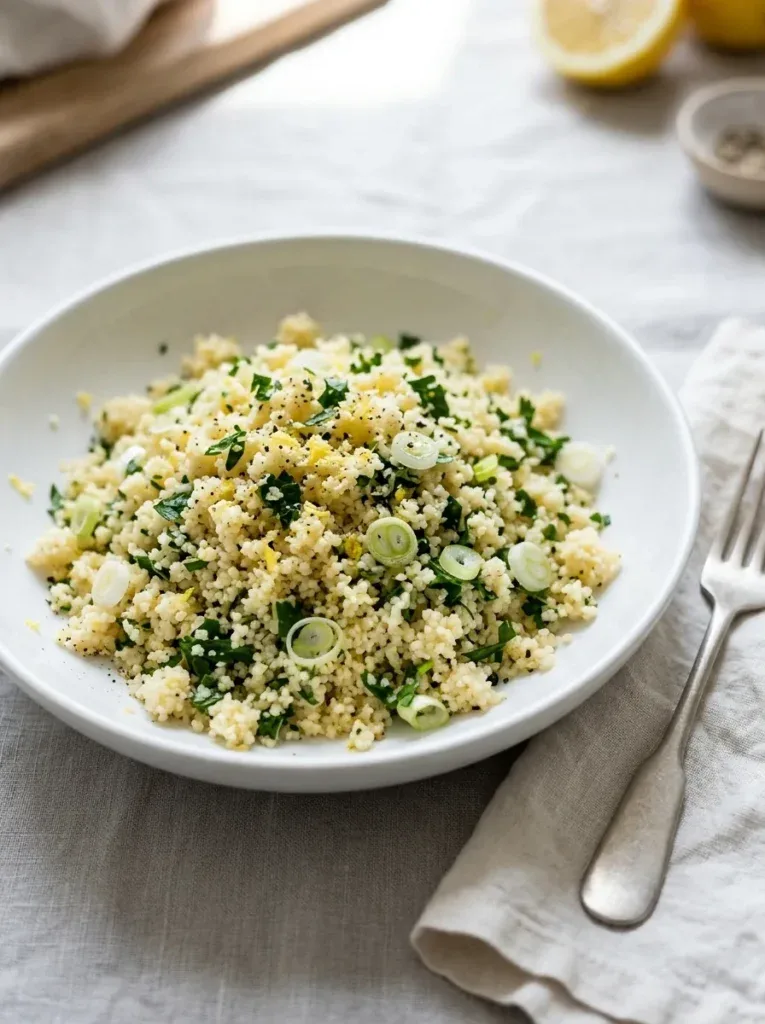
In my kitchen, I always coat the dry couscous grains with olive oil and finely grated lemon zest in a wide bowl before pouring over the boiling stock, which keeps lemon herb couscous light and separate while a main dish finishes on the stove. While the covered grains steam for five minutes, you can slice the spring onions and chop the parsley, then fold in the lemon juice after fluffing so you can judge exactly how much brightness the stock needs.
Servings: 4 side servings · Prep: 10 minutes · Cook: No cooking · Resting: About 5 minutes · Total: 15 minutes
Cuisine: North African-inspired
Key Ingredients & Why They Matter
- Instant Couscous (200 g): These pre-steamed, dried semolina granules rehydrate rapidly by absorbing hot liquid under a tight cover without needing direct stovetop heat.
- Olive Oil (1 tablespoon) & Lemon Zest (1 teaspoon): Toss the dry grains with oil and zest first so the fat coats each semolina particle to prevent clumping while the hot liquid releases citrus oils from the peel.
- Boiling Vegetable Stock (250 ml): Pouring boiling stock over the shallow bed of couscous hydrates the core evenly and seasons the grains from the inside out.
- Lemon Juice (1½ tablespoons) & Chopped Parsley (3 tablespoons): Added only after fluffing and venting excess steam, the fresh acid and herbs keep their vibrant color and lift the savory stock.
Ingredients
- 200 g instant couscous
- 250 ml boiling vegetable stock, or the amount specified on your couscous packet
- 1 tablespoon olive oil
- 1 teaspoon finely grated lemon zest
- 1½ tablespoons lemon juice
- 3 tablespoons chopped parsley
- 2 spring onions, finely sliced
- Salt and black pepper to taste
Instructions
Step 1. Measure the couscous and check its liquid ratio
Use 200 g fine instant couscous and check the packet for its stock ratio. About 250 ml is a starting point for many brands. Measure the liquid first and set out a heatproof bowl wide enough to fluff the grains.
Step 2. Coat the dry grains with oil and lemon zest
Stir the olive oil and grated zest through the couscous in the bowl. Lift the dry grains with a fork as you mix so the zest doesn’t stay in one damp clump. Keep the lemon juice for the finish.
Step 3. Bring the stock to a boil and pour it evenly
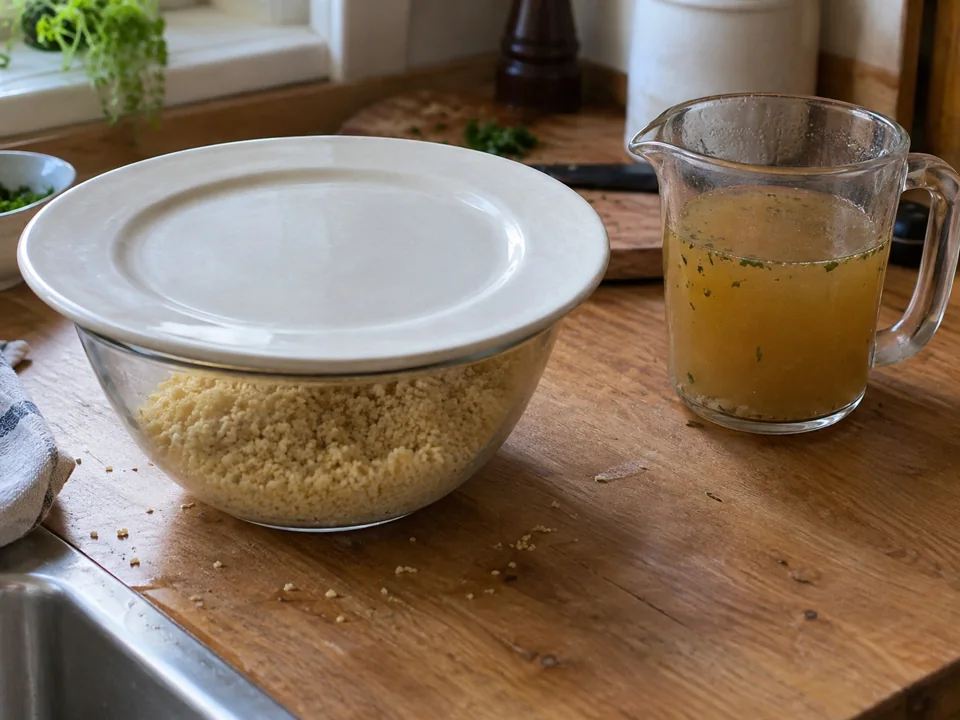
Bring the measured vegetable stock to a boil. Pour it across the surface so both sides of the bowl get wet. Stir once, then cover tightly with a lid or plate while the steam is still rising.
Step 4. Leave the grains covered while you chop the herbs
Rest for about five minutes or the packet’s stated time. While it sits, pat the parsley dry, chop it finely and slice the spring onions. Measure the lemon juice so it can go in once the couscous is fluffy.
Step 5. Fluff the edges first and check a few grains
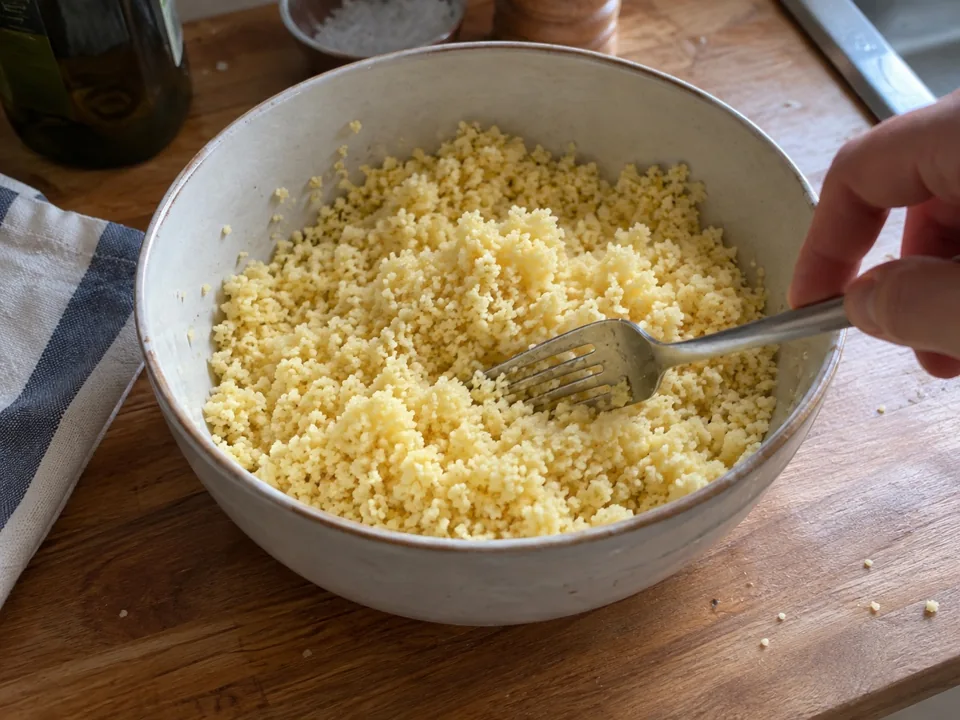
Lift the lid away from you to let steam escape. Drag a fork through the edges and work toward the middle. Taste grains from the center. They should be tender and separate without a hard core.
Step 6. Adjust a dry or damp batch before seasoning
If the grains are hard and the bowl is dry, sprinkle over a tablespoon of boiling water and cover for two more minutes. If they are already tender with visible moisture, spread them out and let steam escape before adding the herbs.
Step 7. Fold in the lemon juice, parsley and spring onions
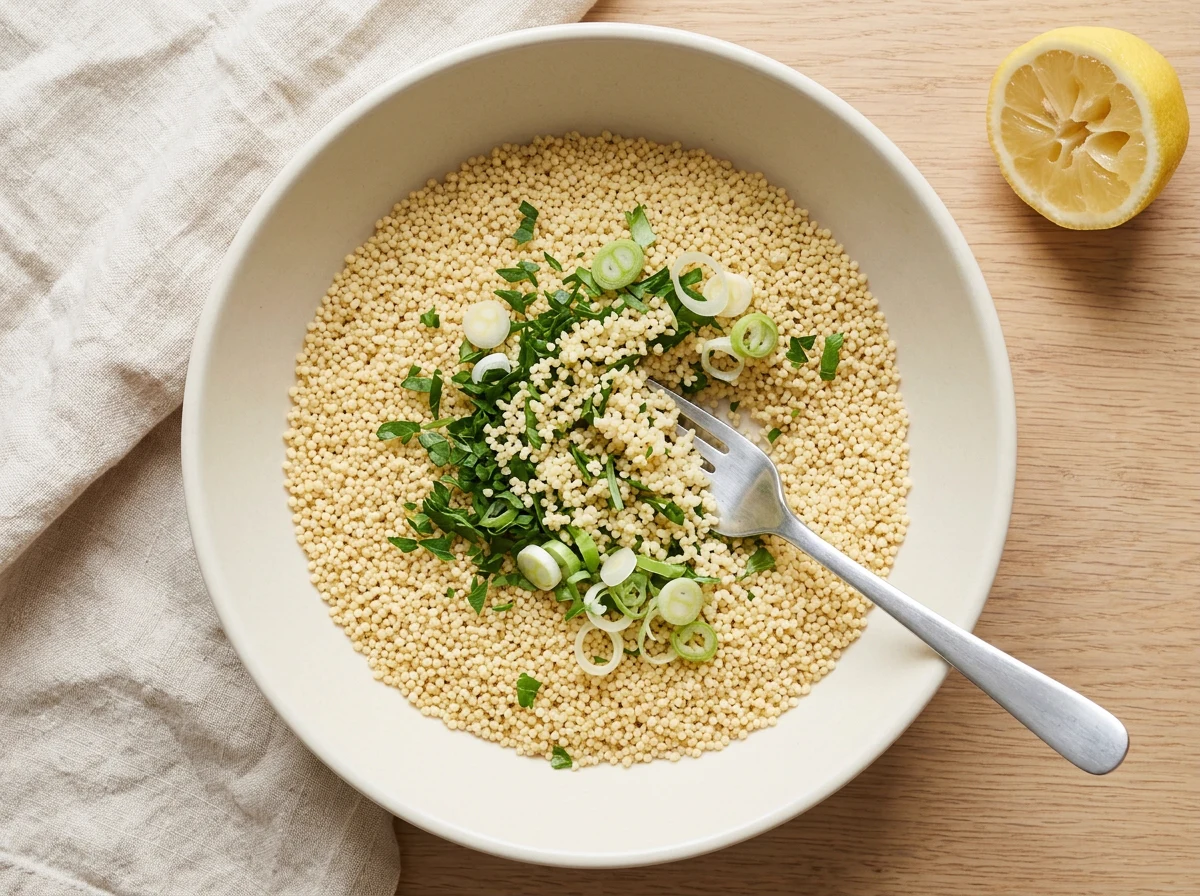
Drizzle the measured lemon over the fluffed grains. Scatter the herbs and onions across the top before folding with the fork so they spread through the bowl. Taste before adding salt and finish with black pepper.
Step 8. Serve warm or chill promptly for a cold side
Transfer to a serving bowl for a warm side. For a cold salad, spread it in a shallow covered container once steam has mostly escaped and refrigerate promptly. Fluff and taste it again when cold.
Tips for loose, fluffy couscous
A bowl with sloping sides gives you room to slide the fork under the grains. If the grains come out in a damp lump, separate them gently and let the extra steam escape before adding more liquid. A hard center on an otherwise dry grain calls for a little more hot water and time under the cover.
Zest only the yellow layer of the peel. Reserve the juice until the grains are softened so the liquid used for hydration stays consistent. If using a strongly seasoned stock, wait until the herbs and lemon are mixed in before reaching for the salt.
Storage and serving
Refrigerate within 2 hours in a shallow covered container and use within 3 days. For a salad, add drained diced cucumber or tomatoes just before serving so they won’t water down the couscous in the fridge. If reheating, add a small splash of water and heat until the center reaches 74°C / 165°F. Fluff afterward and add a little fresh parsley if available.
Check the middle when using a deep bowl
Stock can reach the outside first when the dry grains are piled high. A wide bowl makes it easier to pour evenly and gives you room to lift the grains rather than flattening them. If you only have a deep bowl, fluff carefully from the bottom and taste there too.
Use lemon to balance the stock
Vegetable stocks vary in saltiness. Add the lemon juice before you decide how much salt to use. If the stock was already well seasoned, try a little extra parsley or cracked pepper before adding more salt. A squeeze of lemon can also brighten a chilled bowl.
Keep the texture when serving a group
Fluff close to serving and put extra herbs on the table. If you make two batches, measure and steep them in separate bowls so each gets the right proportion of hot liquid. Combine them only after the grains have softened.
Frequently asked questions
Can I use pearl couscous?
Pearl couscous needs to simmer. Follow its packet, then drain if needed and add the lemon and herbs once the grains are tender.
Can I make it with water?
Yes. Keep the same volume and season at the end. The flavor will be cleaner and less savory, so serve it alongside a well-seasoned main or add a little extra zest.
Is couscous gluten-free?
Standard couscous is made from wheat. If you need a gluten-free side, follow the cooking instructions for an appropriate substitute and add the seasonings afterward.
Can I use dried parsley?
Use a smaller amount and give it a moment to hydrate before tasting. Fresh parsley gives a brighter texture and color, so add finely sliced spring onion as written if you’re using dried herbs.
Estimated nutrition
About 225 kcal, 6.8 g protein, 40.5 g carbohydrates and 3.8 g fat per serving. Based on one-fourth of the recipe. Stock brands vary in calories and salt.
Spoon the couscous alongside Maple Dijon Chicken Thighs and let the chicken juices run through the grains. Save a few of the chopped herbs for the finished plates.

Reader comments