

Estimated read time: 7 min 45 sec
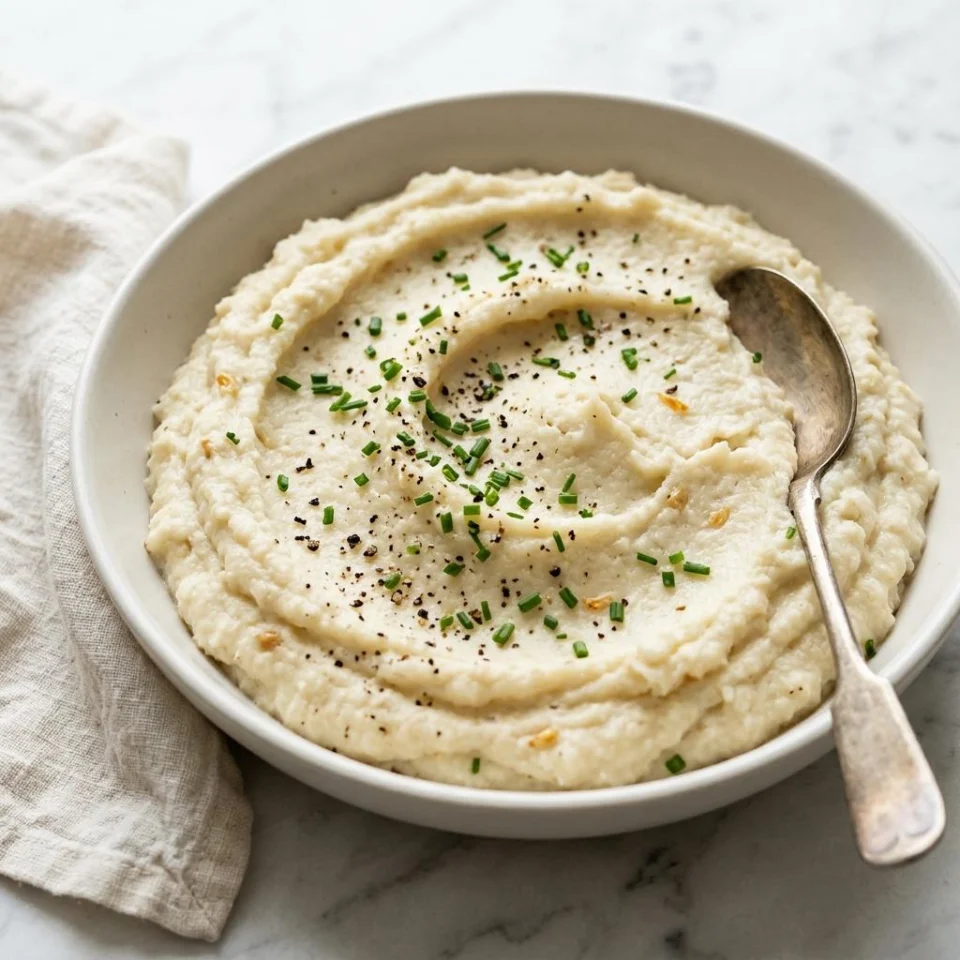
Roasted garlic cauliflower mash gets its mellow, sweet-savory flavor from whole roasted garlic cloves blended with butter and thick Greek yogurt. In my kitchen, the most important check happens right after steaming and draining: I return the florets to the warm, dry pan and tilt it to make sure no puddle of water collects along the bottom edge before I squeeze in the garlic and blend.
Servings: 4 side servings · Prep: 15 minutes · Cook: 45 minutes · Total: 60 minutes
Cuisine: European-inspired
Pressure from a spoon should collapse the cauliflower stems before you drain them.
Keep excess moisture out of the mash
Cut the cauliflower before the garlic finishes roasting and set out a colander for a good drain. Stir the Greek yogurt smooth in its container and add it after you see how loose the mash is. Let steam escape from the cauliflower before blending or mashing.
Key Ingredients & Why They Matter
- Cauliflower florets (800 g prepared): Steaming the florets over simmering water instead of submerging them—followed by drying them over low heat—prevents waterlogged cells from turning the purée thin and watery.
- Whole garlic bulb (1 small bulb, about 40 g) and olive oil (1 teaspoon / 5 g): Roasting the foil-wrapped bulb for 30–40 minutes converts sharp sulfur compounds into mellow, caramelized sugars and softens the cloves into a paste that blends seamlessly.
- Unsalted butter (25 g) and plain Greek yogurt (60 g): Butter adds richness and gloss while thick, strained Greek yogurt contributes creamy body and gentle tang without thinning the mash like liquid milk would.
- Fresh chopped chives (1 tablespoon / 3 g): Added right at the end to bring a bright, fresh allium contrast to the sweet roasted garlic.
Ingredients
- 1 large cauliflower, trimmed into florets (800 g prepared)
- 1 small garlic bulb (about 40 g)
- 1 teaspoon olive oil (5 g)
- 25 g unsalted butter
- 60 g plain Greek yogurt
- 1/2 teaspoon fine salt
- 1/4 teaspoon black pepper
- 1 tablespoon chopped chives (3 g)
- Water for steaming
The 800 g is the weight of the trimmed florets. Use thick plain Greek yogurt, preferably with some fat, for a smoother finish. Set out a covered steamer, wide colander, foil and a deep heatproof pan or jug for the immersion blender.
Equipment
A small piece of foil for the garlic, a covered steamer, a wide colander, and a deep saucepan or heatproof jug for an immersion blender.
Instructions
Step 1. Prepare the garlic bulb and heat the oven
Heat the oven to 200°C / 400°F conventional or 180°C fan. Slice just enough off the top of the garlic bulb to expose the cloves. Drizzle the teaspoon of olive oil onto the cut face, then wrap the bulb loosely in foil and set it on a small tray to catch any oil.
Step 2. Roast until the cloves are soft
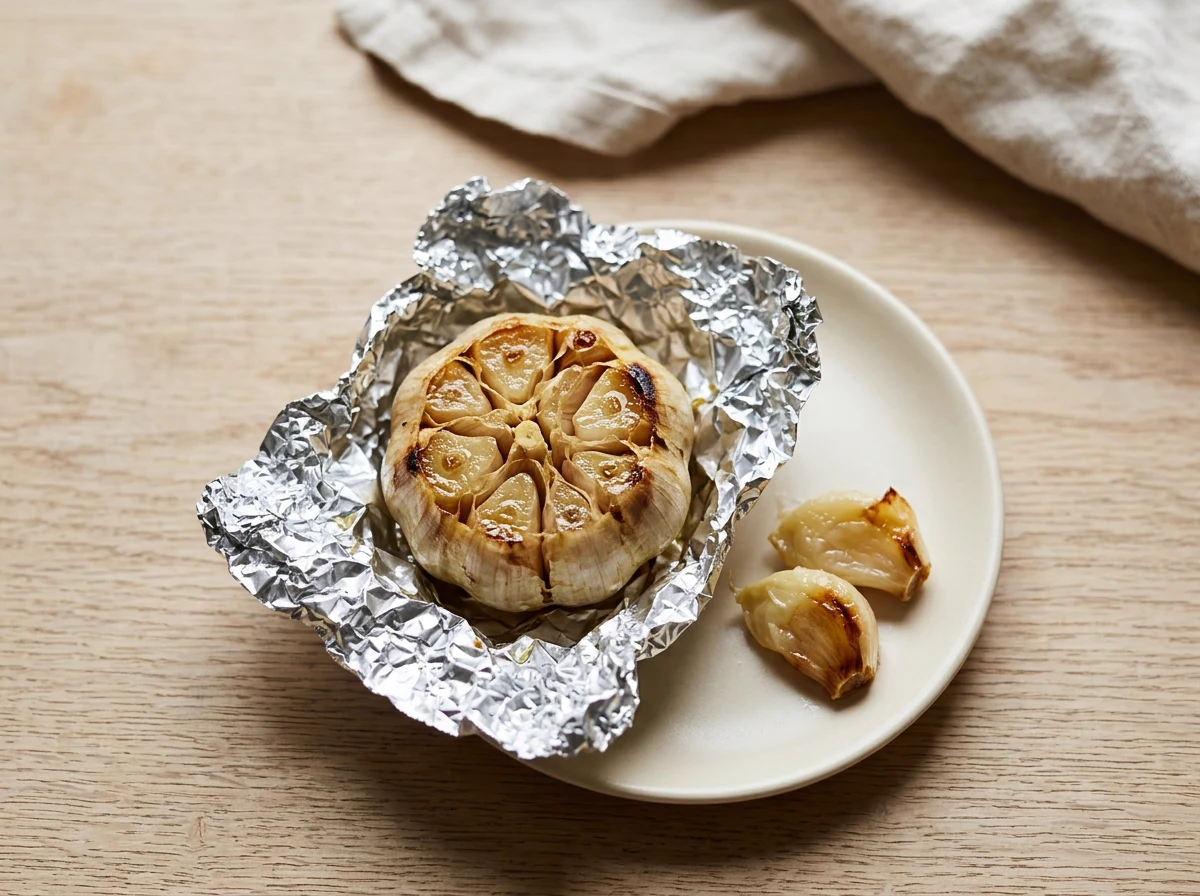
Roast the bulb for 30–40 minutes. Open the foil carefully, then press a clove with the back of a spoon. It should yield without springing back and look light gold. Give it more time if the center is firm. Let the bulb cool just enough to hold while the cauliflower finishes.
Step 3. Cut and steam the cauliflower while the garlic roasts
Cut the cauliflower into pieces of similar size and split the thick stems. Keep the florets above the simmering water in a covered steamer. Steam for 12–15 minutes while the garlic roasts. A paring knife should slide into the thickest stem without catching. Keep enough water in the base so the pan doesn’t boil dry.
Step 4. Drain in a colander and let steam escape
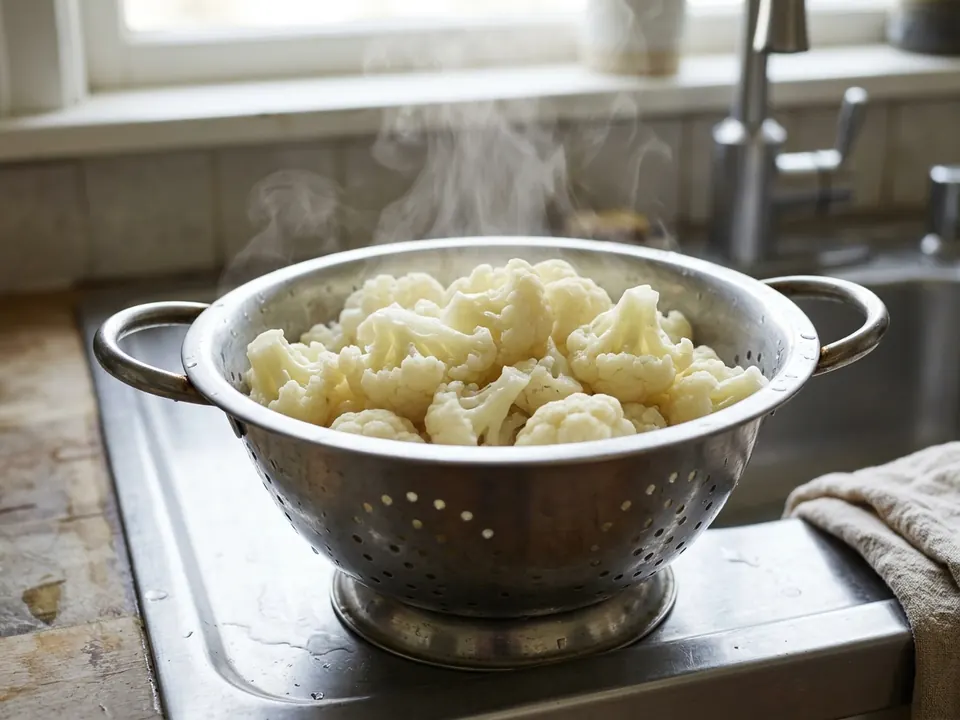
Lift the florets into a wide colander and leave them uncovered for about three minutes. Shake it gently once to release water from between the branches. If you used a shallow steamer basket, empty the cooking water before returning cauliflower to the warm pan.
Step 5. Dry the florets and check the bottom of the pan
Set the drained cauliflower in the dry pan over very low heat for one to two minutes. Stir gently so it dries without browning. Tilt the pan and check for a puddle along the lower edge. If water gathers, keep stirring over low heat for another minute before adding dairy.
Step 6. Squeeze out the garlic and start blending
Squeeze the roasted cloves from their skins. Discard any dry papery pieces that fall out. Add the garlic, butter, salt and pepper to the cauliflower and begin blending in the deep pan. Stop and scrape the sides with a spatula if florets gather out of reach. Keep the blender head submerged and switch it off before lifting it.
Step 7. Blend in the yogurt and check the texture
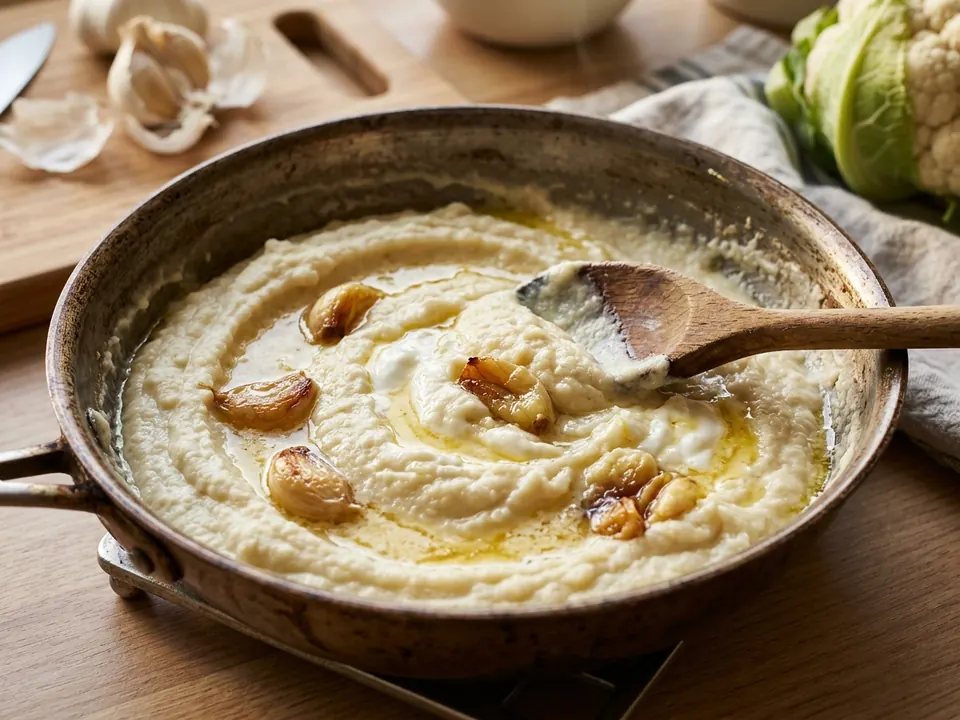
Add the 60 g Greek yogurt and pulse until the mash is as smooth as you like. Lift a spoonful. It should form a soft mound that relaxes a little around the edges. If the florets were especially dry, add hot water by the teaspoon. If you want some texture, stop while you still see a few small pieces.
Step 8. Warm gently, season and add chives
Stir over low heat until hot throughout. Keep the heat gentle so the yogurt stays smooth. Taste and add a small pinch of salt if needed, then spoon the mash into a warm bowl. Scatter chopped chives on top and divide into four side portions.
Adjust smoothness after blending
Blend only until the florets are smooth enough for the texture you want. If the mash looks loose, warm it gently while stirring to let a little moisture escape. If it’s thick because the florets were especially dry, add hot water by the teaspoon and stop when a spoonful holds its shape. Taste again after adding water before deciding on more salt.
Storage
Divide into shallow containers and refrigerate within 2 hours at 4°C or colder. Use within 3 days. Reheat gently, stirring until 74°C / 165°F throughout. Freeze for up to 1 month for quality; thaw in the refrigerator and whisk after reheating.
Food handling reference: FoodSafety.gov minimum cooking and reheating temperatures. Refrigerate perishables promptly, using shallow containers.
Adjust the garlic to the rest of the meal
Start with three-quarters of the roasted cloves if your bulb is large or you want the mash to sit alongside a strongly seasoned main. Blend that amount through before adding the rest. The flavor spreads better when the garlic is soft, and the extra cloves can be spread onto bread at the table.
Frequently asked questions
Why is the mash watery?
The florets may have retained steam or boiling water. Drain and dry them before adding yogurt.
Can I boil the cauliflower?
Yes, but drain very thoroughly and dry it in the warm pan before blending.
Can I make it without an immersion blender?
Yes. A potato masher leaves a little texture. Steam the florets until a fork crushes them easily, mash the garlic with the butter first and stir the yogurt in at the end.
Estimated nutrition
Per serving, about 130 kcal, 6.1 g protein, 14 g carbohydrates and 7.2 g fat. Uses all the garlic cloves, butter and plain Greek yogurt.
Serve warm with a roast or protein-rich salad. For a meal with contrasting texture, try Lemon Garlic Chickpea Salad alongside it.
Reader comments