

Estimated read time: 7 min
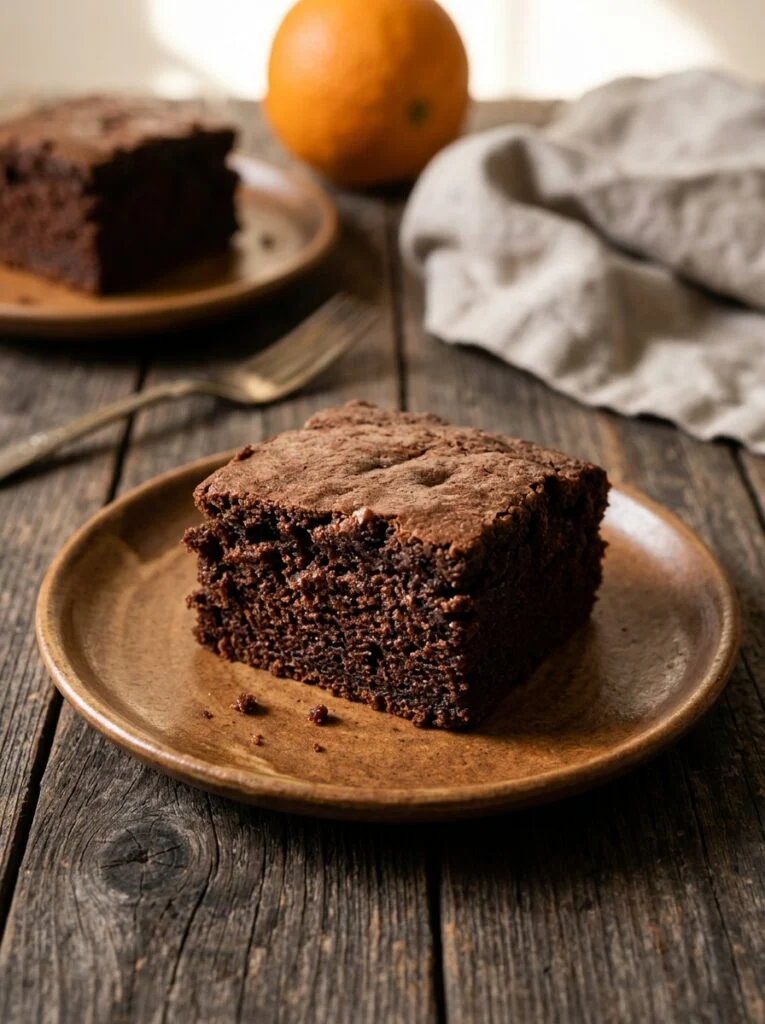
Cocoa orange olive oil snack cake has a soft chocolate crumb with orange zest in every slice. When I make this cake, I always rub the fresh orange zest directly into the granulated sugar with my fingertips until the crystals look damp and smell bright with citrus oil before whisking in the eggs. Use a toothpick and a light press at the center to check the bake; the small square pan makes nine pieces.
Servings: 9 · Prep: 15 minutes · Cook: 25–30 minutes · Total: 40–45 minutes, plus cooling
Zest the orange before measuring the liquids
Zest the orange straight into the measured sugar and rub it in while the oven preheats. Use an olive oil whose flavor you enjoy on its own, since it will come through in the finished crumb. Line the pan before folding the batter so it can go straight into the oven.
Key Ingredients & Why They Matter
- Zest of 1 Orange & Sugar (150 g): Rubbing the grated zest against sharp sugar crystals ruptures the citrus oil glands and binds the aromatic limonene oils to the sugar so they disperse evenly through the batter.
- Olive Oil (90 ml): Because olive oil remains liquid at room temperature, it coats the 160 g of all-purpose flour proteins more thoroughly than solid butter, producing a plush crumb that stays moist for days.
- Unsweetened Cocoa (30 g): Whisking and breaking up cocoa lumps with the dry ingredients prevents dry pockets, while its natural acidity pairs with the fruity esters of mild olive oil and orange.
- Eggs (2) & Milk (120 ml): Emulsify the olive oil and hydrate the starch and 1 teaspoon of baking powder so the 8-inch square cake rises into a tender, springy structure.
Ingredients
- 160 g all-purpose flour
- 30 g unsweetened cocoa
- 150 g sugar
- 1 tsp baking powder
- 1/4 tsp fine salt
- 2 eggs
- 90 ml olive oil
- 120 ml milk
- zest of 1 orange
Instructions
Step 1. Warm the oven and line the pan
Heat the oven to 350°F (175°C). Line an 8-inch square pan with parchment, leaving two overhanging edges so you can lift the cooled cake. Smooth the paper against the bottom and corners. Scrunching and flattening the paper first can help it stay down.
Step 2. Whisk the cocoa and flour together
Whisk the flour, cocoa, baking powder and salt in a bowl. Break up visible cocoa lumps with the back of a spoon or sift them through a sieve. Evenly distributed cocoa keeps dark streaks from hiding dry flour when you fold the batter.
Step 3. Rub the zest into the sugar
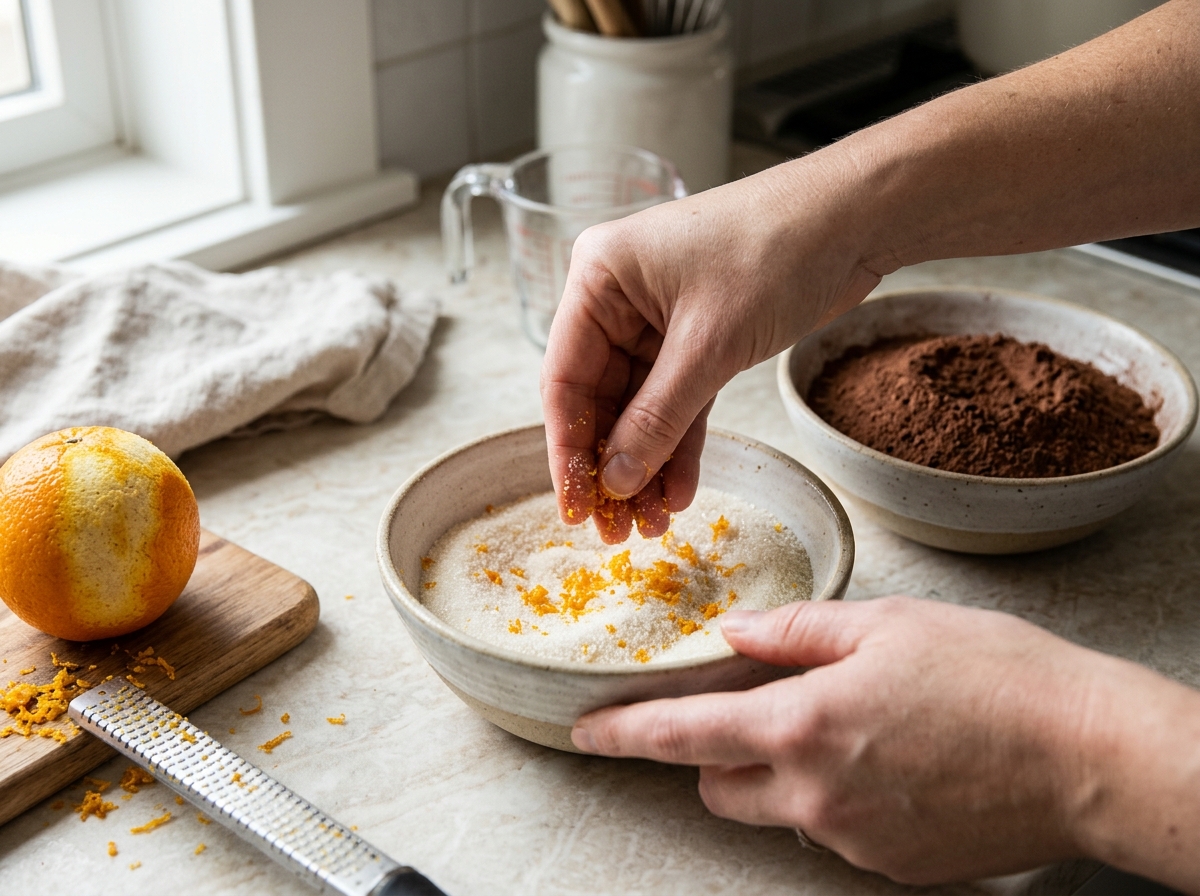
Grate only the orange outer peel into the sugar. Rub it in until the sugar smells fragrant and looks slightly damp. Avoid taking much of the bitter white pith. Work the zest through the whole bowl so the orange flavor is spread through the batter.
Step 4. Whisk the wet ingredients and fold
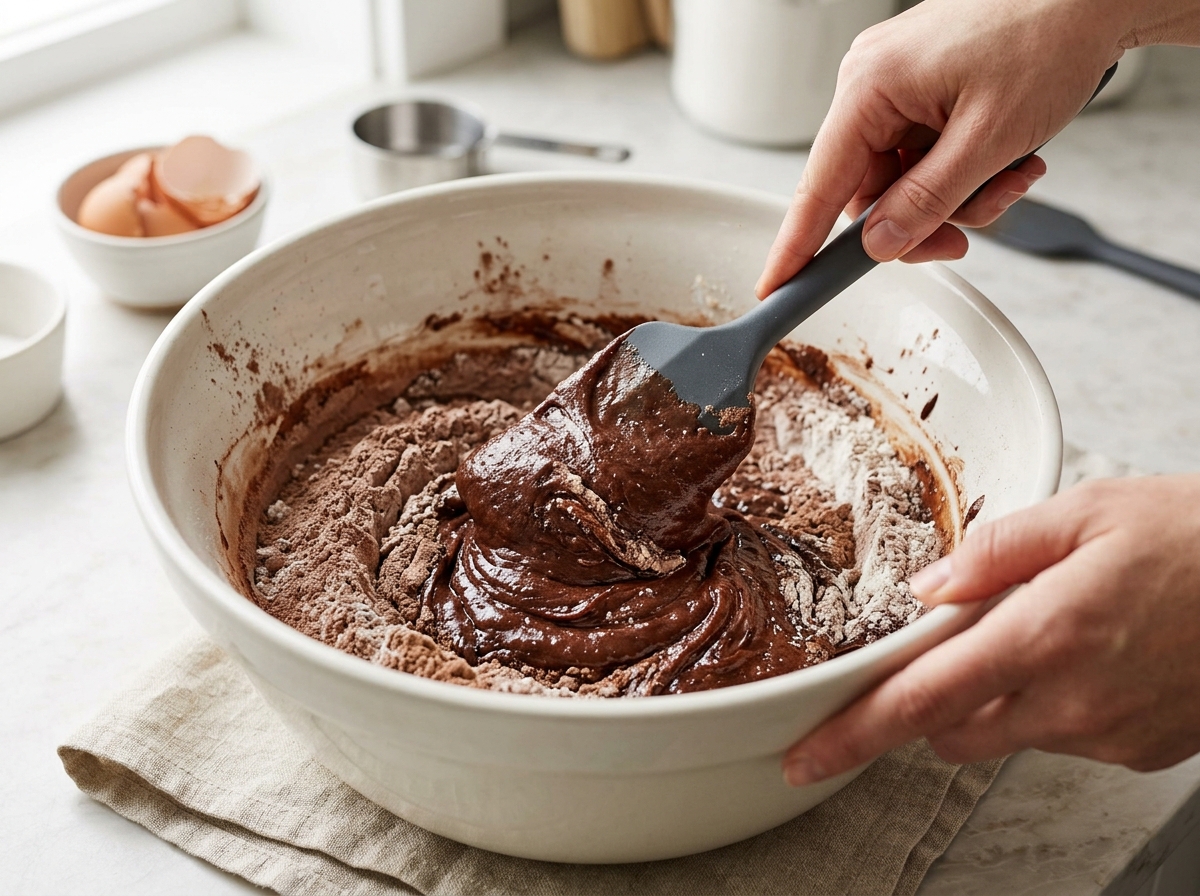
Whisk the eggs into the orange sugar, then whisk in the olive oil and milk. Fold in the flour mixture in two additions. Run a spatula along the bottom and sides and stop when no dry streaks remain. Pour into the pan and smooth the surface with a spatula.
Step 5. Bake until the center is set
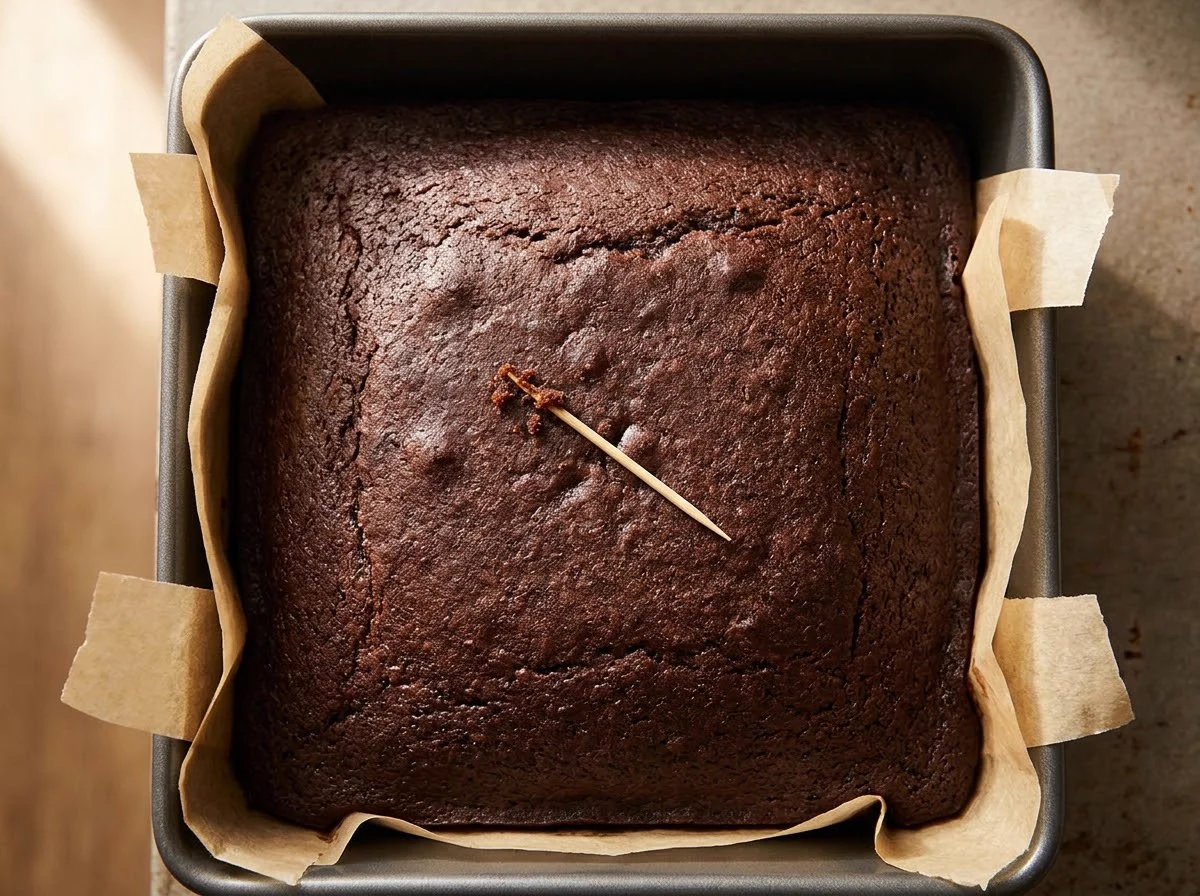
Bake for about 25–30 minutes and check toward the lower end of the range. The center should spring back lightly. A toothpick inserted near the middle should show a few moist crumbs without wet batter. If it comes out with a wet streak, give the cake another minute or two and test a fresh spot.
Step 6. Cool completely and cut nine slices
Set the pan on a wire rack and let the cake cool until the center is firm enough to move. Lift it with both parchment handles and set it on a cutting board. Cut in thirds each way using a thin knife. Wipe the knife between slices if crumbs are collecting on the blade.
Bring out the orange flavor
Rub the zest into the sugar with your fingertips until fragrant and slightly damp. This distributes the orange oils through the batter.
Cooking tips
Rub the zest into the sugar until fragrant. Stop stirring as soon as the dry ingredients disappear.
3 tips for cocoa orange olive oil snack cake
- Whisk the dry ingredients until the cocoa is evenly distributed. Break up any visible lumps before adding the wet ingredients.
- Zest the orange before juicing it. Stop at the white pith and rub the zest into the sugar to release the citrus oils.
- Begin checking near the low end of the baking range. The center should spring back lightly. Use King Arthur Baking’s cake doneness guide for additional cues.
Serving cocoa orange olive oil snack cake
Cool the cake before slicing. Lift it out with the parchment if the pan was lined, then cut squares with a thin knife. For another citrus bake, try our orange yogurt loaf cake.
Choose an olive oil that suits the cake
Taste a little of the oil before mixing. A mild or fruity oil supports the orange and cocoa. A strongly peppery oil will give the cake a more noticeable finish, especially once it’s cool. If using a smaller orange, zest it finely so the flavor can spread through all the sugar.
Bake ahead and store to protect the crumb
Cool the cake before covering it, so trapped steam doesn’t wet the top. If serving the next day, keep the cake whole and cut it just before serving. Wrap leftover squares separately if freezing so you can thaw only what you need.
FAQs
Which olive oil works?
Choose a mild oil so the orange and cocoa remain clear.
Can I make the cake ahead?
Yes. Cool it completely and keep it covered so the cut edges stay soft.
How can I tell when it is baked?
Look for a center that springs back and a toothpick with a few moist crumbs. Wet batter on the toothpick needs more baking time.
Serving your finished recipe
Let the cake cool before cutting it into squares to keep the tender crumb intact.
Tips for Cocoa Orange Olive Oil Snack Cake
Zest the orange before juicing it. Rub the zest into the sugar with your fingertips to distribute the citrus oils evenly through the batter.
Estimated nutrition
Per serving, about 240 kcal, 4.3 g protein, 33.2 g carbohydrates and 11.1 g fat. Uses one ninth of the cake, with whole milk.
Reader comments