

Estimated read time: 9 min 30 sec
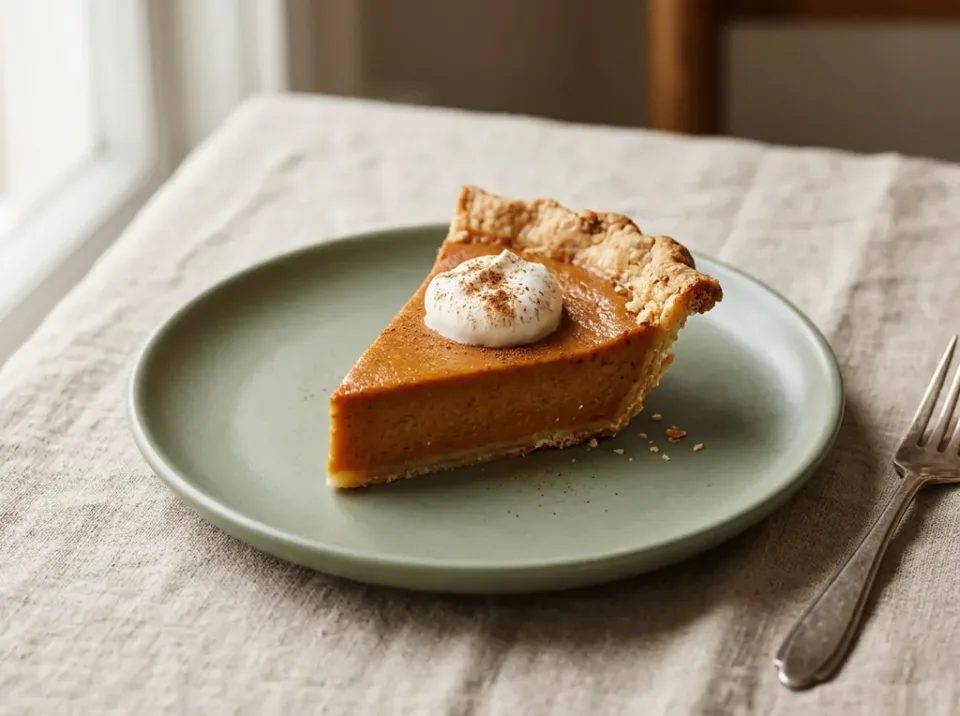
Whenever I plan a holiday dessert table, make-ahead pumpkin pie is the very first bake I check off my list the day before dinner. A custard pie actually slices much more cleanly after it has cooled on a wire rack and chilled overnight in the refrigerator, giving the eggs and pumpkin starches time to set into a silky, velvety wedge that holds a sharp point on the plate. In my kitchen, I prevent both soggy bottom crusts and cracked custard centers by pouring the spiced filling into a chilled pastry shell, starting the bake at 425°F (220°C) for the first 15 minutes to set the bottom pastry, and then dropping the oven to 350°F (175°C) until the outer ring is set and the very center still has a gentle, gelatin-like wobble.
Servings: 8 slices · Prep: 20 minutes · Cook: 65 minutes · Cooling and chilling: Allow about 8 hours · Total: 565 minutes
Cuisine: American
How I Set Up My Kitchen Before Mixing the Custard
Before I open the can of pumpkin, I fit my unbaked pastry crust into a standard 9-inch pie plate, crimp the rim, and slide the empty shell into the refrigerator for 15 to 20 minutes while I preheat the oven and whisk the custard. Starting with cold pastry fat keeps the crimped edge from slumping while the liquid custard heats up. I also clear a level spot on a refrigerator shelf ahead of time and place the chilled pie plate on a rimmed aluminum baking sheet before pouring in the filling—carrying a brim-full liquid custard pie to a 425°F oven is much steadier when you are holding the handles of a sheet pan rather than the narrow rim of a hot pie dish.
Key Ingredients & Why They Matter
- 100% Pure Pumpkin Purée (425 g / one 15-oz can): Check the label carefully so you buy plain 100% pumpkin purée rather than pre-sweetened canned “pumpkin pie mix.” Plain purée lets you control the brown sugar and warm spice balance yourself.
- Evaporated Milk (300 ml) + Light Brown Sugar (150 g): Evaporated milk has roughly half of its water gently cooked off, giving the pumpkin custard a rich, creamy body without feeling heavy or greasy, while light brown sugar brings a subtle caramel note that pairs naturally with cinnamon, ginger, and nutmeg.
- 2 Large Eggs Whisked Gently (Not Whipped): Two whole eggs set a 9-inch pumpkin custard smoothly without tasting eggy. Whisk just until the yolks, whites, and spices are uniform—whipping frothy air bubbles into custard batter causes the pie to puff like a soufflé in the oven and crack as it sinks on the cooling rack.
Ingredients
- 1 unbaked 9-inch pie crust
- 425 g pumpkin purée
- 300 ml evaporated milk
- 150 g light brown sugar
- 2 large eggs
- 1½ tsp cinnamon
- ½ tsp ground ginger
- ¼ tsp nutmeg
- ½ tsp fine salt
Instructions
Step 1. Fit the crust and chill the shell
Position a rack in the center or lower-middle of your oven and preheat to 425°F (220°C). Fit the unbaked 9-inch pastry gently into a 9-inch pie plate without stretching the dough, and crimp the rim slightly above the lip of the dish. Refrigerate the fitted shell while you whisk the filling, and set out a rimmed half-sheet pan.
Step 2. Whisk the pumpkin custard
In a large mixing bowl, whisk the pumpkin purée, evaporated milk, light brown sugar, 2 eggs, cinnamon, ginger, nutmeg, and fine salt together slowly until completely smooth. Scrape the bottom and sides of the bowl with a spatula to make sure no damp clumps of brown sugar or pockets of ground spice are hiding at the bottom.
Step 3. Check the filling and strain if needed
Let the bowl rest for 60 seconds so any surface bubbles pop. If you spot any unmixed strands of egg white or tiny dry spice specks, pour the liquid custard through a medium-mesh strainer into a large pouring pitcher—it takes 30 seconds and guarantees a glass-smooth custard surface.
Step 4. Fill the cold shell and start at high heat
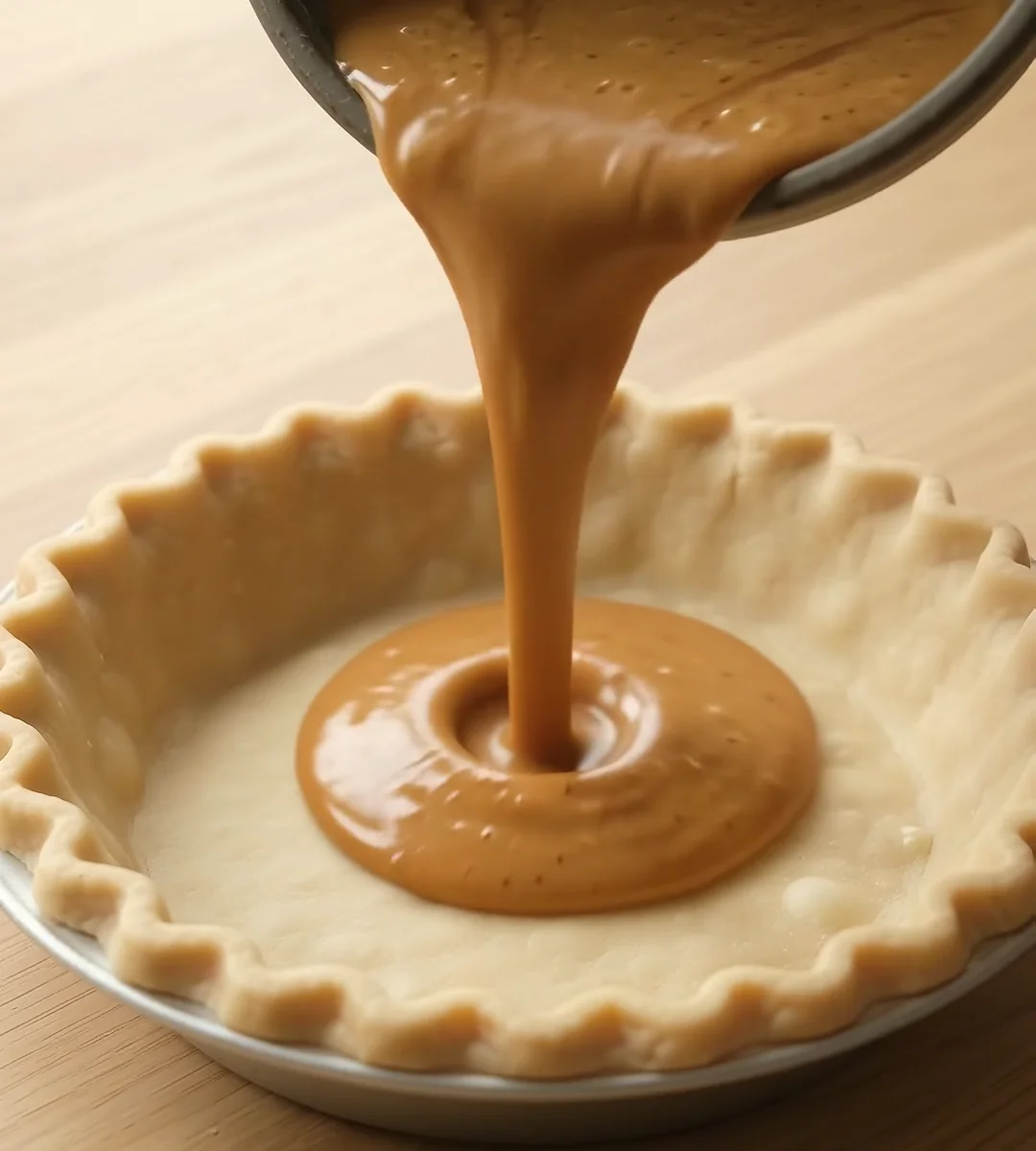
Place the chilled pie shell on your rimmed baking sheet and pour the pumpkin custard slowly into the crust until it sits about ¼ inch below the crimped rim. Slide the sheet pan into the 425°F (220°C) oven and bake for 15 minutes.
Step 5. Lower the temperature and watch the crust
After 15 minutes, keep the oven door closed and lower the temperature to 350°F (175°C). Continue baking for 40 to 50 minutes, taking your first visual check at 40 minutes. If the crimped pastry rim turns deep golden brown before the center custard finishes setting, drape a loose ring of aluminum foil over the outer crust edge while leaving the pumpkin center uncovered.
Step 6. Check the center wobble and internal temperature
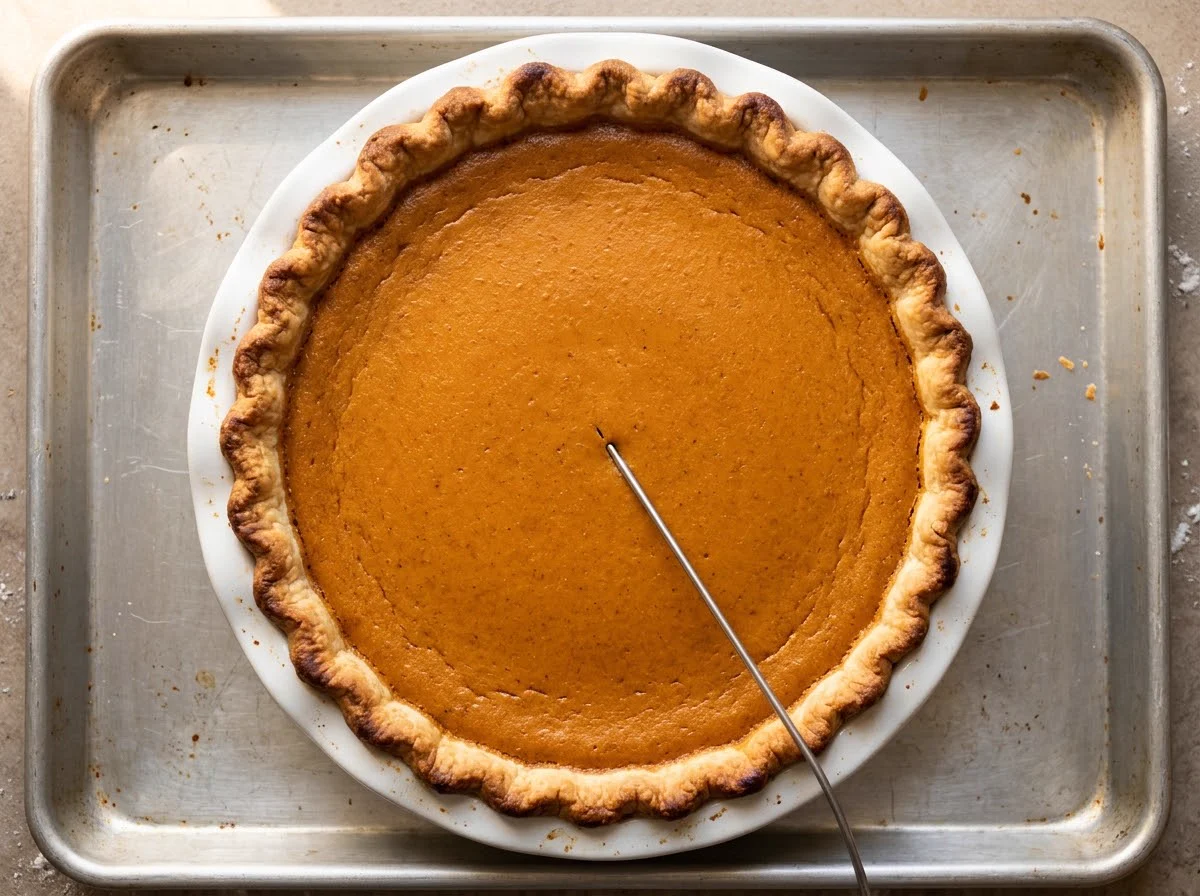
Give the sheet pan a gentle tap: the outer 2 inches of pumpkin custard around the crust should look puffed and set, while a 2-inch circle in the very center should jiggle together like set gelatin rather than sloshing like liquid. When I verify with my instant-read thermometer in the center (stopping halfway down so the tip doesn’t touch the pie plate), I pull the pie right at 170°F to 175°F (77°C–79°C). Carryover heat finishes setting the center as it cools; baking past 185°F causes egg proteins to over-tighten and split open in a center crack.
Step 7. Cool on a rack, then chill overnight
Transfer the pie plate from the baking sheet to a wire cooling rack so air can circulate underneath the dish. Cool uncovered at room temperature for about 90 to 120 minutes until the steam stops rising and the plate feels lukewarm, then transfer the pie to the refrigerator within 2 hours of baking. Once the pie is completely cold in the fridge, cover it loosely so condensation doesn’t drip onto the custard, and chill for at least 6 hours or overnight.
Step 8. Slice the cold pie with a clean blade
Cut the chilled pie with a thin, sharp straight-edged knife, wiping the blade clean with a damp cloth between every slice so the spiced custard edges stay sharp. Slide a thin metal pie server all the way under the bottom crust point before lifting the first wedge.
3 Keys to a Crack-Free, Silky Pumpkin Pie
- Pull the Pie While the Center Still Jiggles Gently: The number-one cause of a cracked or watery pumpkin pie is waiting for the very center of the custard to look completely stiff in the oven. Check out King Arthur Baking’s visual doneness guide for a side-by-side look at a liquid center versus a properly set custard wobble.
- Never Cover a Warm Custard Pie: Wrapping plastic wrap or foil over a pie that is still warm traps rising steam, which rains back down onto the custard as water droplets and softens the flaky crust. Always let the pie cool on a wire rack first, and cover it only after it has chilled cold in the refrigerator.
- Use a Foil Crust Shield Only on the Rim: If you shield the pastry edge halfway through the 350°F bake, cut the center out of a square of foil so the ring covers only the pastry crimp—covering the whole pie blocks radiant heat and slows down the custard.
Make-Ahead Timeline & Cold Storage Safety
Because pumpkin pie is an egg-and-dairy custard, food-safety guidelines require refrigerating the cooled pie within 2 hours of coming out of the oven and keeping it at 40°F (4°C) or below (see FoodSafety.gov’s custard pie storage guidance). Baking it the evening before your meal frees up your oven completely on Thanksgiving Day—see how it slots into our Make-Ahead Thanksgiving Menu alongside Maple Pecan Pie. Stored covered in the refrigerator, the baked pie keeps beautifully for 3 to 4 days.
Frequently asked questions
Can I bake this pie 1 to 2 days ahead of Thanksgiving?
Yes! Pumpkin pie is actually at its best 12 to 24 hours after baking because the spices meld and the chilled custard firms into clean, sliceable wedges. Wait to add whipped cream until right before serving individual slices.
Why did a small crack open in the center while cooling?
That happens when the center of the custard reaches a slightly high temperature (above 180°F–185°F) in the oven, causing the egg protein mesh to contract tightly as it cools. Fortunately, a dollop or rosette of lightly sweetened whipped cream down the center hides a surface crack completely without affecting the flavor.
Can I use homemade roasted pumpkin or butternut squash purée?
Yes, provided you drain the cooked purée in a cheesecloth-lined strainer for 30 minutes first until it is as thick and dry as canned pumpkin—watery homemade purée will prevent the custard from setting and soak the bottom crust.
What if my pie dish is an extra-deep ceramic dish?
This recipe is scaled for a classic 9-inch pie plate (about 1¼ to 1½ inches deep). In a deep-dish plate, the custard will sit slightly shallower, so start checking the center wobble and thermometer reading 5 minutes earlier at the 35-minute mark of the 350°F stage.
Estimated nutrition
Per serving, about 290 kcal, 6.6 g protein, 40.8 g carbohydrates and 11.7 g fat. Uses a standard unbaked 9-inch crust and excludes optional whipped cream.
Serve cold or cool slices topped with softly whipped cream alongside hot coffee after a meal of Garlic Herb Roast Turkey Breast and Classic Sage and Onion Stuffing.
Reader comments